Shikoku Dispatch #6. Full Circle.
Well, it’s done.
Eighty-eight temples. Seventy days—or seventy-two now—and this morning I returned to Temple 1, where it all began.
I wasn’t starting again. I was there to drop off Cam and kind of wanted to complete a full circle.
He joined me in Kochi, around Temple 30, and is now heading back to complete everything he missed before that. It should take him a few more weeks. He has inherited all my highly detailed knowledge about which stretches are beautiful, which are miserable and which can be skipped without regret.
He has also inherited some of my strange wisdom and finesse, which, let’s face it, may or may not be a good thing.
Finishing something like this is strange.
There is happiness and a sense of achievement, but also sadness and nostalgia. There is no grand finale. No parade waiting for you. No streamers and trumpets. No enormous celebration.
Just a quiet feeling of: Well, that’s done. What next?
For now, the answer is some good home-cooked food and a decent glass or two of sake.
Sake is difficult when you have to get up every morning and walk again—especially through a Japanese summer. A beer after walking? Absolutely.
A big glass of sake? Also yes, in theory.
But it’s never just one glass of sake, is it?
But then again it’s never just one beer is it?

I digress.
I think I have finally half-fixed my feet, although naturally this happened only in the final few days. Hot baths seem to be doing the trick. I also went for massages on two consecutive days after Awa Odori, and things are beginning to loosen up.
The masseuse told me I needed to stretch more and do more sport.
That’s polite Japanese for: “You are fat.”
Normal Japanese for “you are fat” is: “You are fat.”
I digress again.
Apparently walking 1,200 kilometres around Shikoku doesn’t count as sport.
One Last Side Quest
Before finishing, we ramped things up and ventured off on another side quest—to the vine bridges of Iya Valley and the Nagoro village filled with scarecrow dolls.
The first vine bridge, aptly named Iya Valley Vine Bridge, was… let’s say not as expected.
It was crowded and heavily touristed, and after taking one look at it, we turned around and got back in the car.
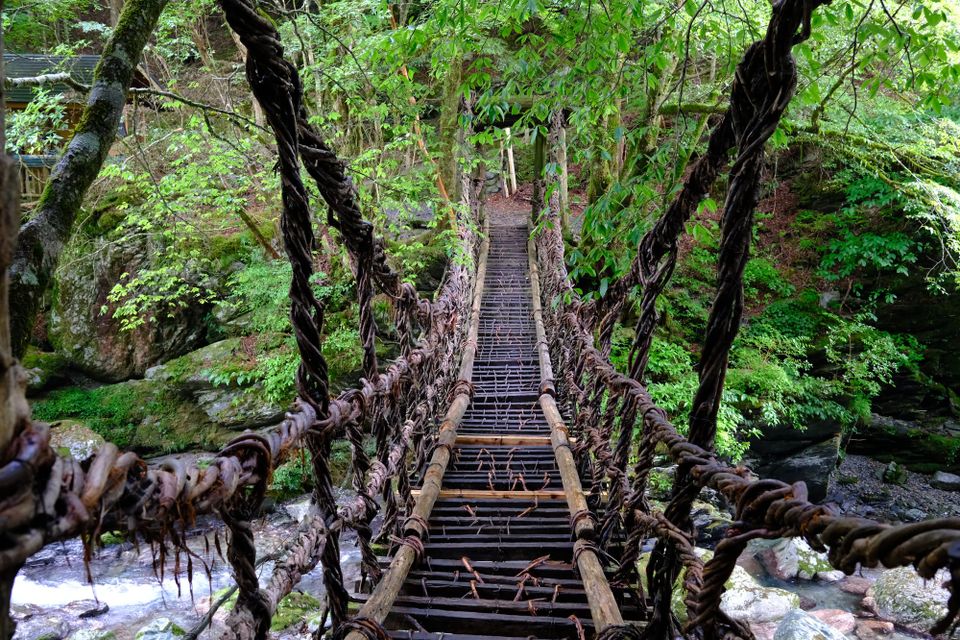
The two bridges much farther into the mountains (Oki-Iya Doubel Vine bridges), though, were very impressive.
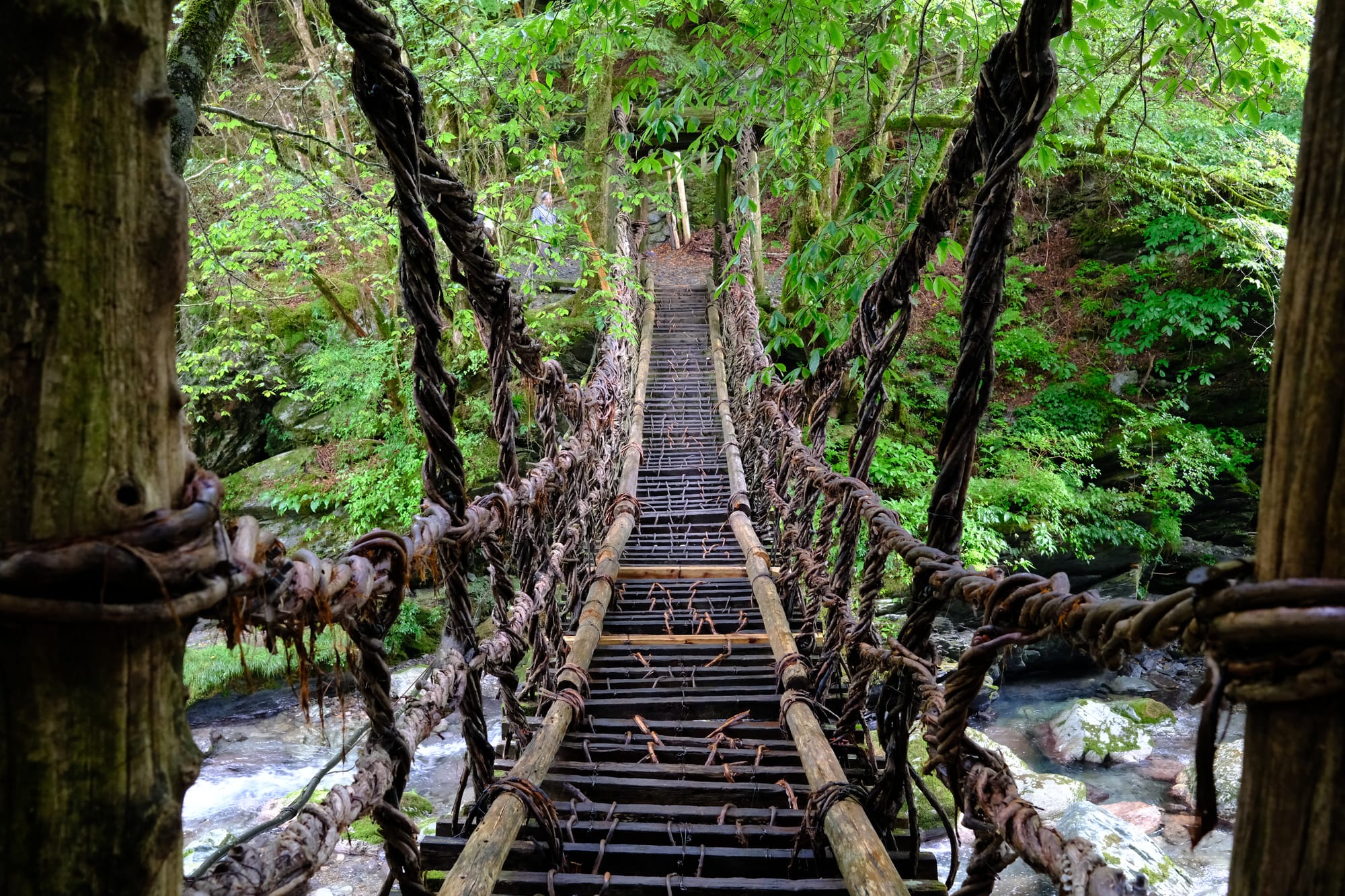
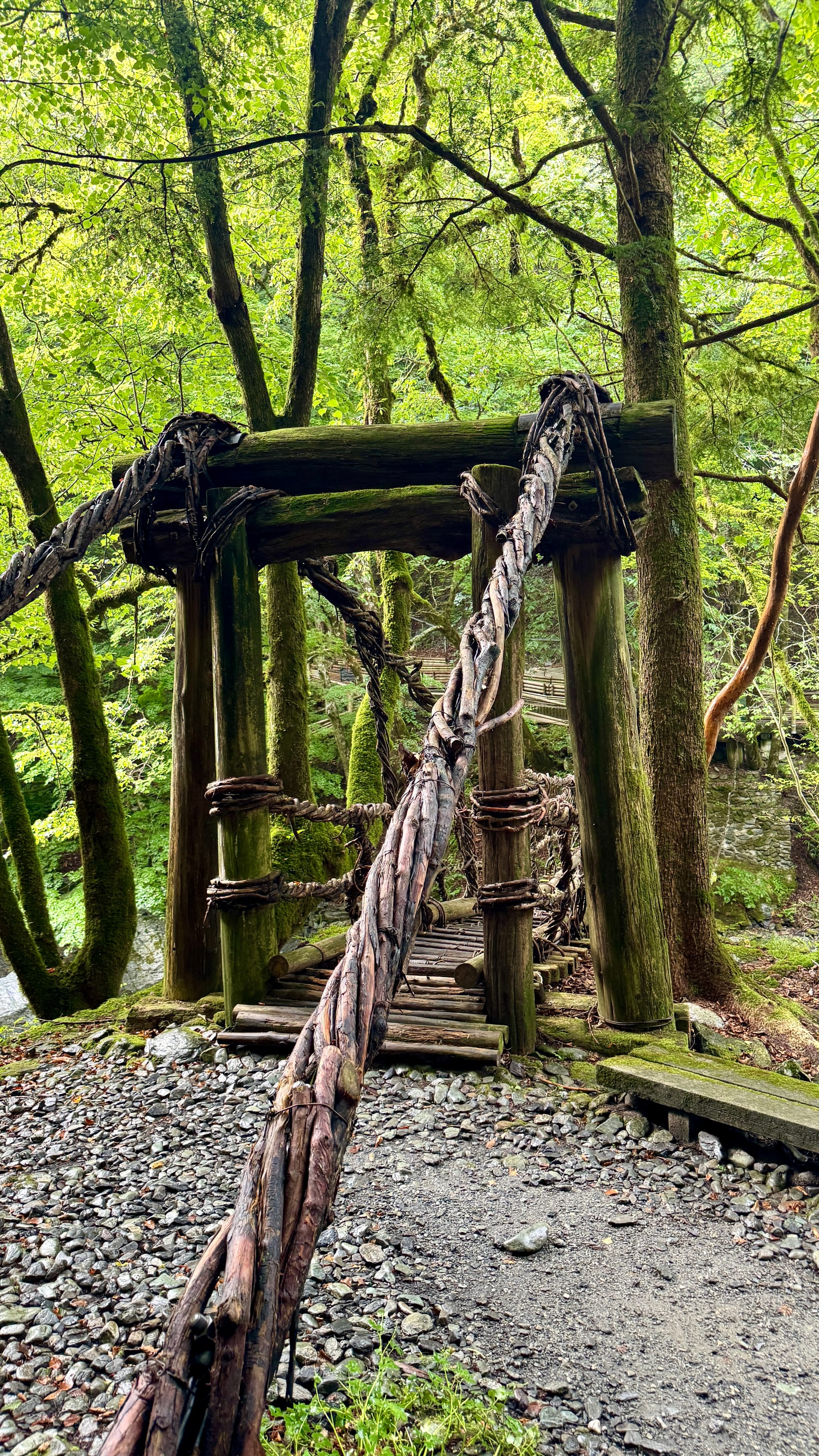
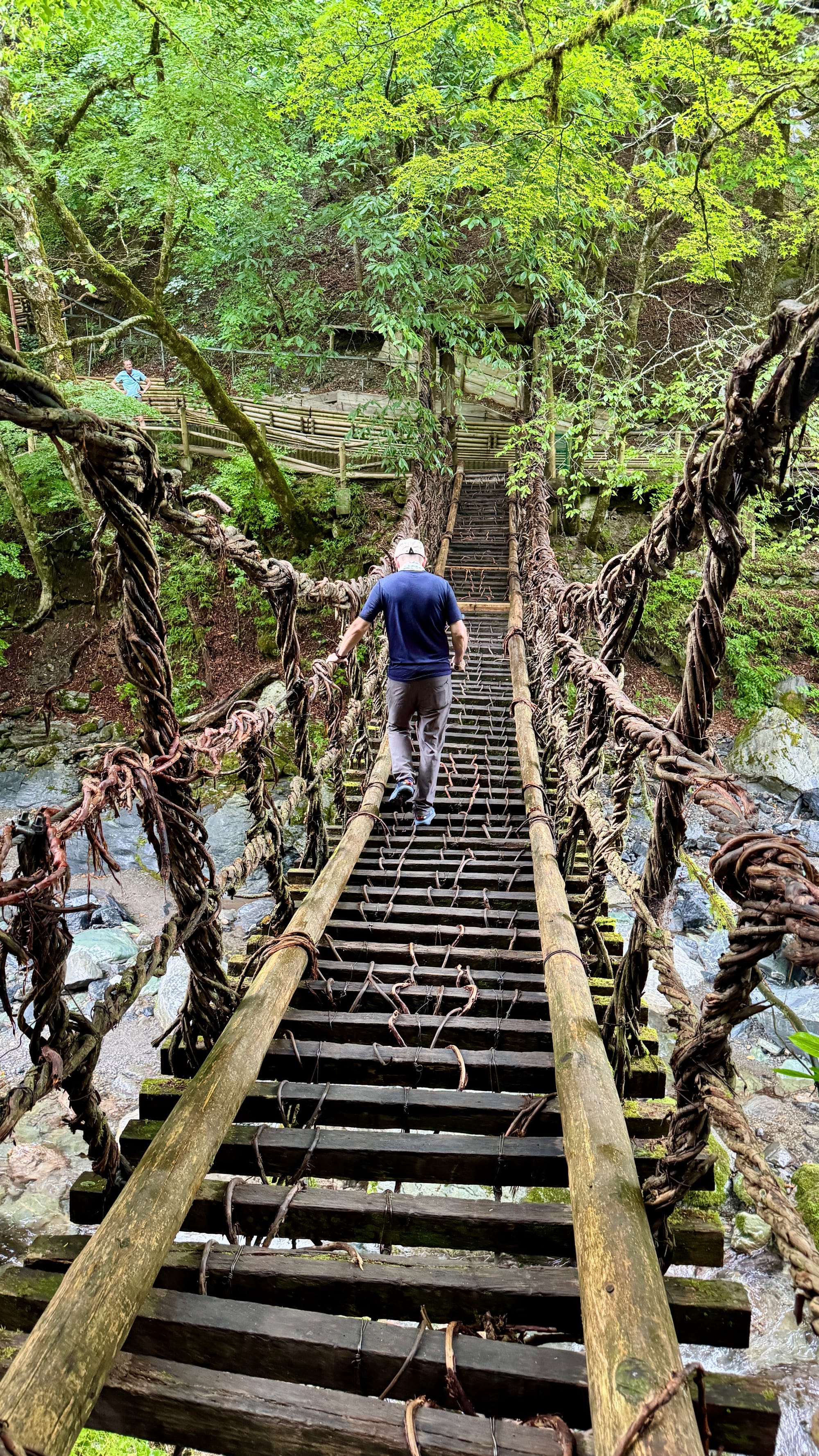
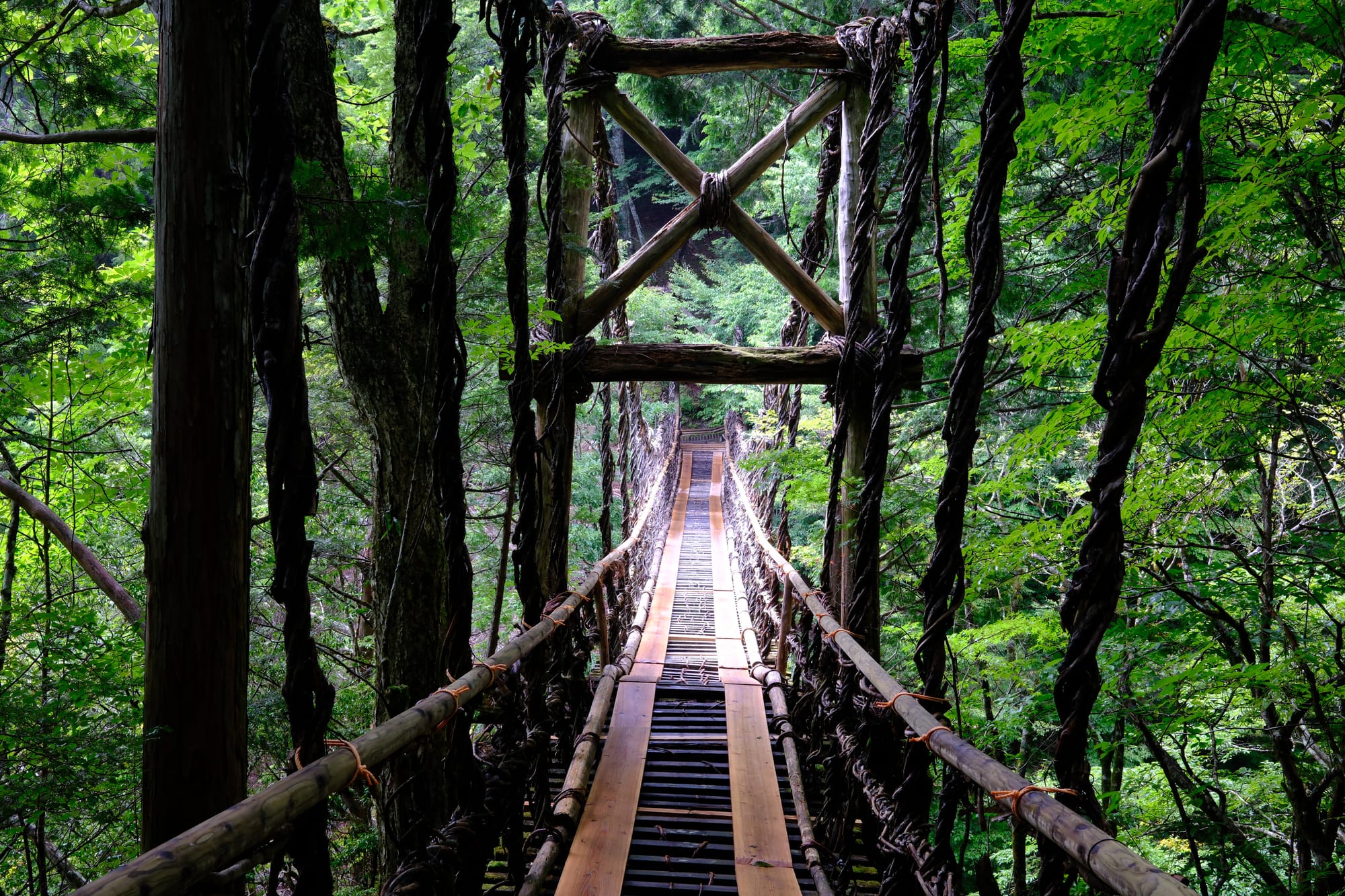
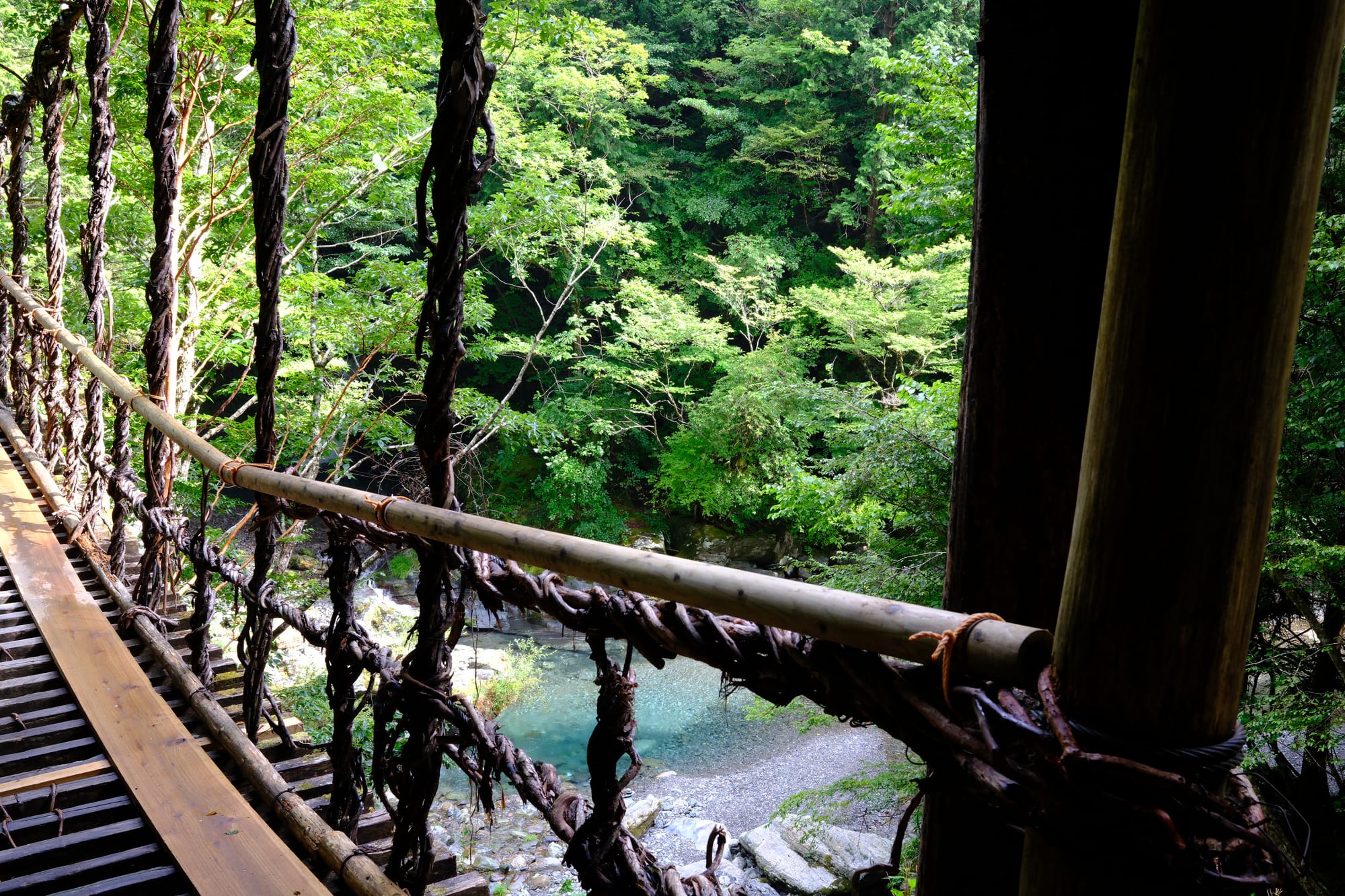
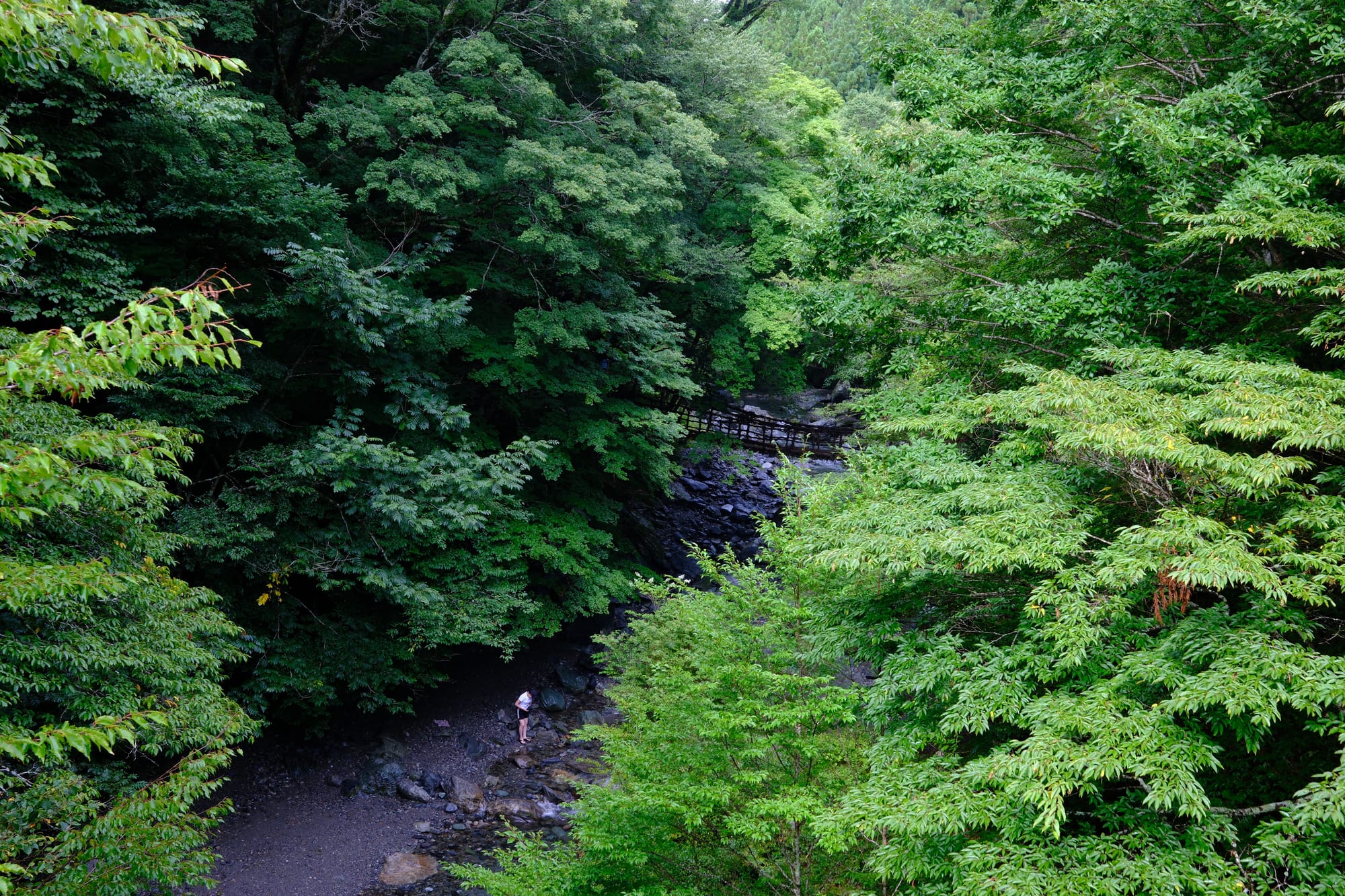
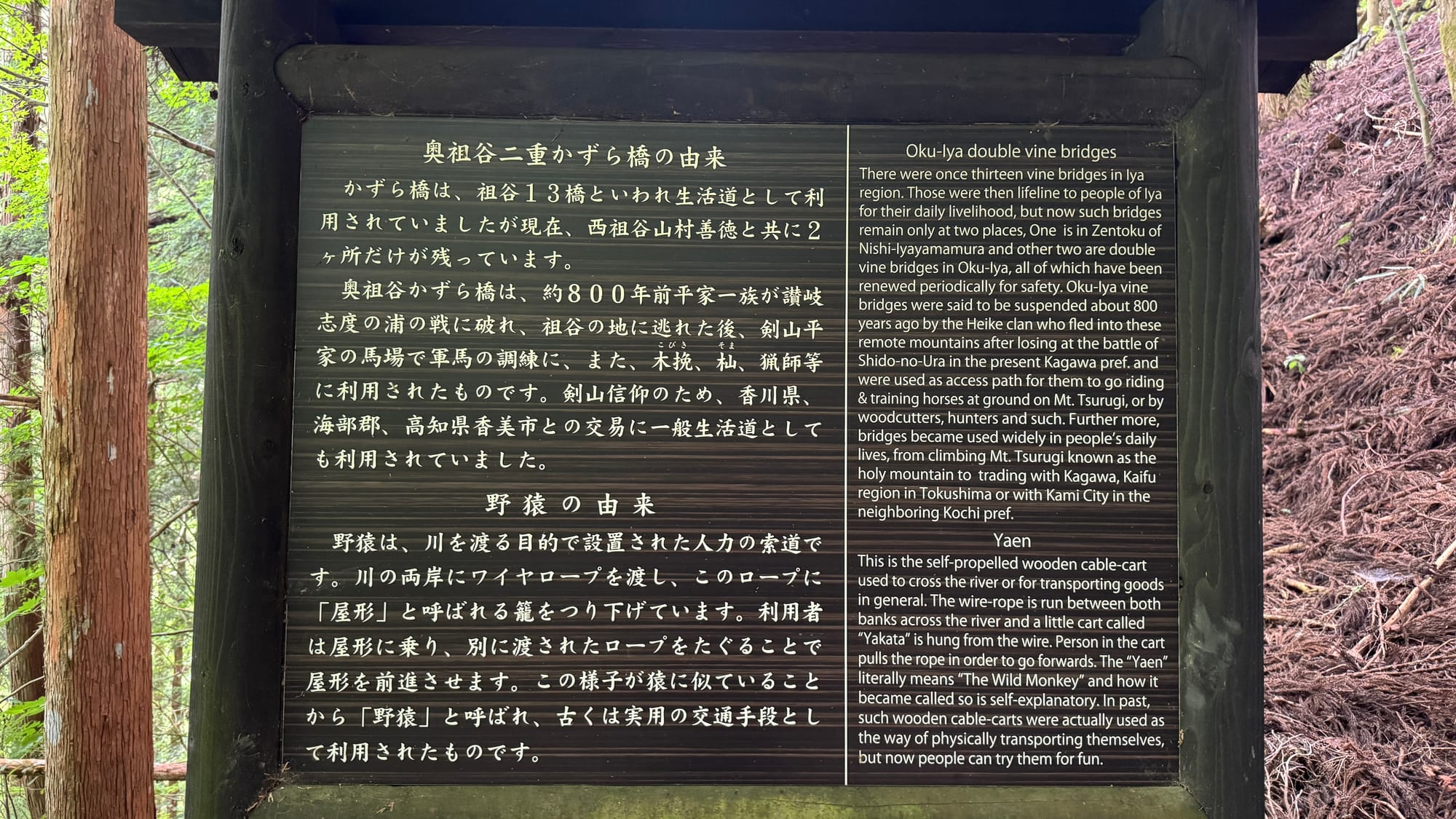
Getting there required some serious Mario Kart driving. Cam in the pilot seat and me as co-driver. Tunes and nav.
Luckily, I had my Toad hat on.
The roads were super narrow—only one lane—with constant bends, steep uppy ups and downy downs. And windy winds. Thirty kilometres an hour if we were lucky.
We picked up the car at 8:00 in the morning and returned it just before 7:00 that evening. It was a long day on the road, although we did manage to squeeze in a couple of difficult-to-reach temples along the way.
The mountains through the centre of Shikoku are nothing short of extraordinary. Ōboke Gorge is beyond words, as are the roads leading deeper into the mountains and east towards the two vine bridges.
The roads were insanely narrow. We laughed at how narrow they were.
Shaking our heads in amazement, wondering how anyone drove out there.
Then we pulled over and three enormous dump trucks came rumbling past in the opposite direction.
How those drivers navigate those roads remains one of Japan’s great mysteries.
The other mystery is how people reverse up or down a winding mountain road when they encounter another vehicle.
Someone has to give—and that means reversing until you find somewhere that is hopefully wide enough to pass.
If you come face-to-face with an enormous dump truck, that person is almost definitely going to be you.
The scarecrow village was equally wild.
There were hundreds of dolls—maybe more—made by one woman and spread out across the village.
They were sitting at bus stops, working in fields, waiting outside buildings and staring at us from places where normal people should—or once would—have been.
And a school.
Full of scarecrow dolls.
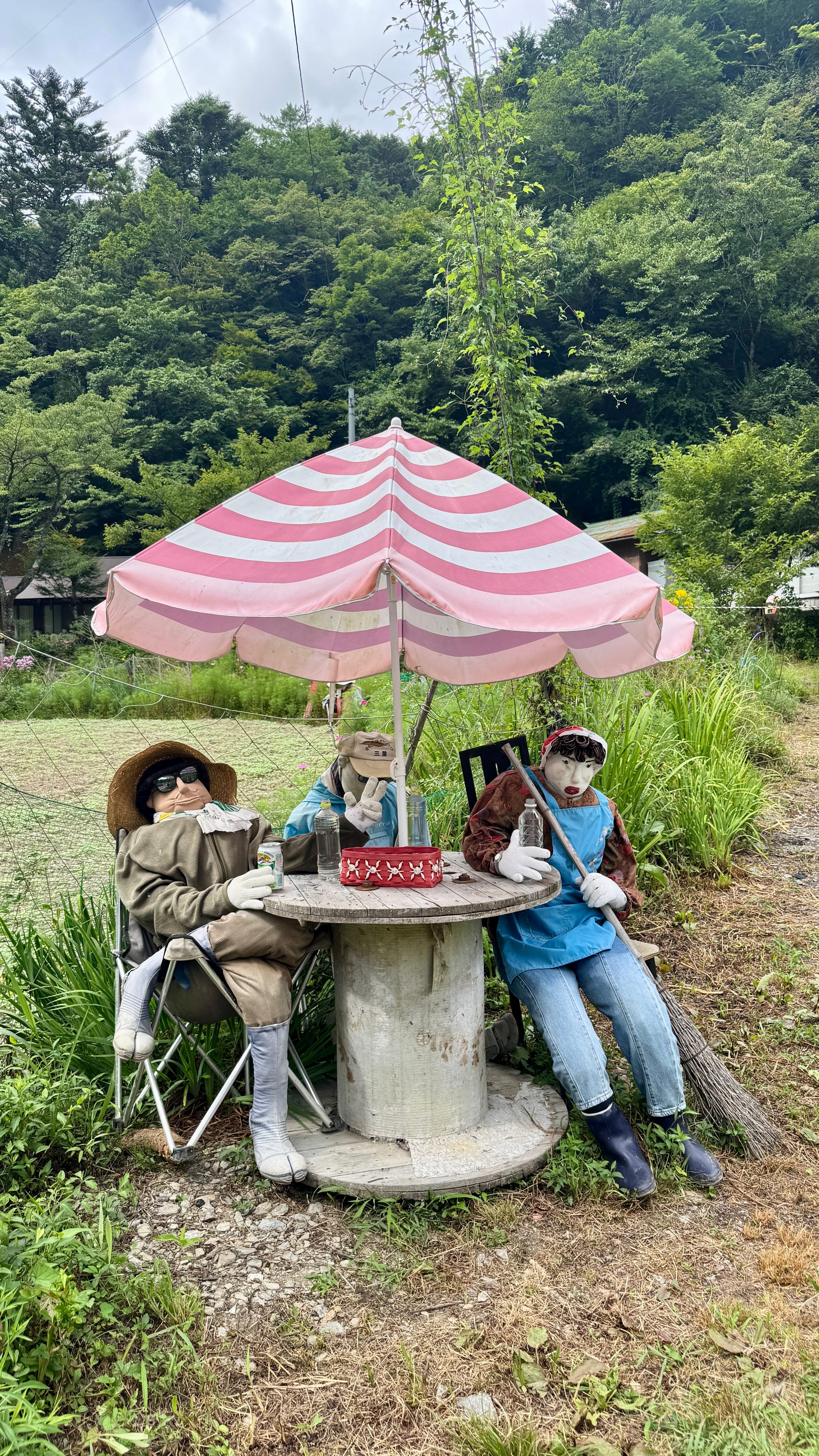
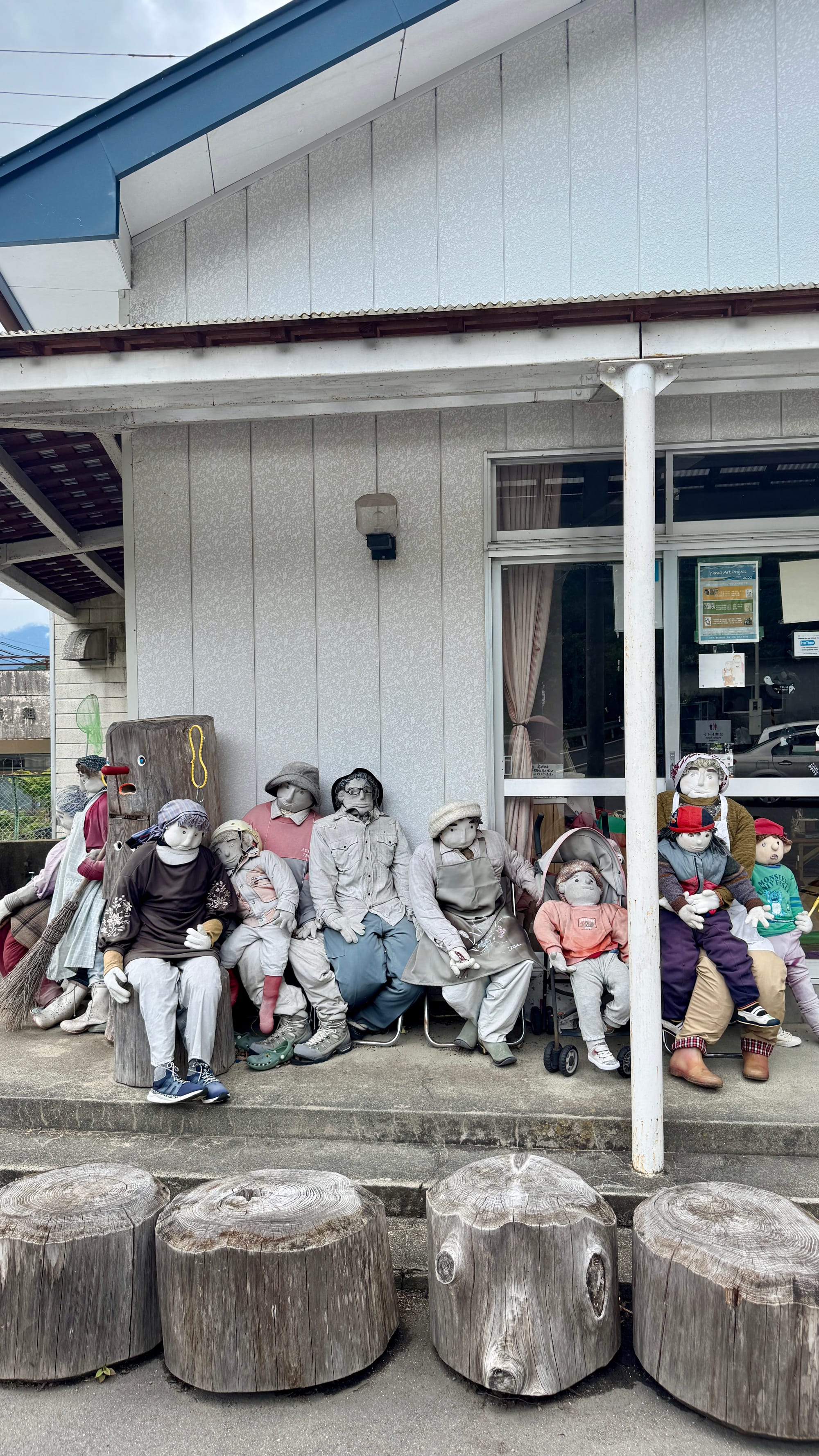
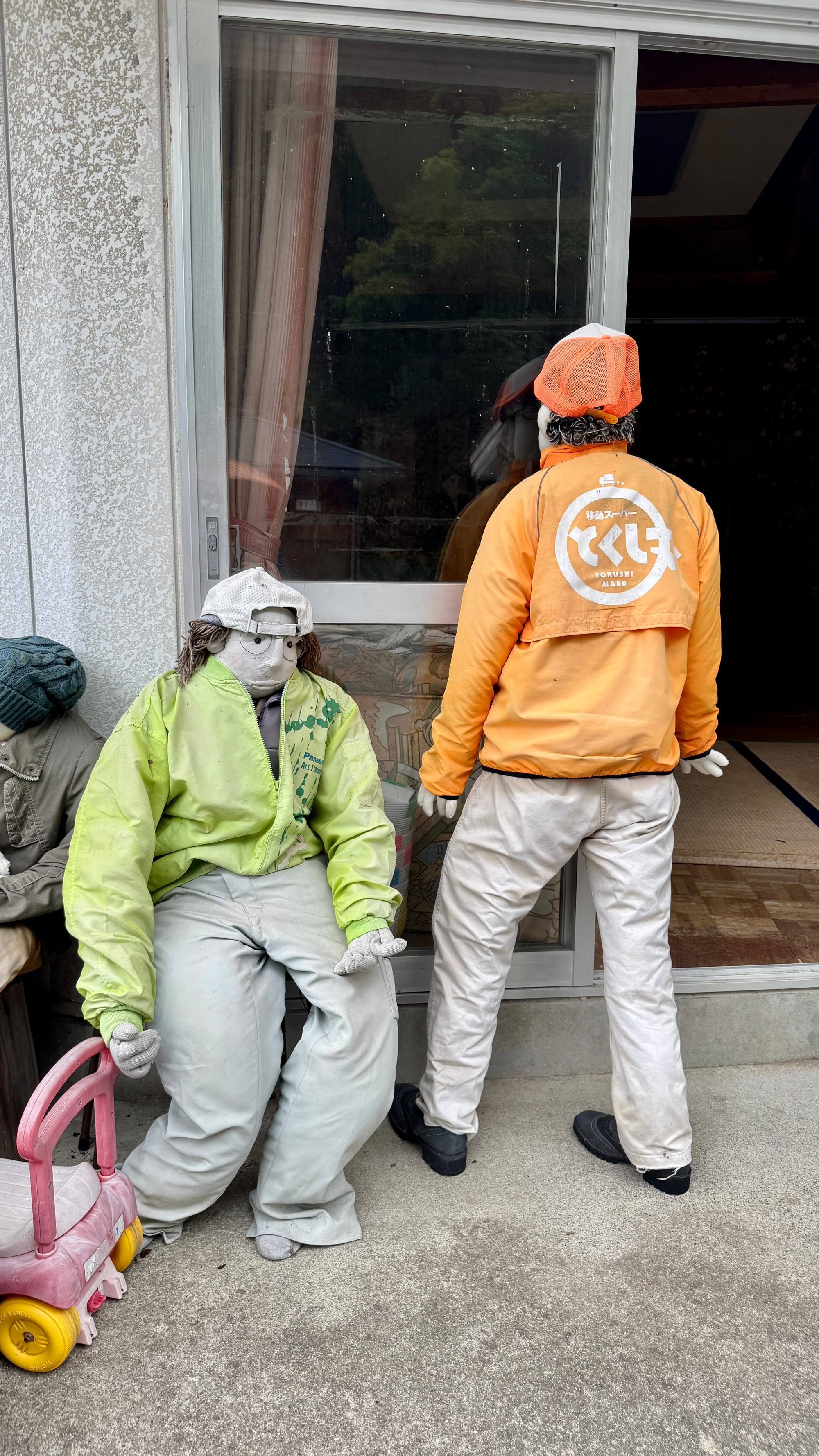
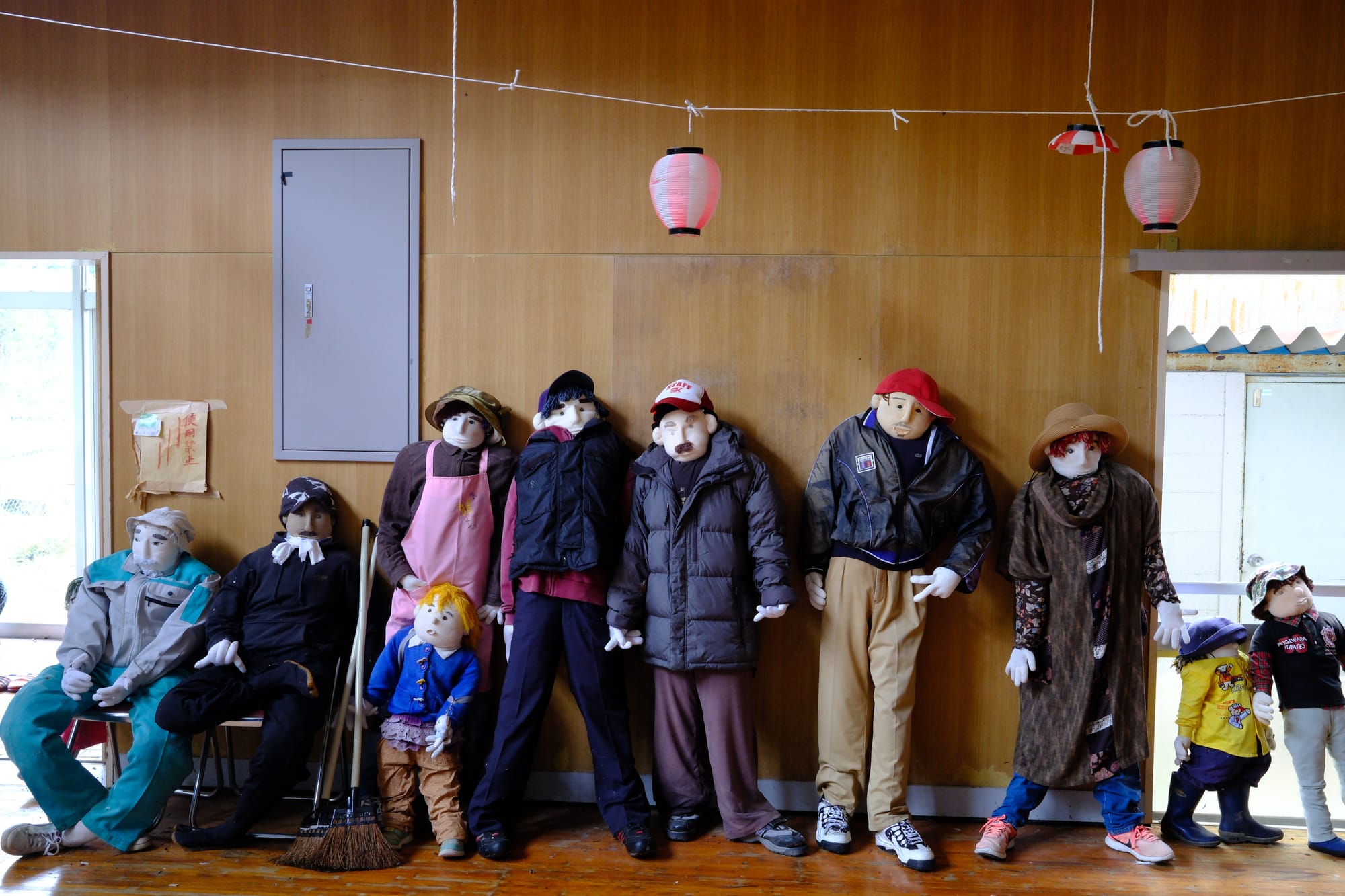
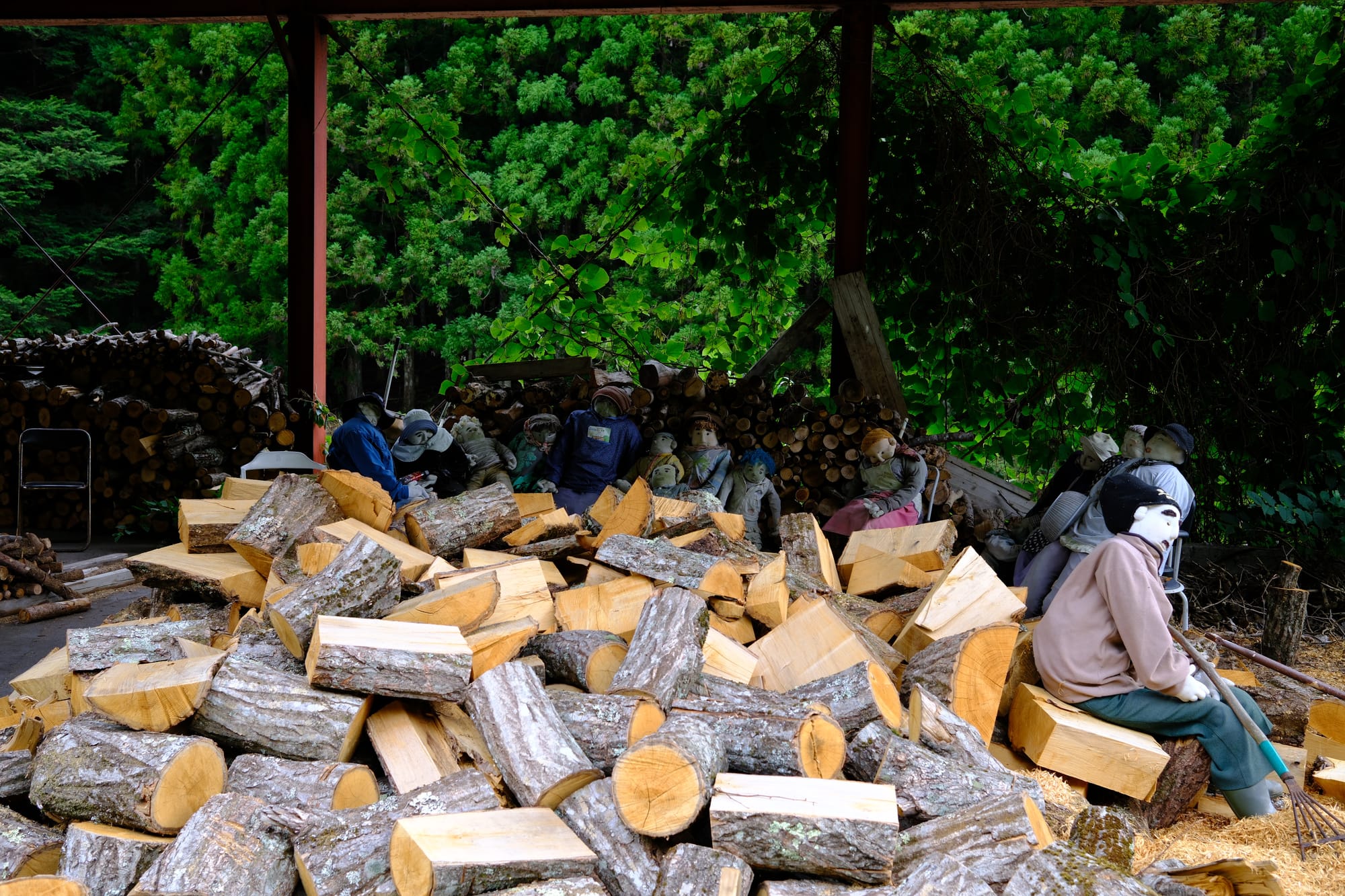
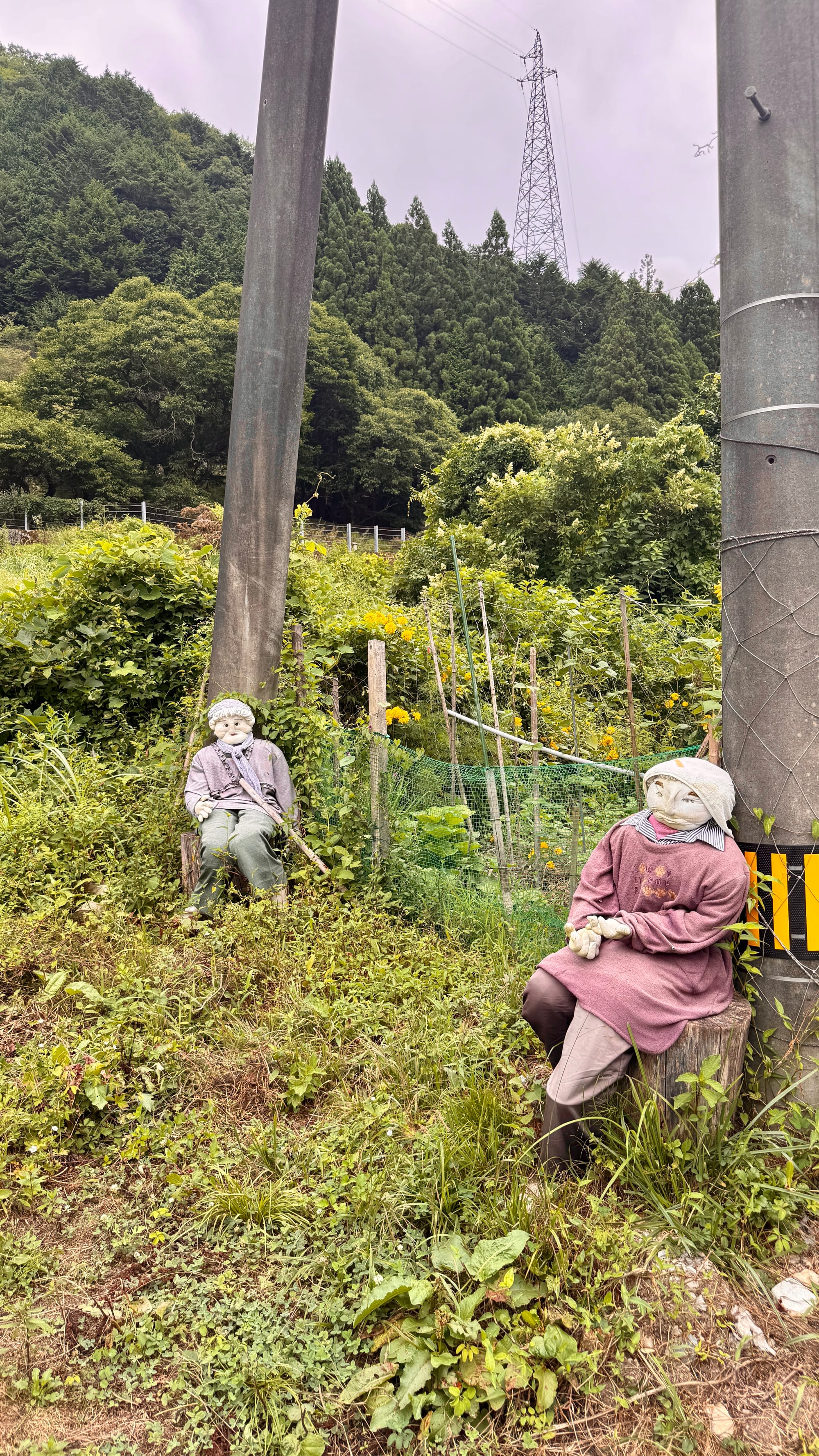
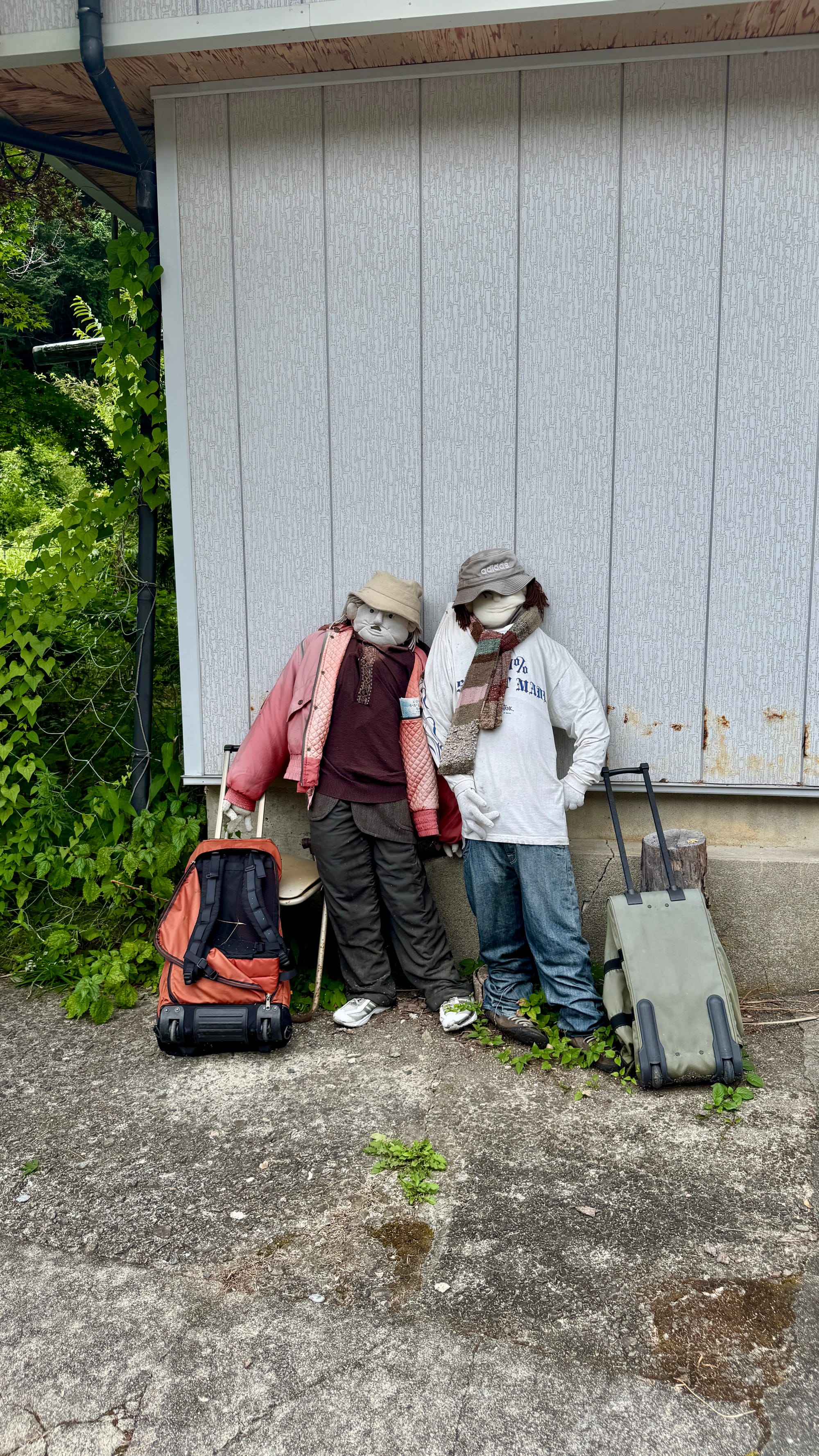
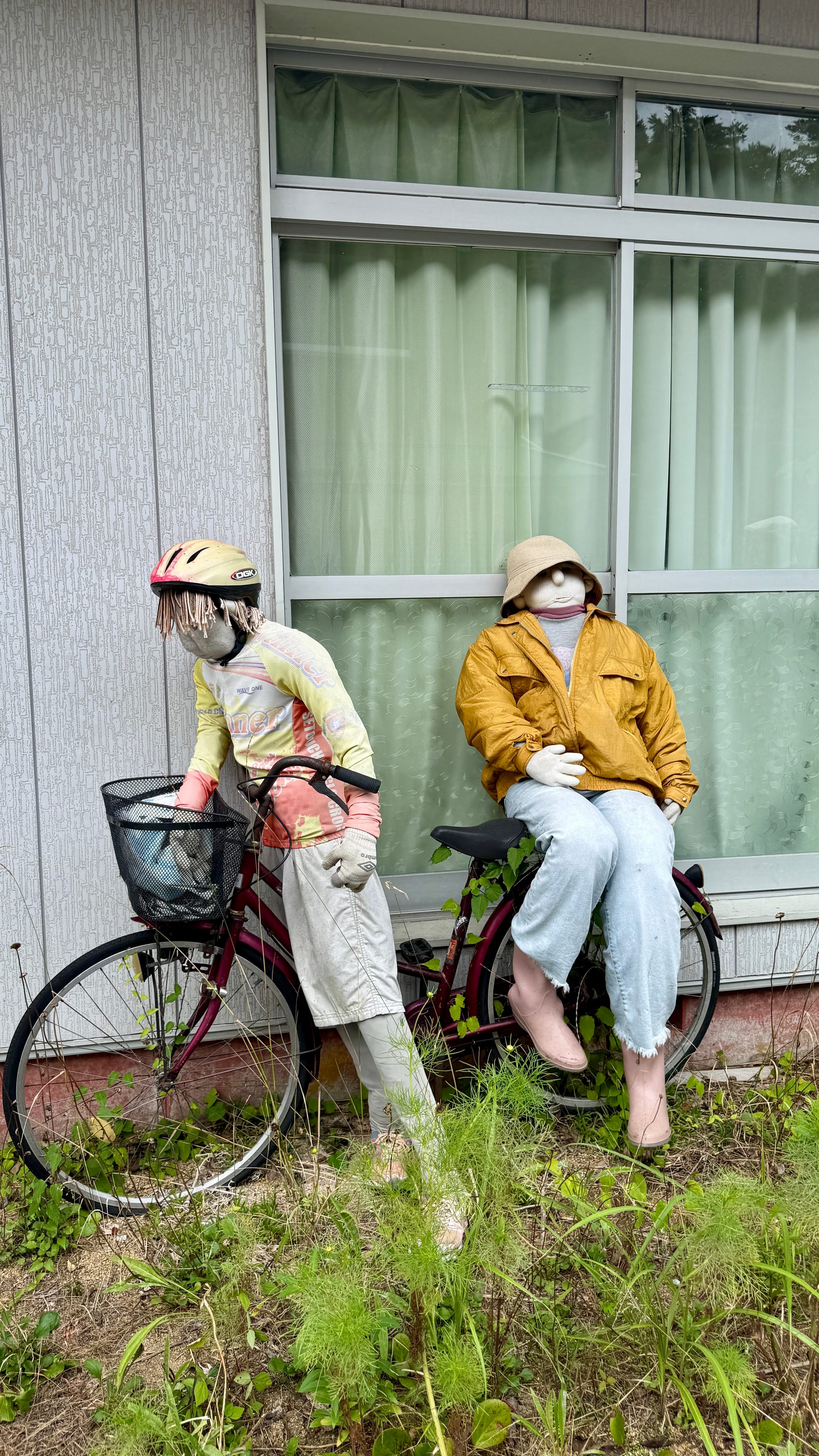
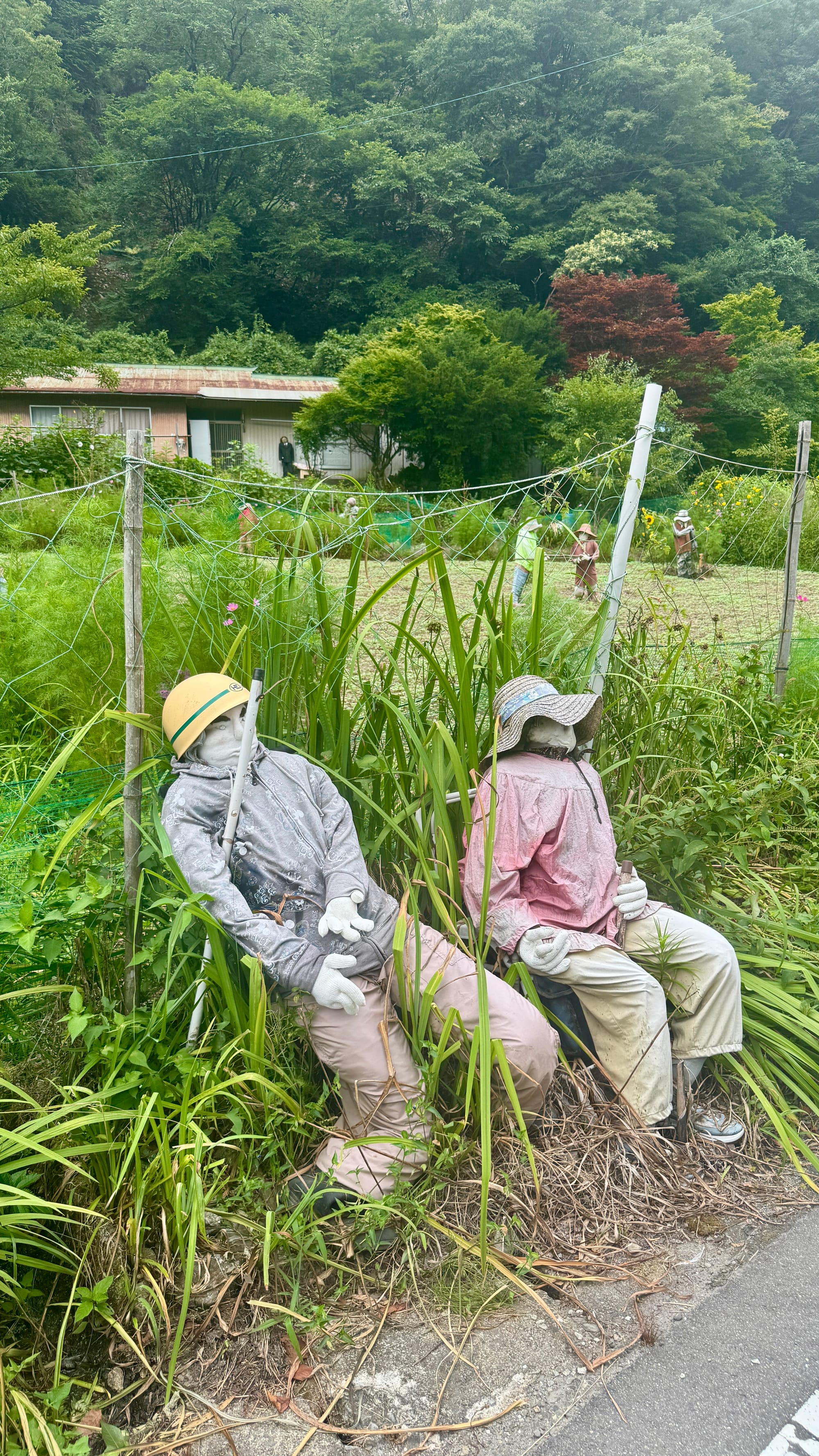
Shikoku already seems to have an unprecedented number of scarecrows, but this was something else entirely.
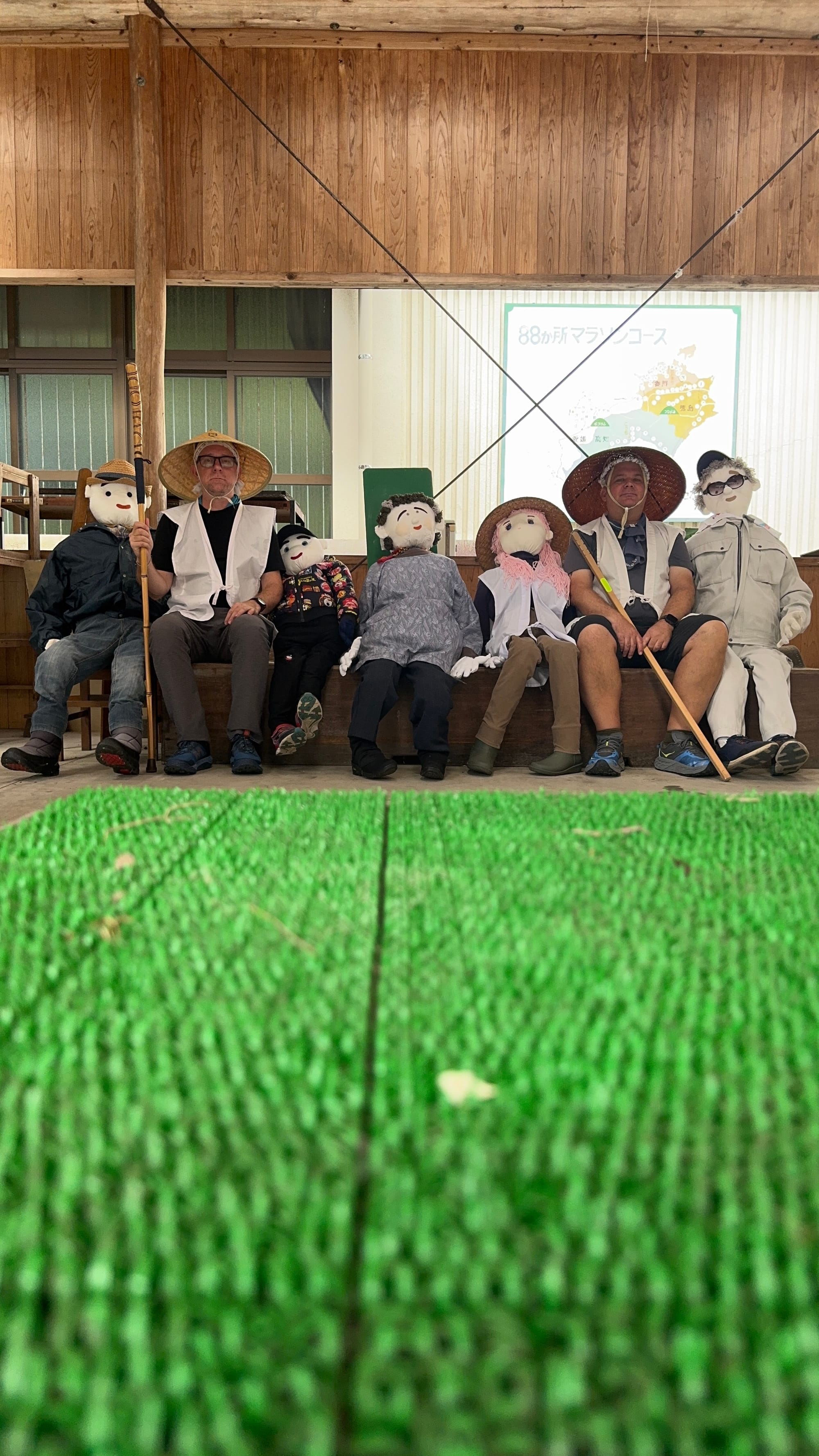
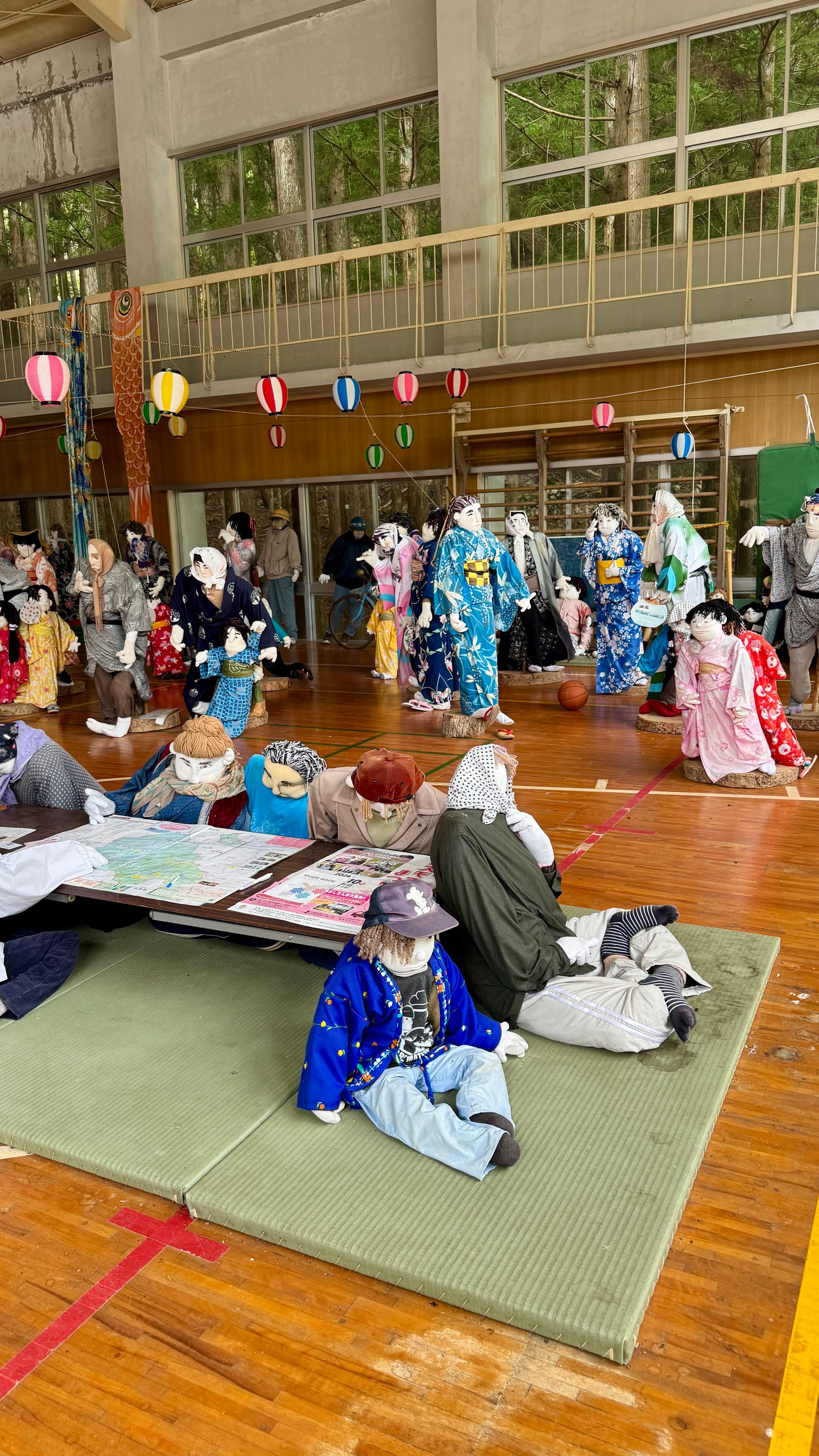
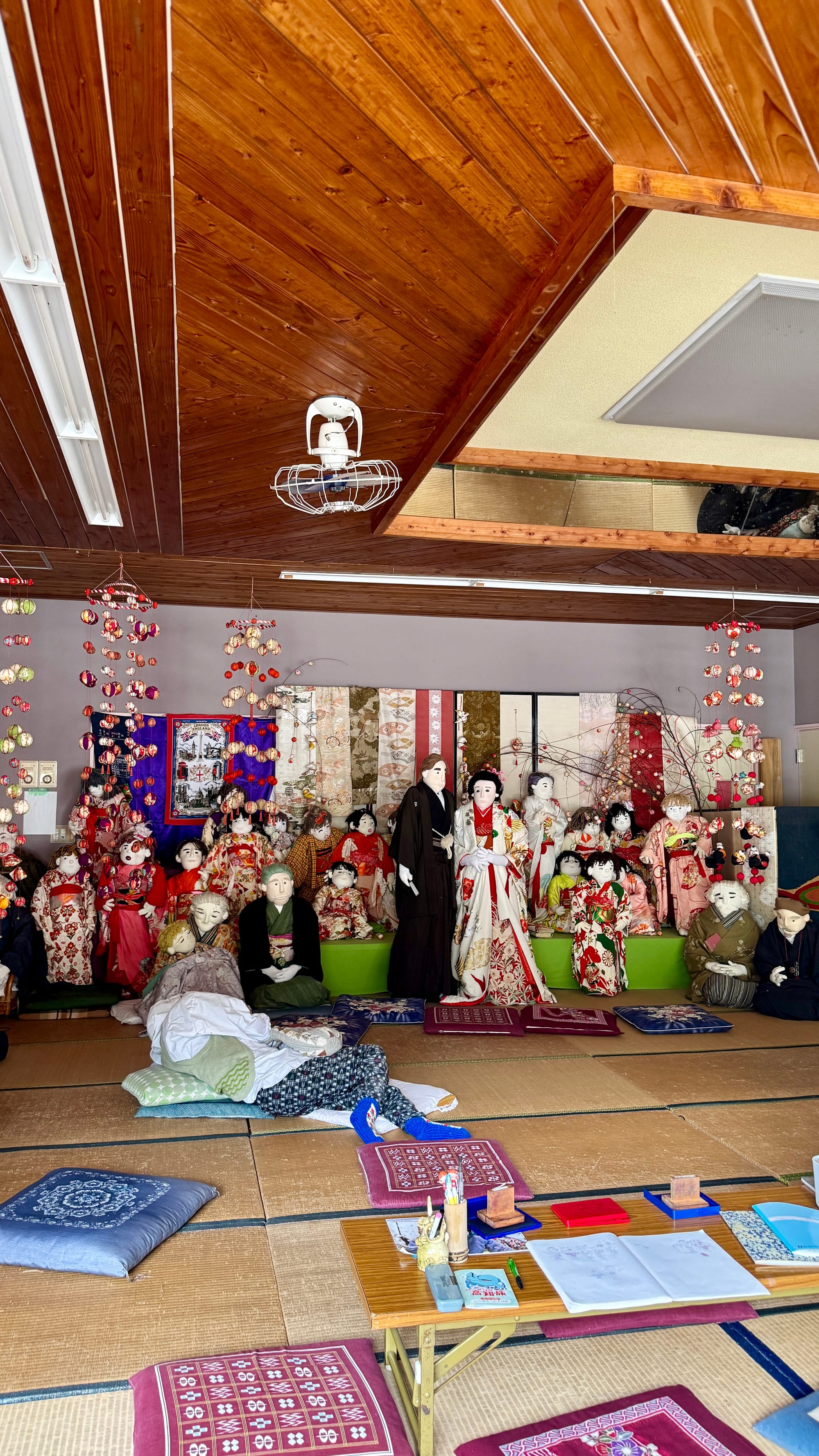
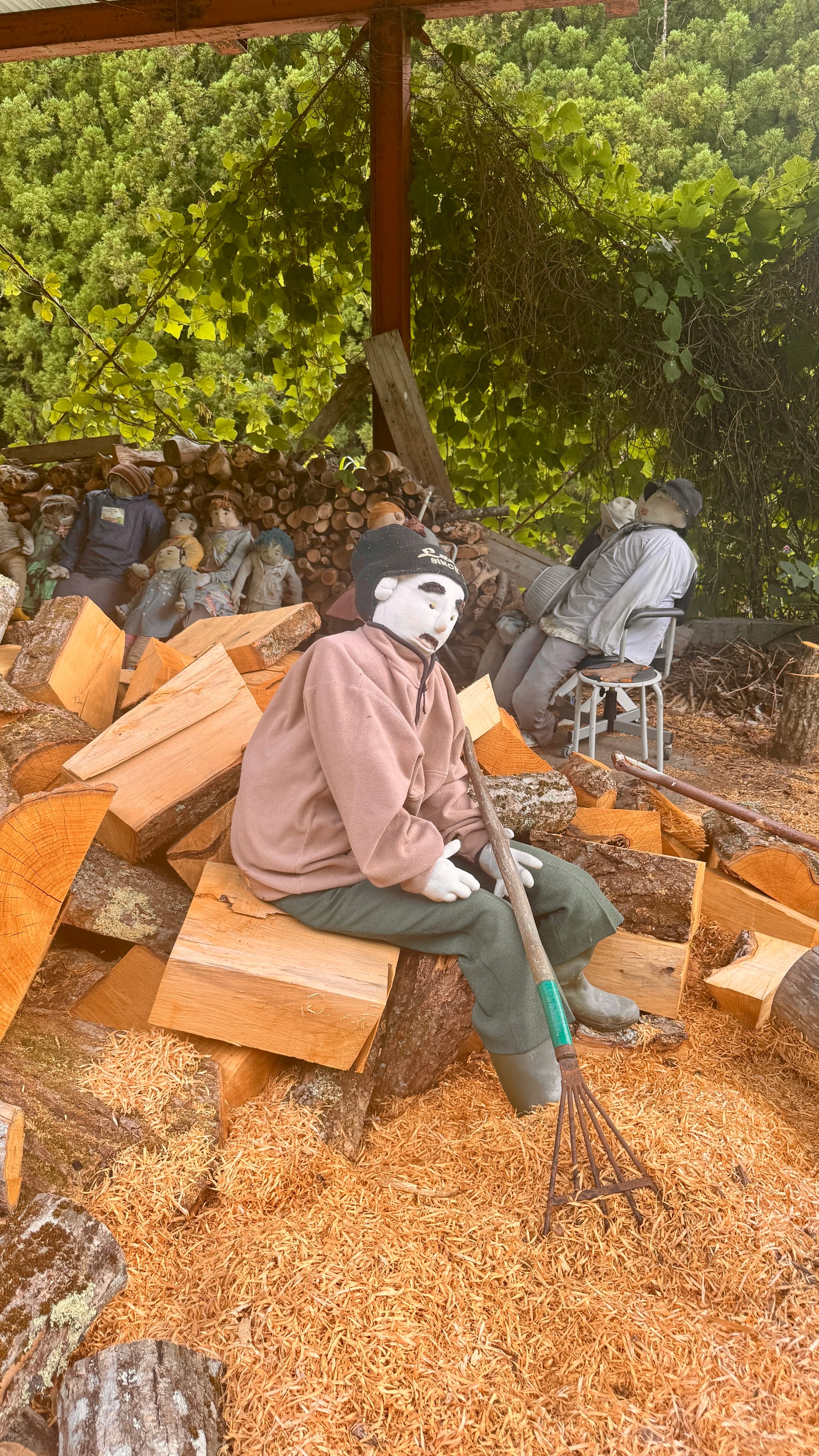
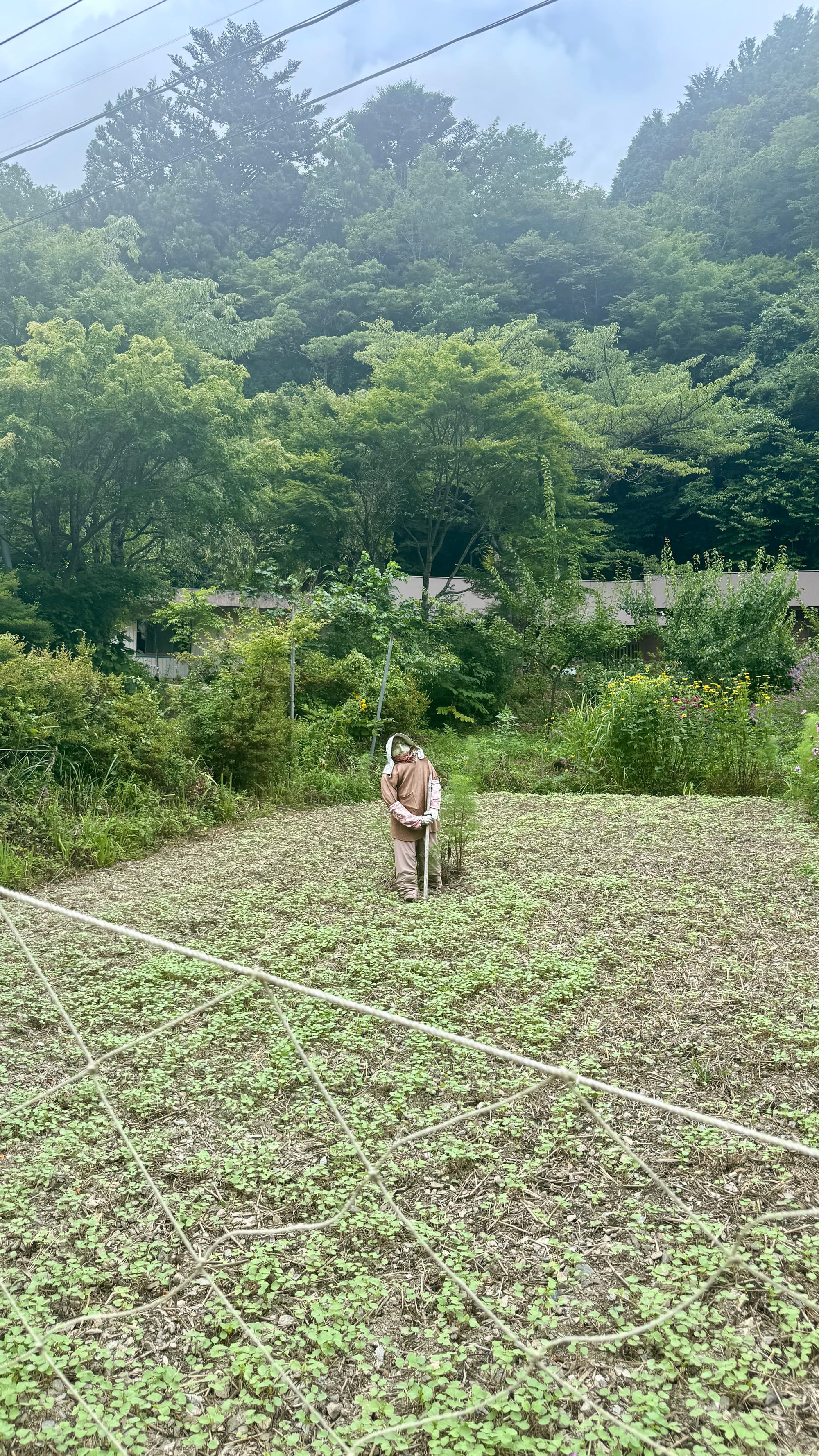
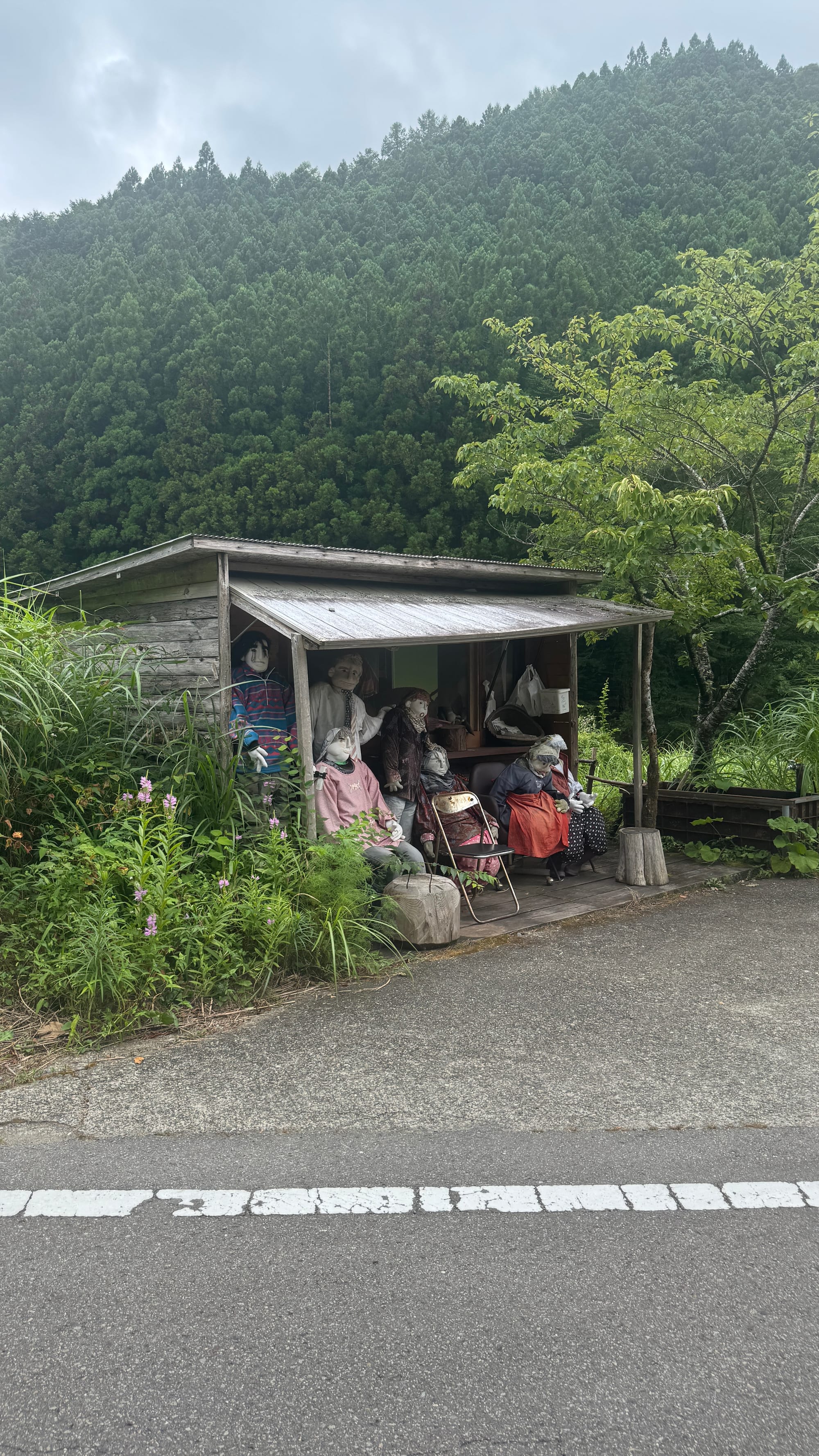
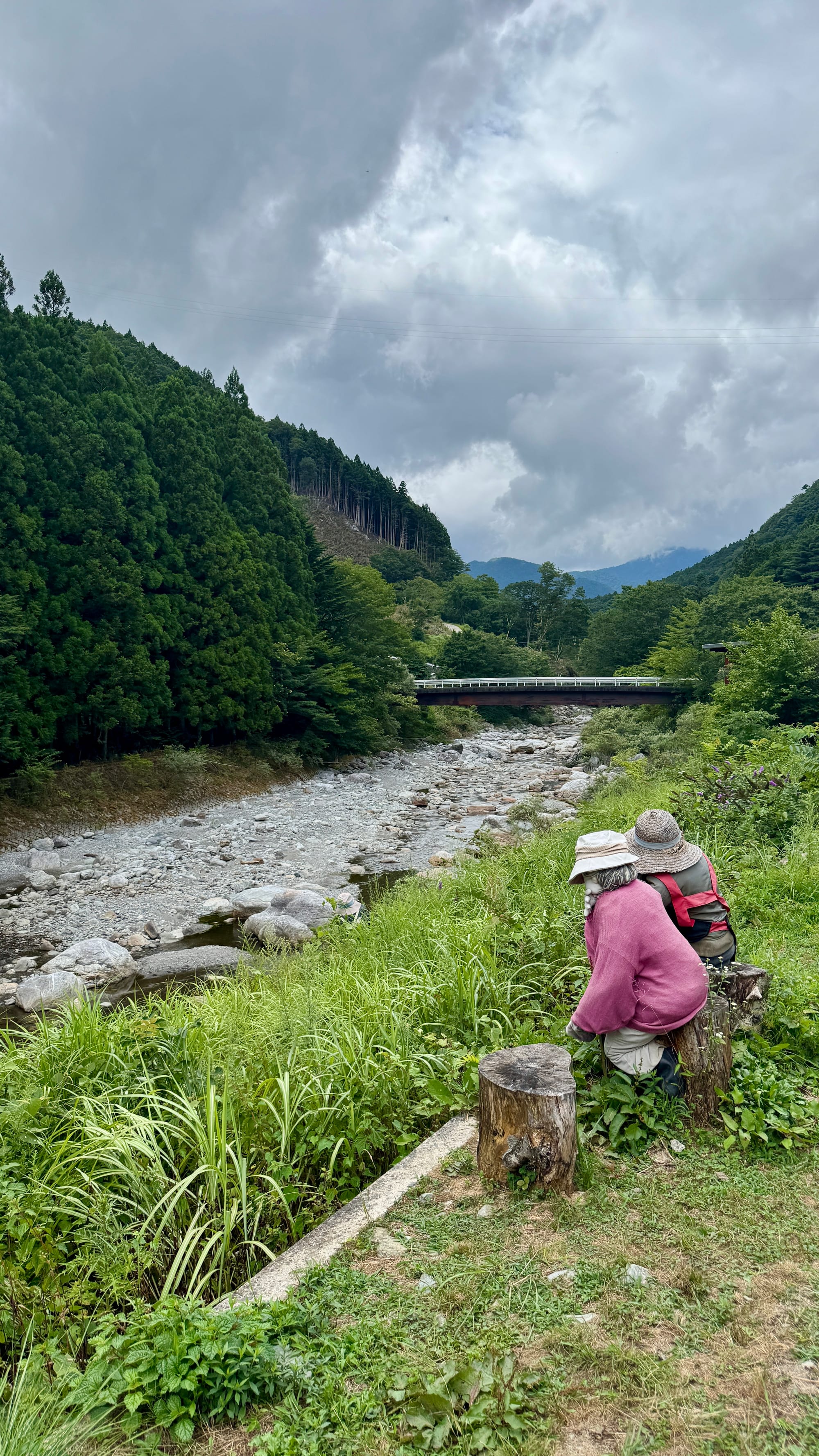
Weird. Wild. Otherworldly.
It would be the perfect place to make a horror movie—or just walk around for twenty minutes and feel like you are already in one.
Can’t deny that the scenery is absolute magic though.
One More Last Side Quest: Awa Odori
You know when you go to a great concert or an amazing event and it takes some time to come back down to earth from whatever cloud you were on?
Well, with Awa Odori, it takes days.
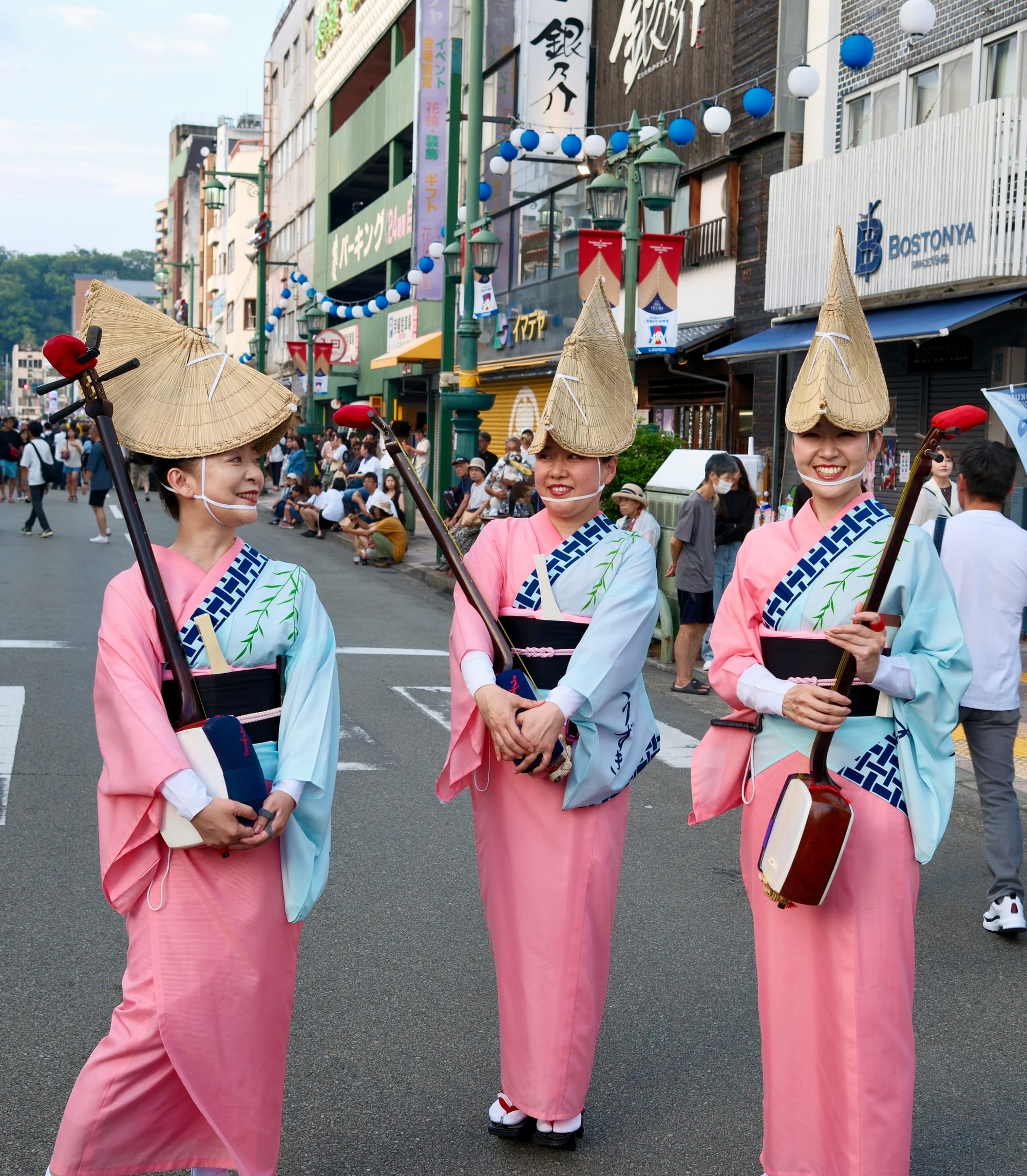
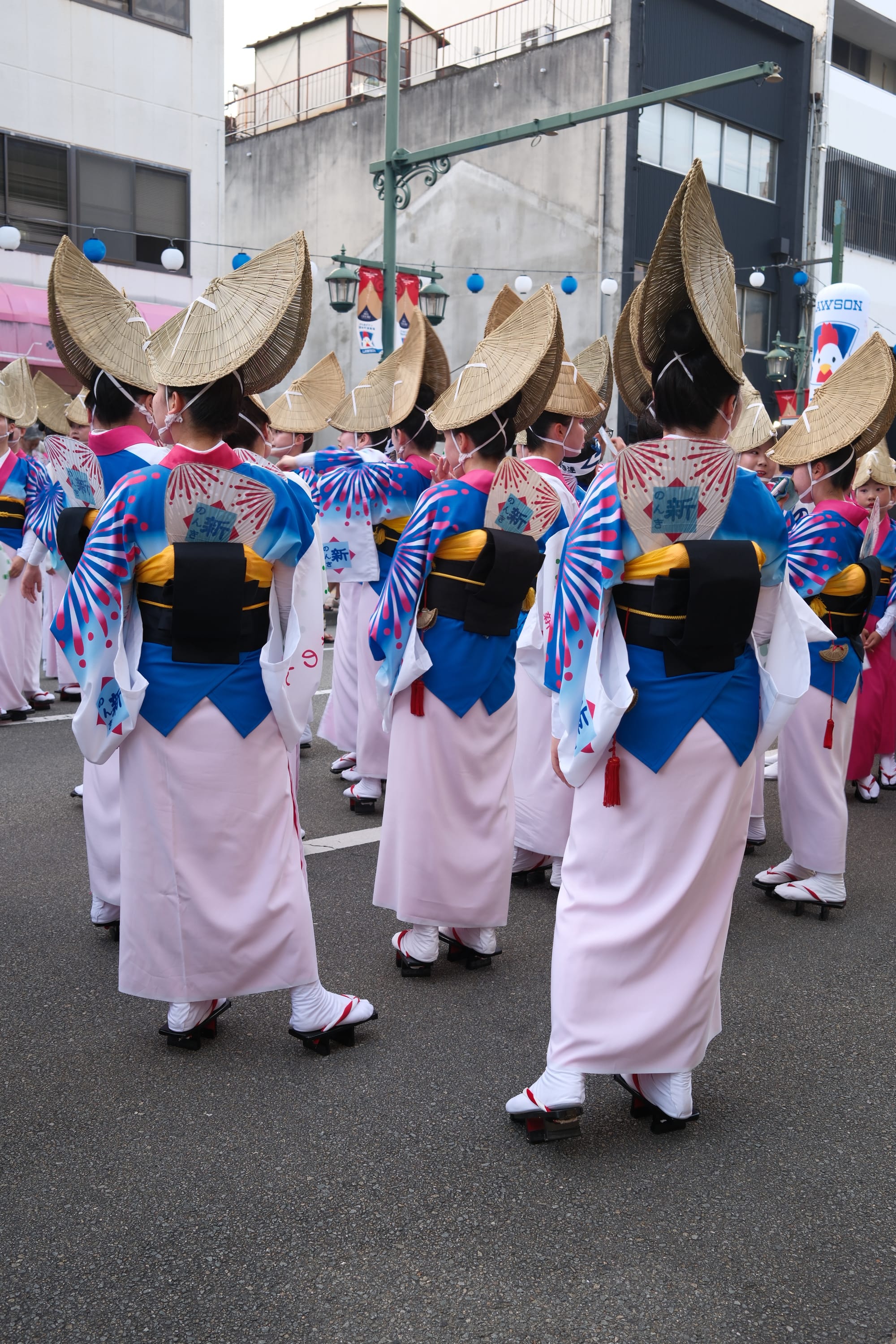
We have been lucky to be travelling during summer matsuri season. But this is one for the books.
We deliberately fast-tracked some temples to get here in time for the festival and wow… was it worth it.
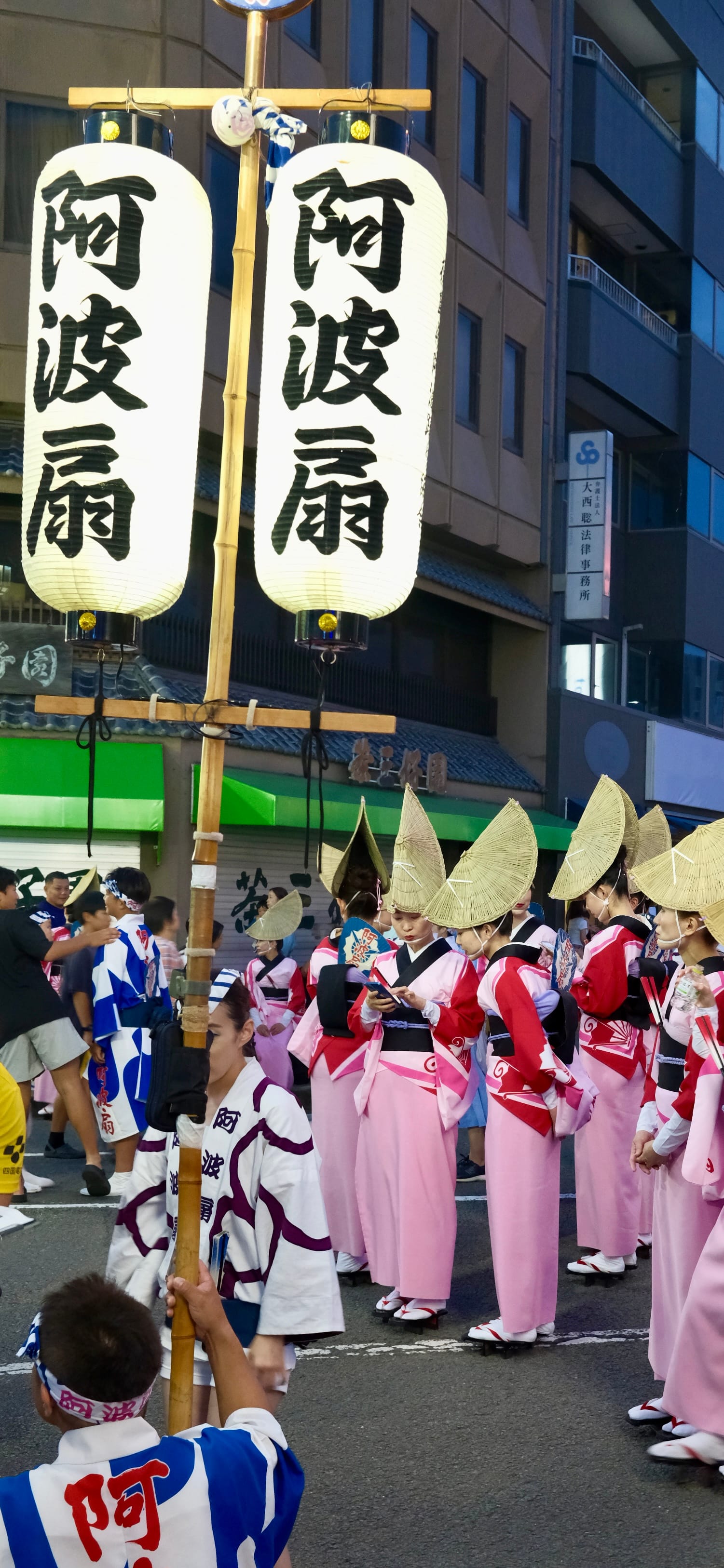
We had to stay in Takamatsu, about an hour away by express train, and could only attend two nights out of the four.
But what a wild two nights they were.
Awa Odori rocks.
It’s the biggest festival I have attended in Japan, and it blows the socks off many of the music festivals I went to when I was younger.
Yes, it really was—and is—that good.
Drums. Dancers. People.
So many people.
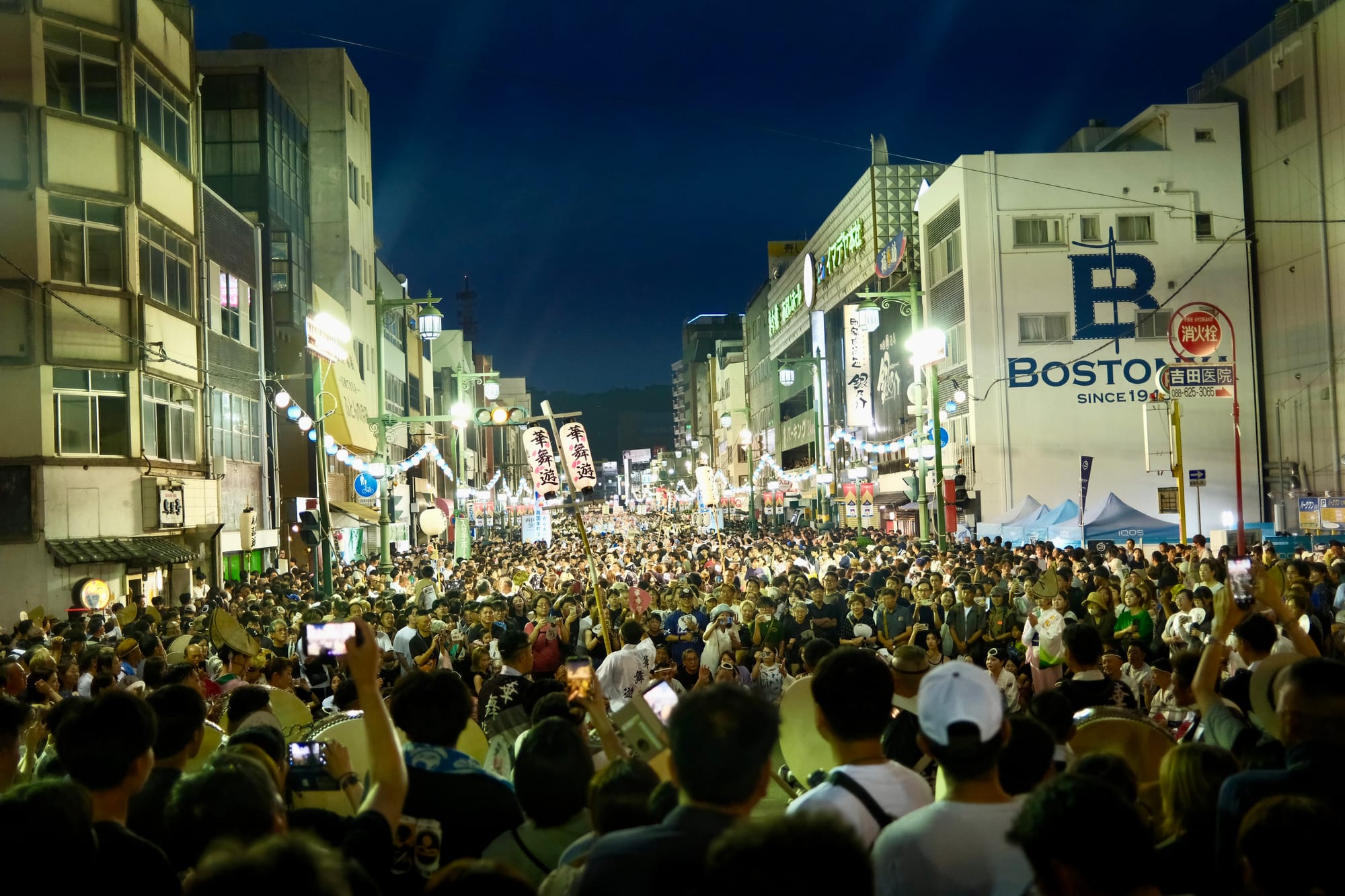
The amount of energy coming from the festival could power a rocket ship. And good energy as well. Hundreds of thousands of people all being respectful and having an amazing time.
No garbage on the street. People apologising if they bump into you. Just general care…
But utter insanity.
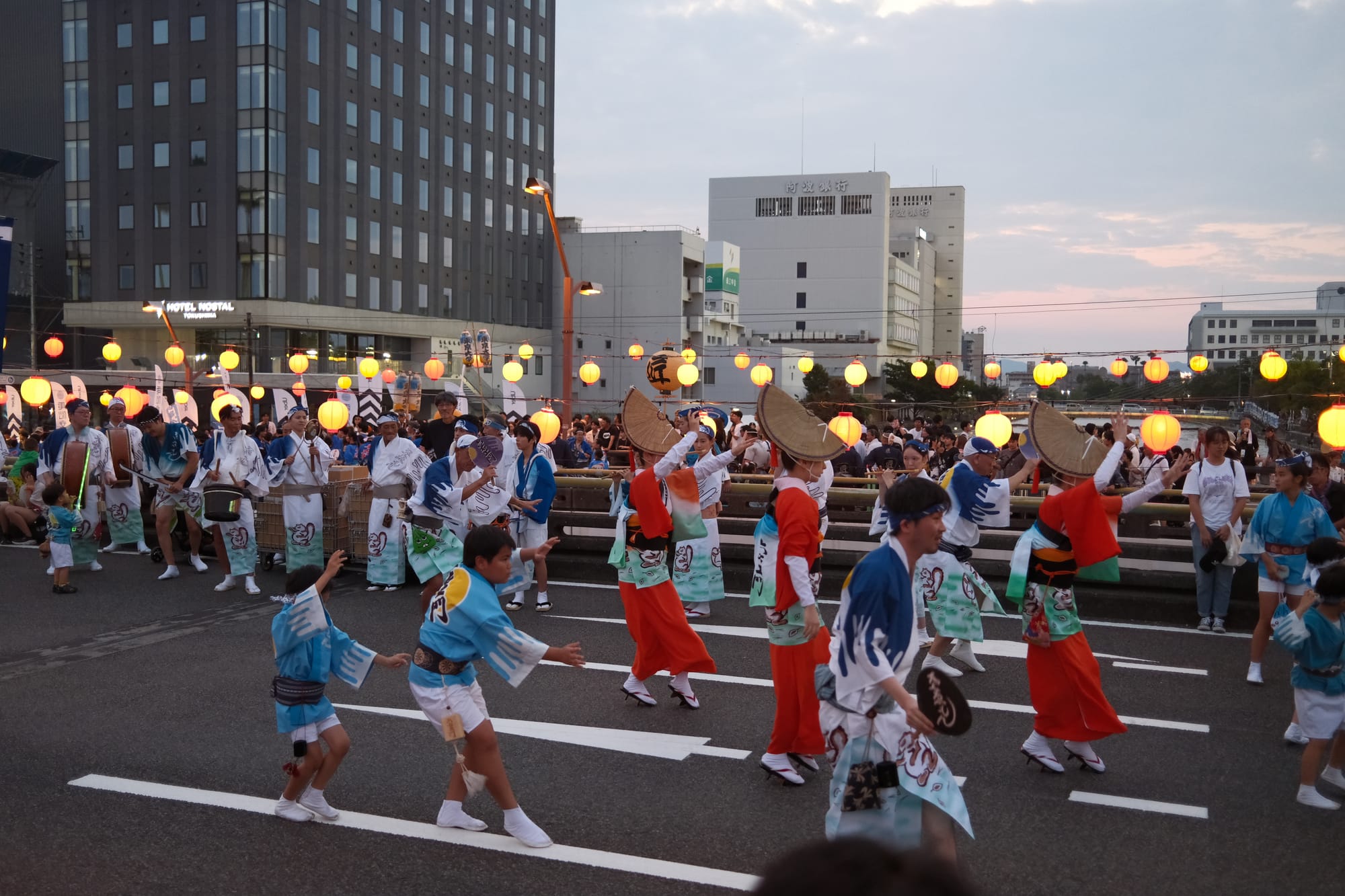
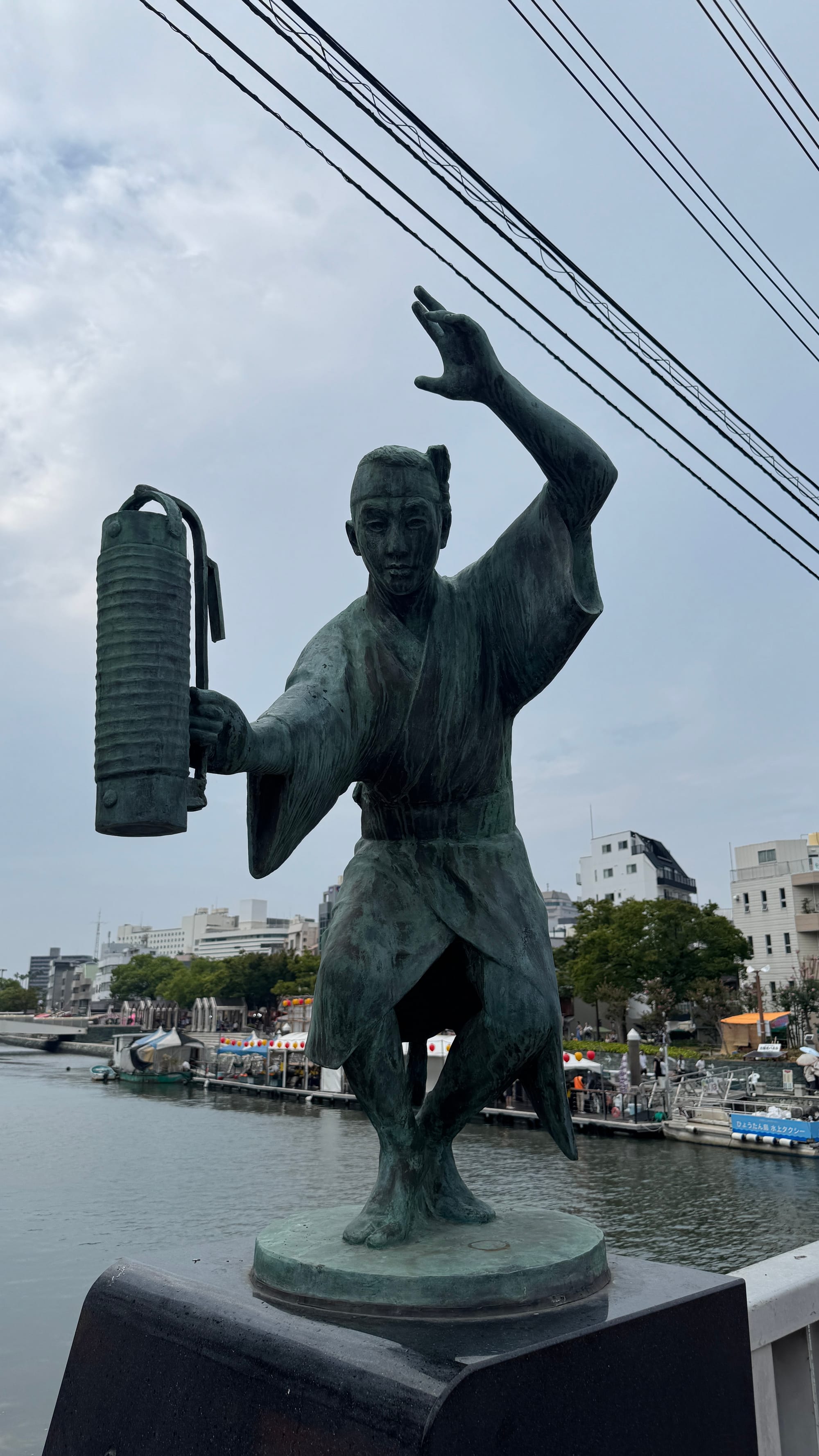
One of the most fun parts is the niwaka-ren, where the barriers between dancers and spectators disappear and anyone can join in.
And of course we joined in.
Everybody did.
At one point, an elderly woman entered the dance circle in front of me.
She just squeezed her way in and started bopping along, walking around the circle.
She was hunched over at a right angle, and if she wasn’t 100 years old she was really close.
She wasn’t having a bar of sitting on the sidelines. Not one bar.
She wanted to dance.
The guy next to me looked at me and tapped another guy in front of her on the shoulder. Then, with what can only be described as some kind of mutual thinking forcefield—complete with fan-powered air conditioning—Grandma slowly made her way around the circle.
Young women were filming and dancing behind her.
Everyone around us watched in amazement.
Gobsmacked.
Gran was going for it.
Matsuri discriminates against no one.
The night continued. More Dancing. More eating. More Drinking.
Every shop in the city had turned into a beer and food stall.
Another family came and said hello - the young boy announced to me in English that his father had drunk a lot. His mother laughed. The festival went on.
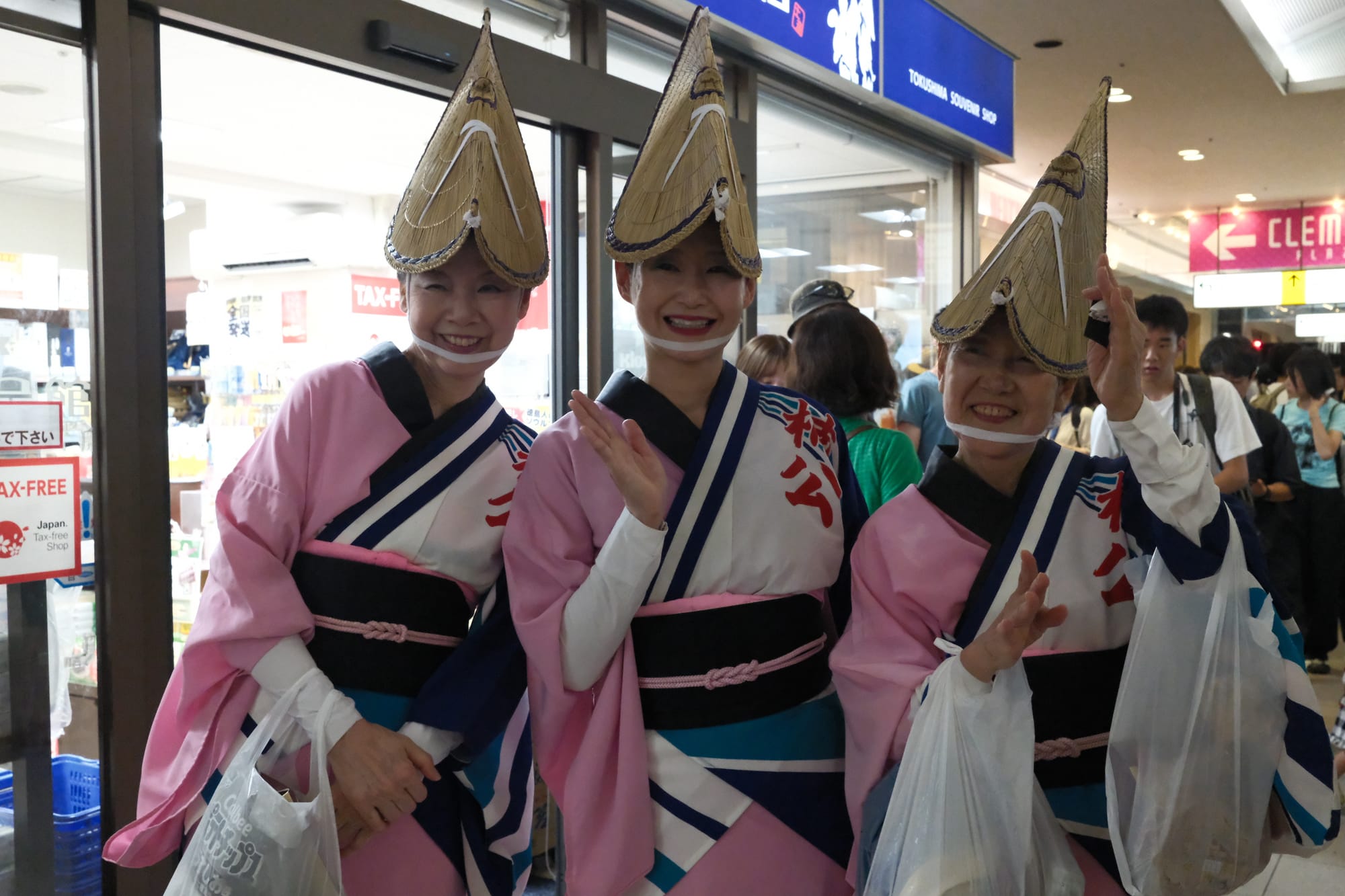
A woman in a wheelchair rolled past and gave me a high five. (I think it’s the hat)
On a side street between performance parades, another child, maybe around two years old, escaped from his parents and ran back towards the dancing.
They were trying to go home, but he wasn’t having a bar of that either.
“I am going this way!” he kept yelling while his dad chased him and his mother ran behind with the stroller.
A boy who was with his parents and maybe five years old asked me in Japanese if I was from Vietnam.
I chuckled and said no. Obviously the Henro hats were confusing him.
His parents laughed too.
But here’s the real kicker.
His parents were actually from Vietnam and had been living here for many years.
Yes, that really did happen.
We met a Bangladeshi man who lives in Tokushima, three travellers from Spain and people from all over Japan.
There must be a sizeable Vietnamese community in Tokushima because we saw festival fans—the handheld kind, not people—with the Japanese flag on one side and the Vietnamese flag on the other.
Everyone was dancing at this matsuri.
Throughout the Henro, I experienced an extraordinary amount of kindness and wholesomeness. But at Awa Odori, I felt it in a different way.
There is a lot happening around the world—and in Japan—concerning racism, nationality and identity. For those few nights, Awa Odori seemed to blow all of that apart.
If you are going to live in a country, become part of it.
Join in.
You can be proud of where you came from and proud of the place where you now live.
Awa Odori may be the best festival I have ever attended in my life. And I am going back next year.
Buy yourself some Udon
A week or two earlier, at Kannonji, I was lighting a candle when I heard someone call out:
“Ohenro-san!”
I turned and saw an elderly woman being supported by her middle-aged daughter. She appeared to be recovering from a stroke or something.
She held out ¥1,000 and told me to buy myself some udon.
At first, I shook my head and refused. I pleaded no. I told her it really wasn’t necessary.
But she insisted, and I remembered that as a henro, you are not supposed to refuse osettai.
You MUST accept it.
I didn’t really know what to say.
I took the money with a million thank-yous and gave her an osamefuda with my name on it.
It made her happy that I had accepted her gift, but it left me with tears welling in my eyes and a lump in my throat.
It was one of the simplest and most moving acts of osettai I received during the pilgrimage.
Actually, all osettai hits hard.
Whether it is ¥1,000 for udon, a cold bottle of water, a bag of tomatoes, a frozen potato or even a ganbatte—it hits hard every time.
Temple 88
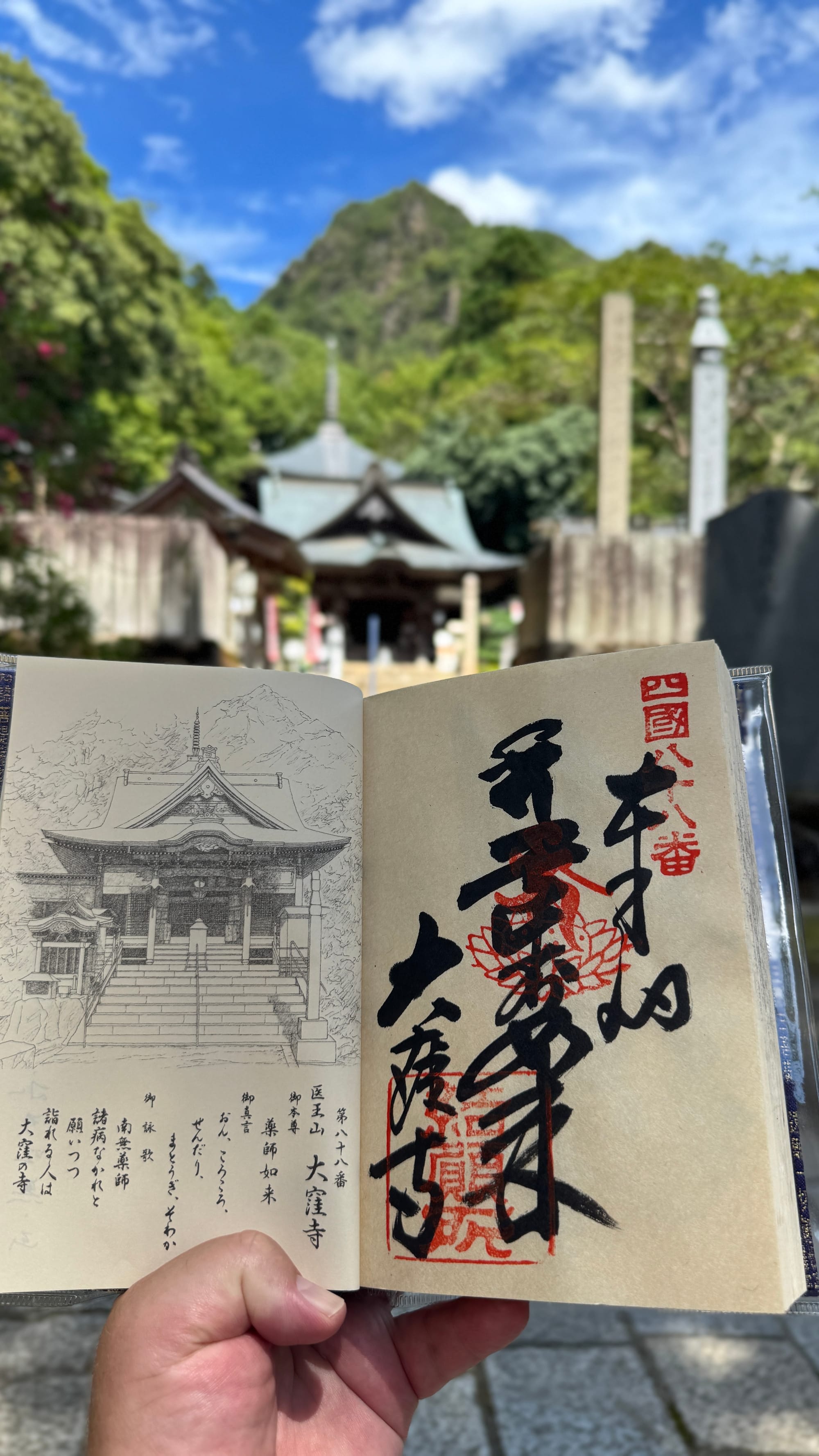
I have to admit that when the monk at the final temple stamped my book and completed the page, I had tears in my eyes.
I had to look up and to the left, stare at the ceiling and blink them away.
This was it.
This was the end.
What next?
At Temple 88, Ōkuboji, a flame taken from the ruins of Hiroshima has been kept burning since it was enshrined there in 1988.
It is a bleak reminder of war and death—and of the importance of peace.
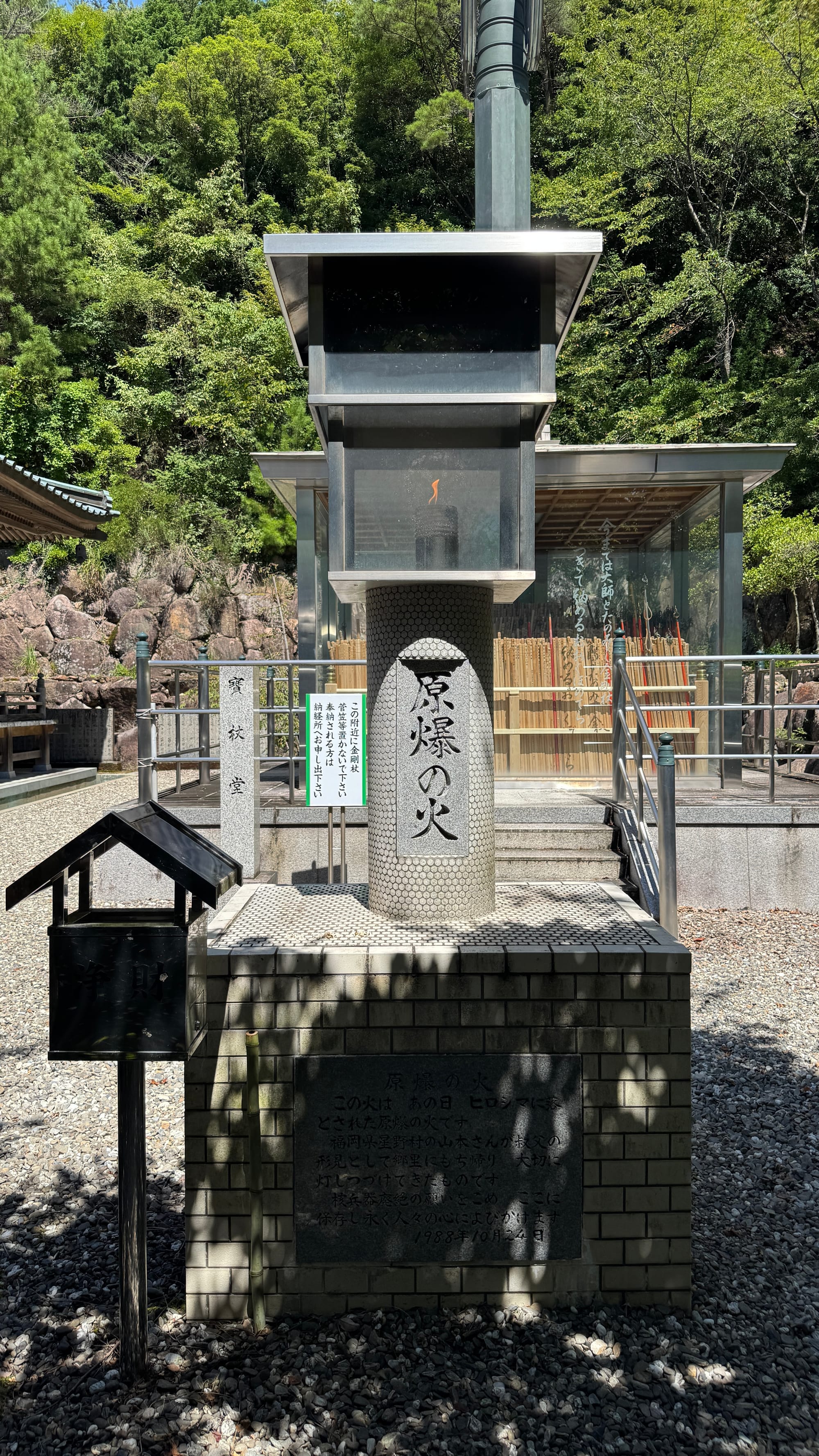
When we arrived, a gas delivery truck was unloading cylinders beside it.
At first, I thought the gas might be for a crematorium where they burned all the old Henro staffs.
It wasn’t.
Although the old staffs do eventually get burned in a special outdoor Buddhist fire ceremony—so I wasn’t completely off track.
At every temple, pilgrims place an osamefuda into two boxes—one at the Hondō, or main hall, and another at the Daishidō.
You write your name, address and date, and often include a wish or prayer.
At Temple 88, I couldn’t help writing one thing:
“World peace.”
Because fuck war.
Everyone undertakes the pilgrimage for different reasons.
Some walk for religious reasons. For grief. For adventure. To heal. Or because they have reached a point in life when they need to do something enormous and difficult.
Others are competitive with it— usually they are super fit as well.
“How many days did it take you?”
I’m still not entirely sure why I did it—apart from the fact that Shikoku has only 27 bears.
But the Henro is hard, man.
Physically and mentally.
It throws obstacles at you. (Mario Kart again)
Some days are almost impossibly beautiful.
Some days you are exhausted and just want to go home. There were many of those days.
But on others, you just feel alive.
Not living.
Alive.
There is always another place ahead.
The next temple. The next town. The next place to sleep.
Each one feels like an achievement, but as soon as you arrive, there is another one waiting.
It is good to have goals.
Daily goals become monthly goals that become yearly goals.
But it is even better to remember everything that happens between those achievements.
I will remember the guesthouses over the hotels.
The strangers who gave us food, money and drinks—cold bottles of water at exactly the moment when we needed them most.
The rain, mountains, rivers, tunnels, vending machines—they’re a blur—wrong turns, sore feet, blisters and cold beers.
At Temple 80, I came across a slogan:
Life is Henro, and Henro is life.
Perhaps that is the lesson.
The destination matters, but the route is not the same thing as the journey.
This morning, I returned to Temple 1 and watched Cam set off again. He is heading back towards Kochi to complete the thirty temples he missed before joining me.
For me, the circle has closed.
For Cam, another one has just begun.
And although this particular journey has ended, the newsletter hasn’t.
Cam told me that a lot of stuff in Japan - the things I consider normal - are interesting to other people. So I’m going to keep rolling with that.
There are still stories from the road to tell—and plenty more happening beyond it.
When Cam finishes, we will head down to Kōyasan in Wakayama together.
Pilgrims traditionally visit Okunoin after completing the 88 temples to give thanks and report their completion to Kūkai—Kōbō Daishi—at his mausoleum.
According to Shingon Buddhist tradition, he did not die.
He remains there in eternal meditation.
I am pretty sure that when we get there, Cam and I will be meditating over a few beers.
The walking is finished.
The journey isn’t.
Dispatch #6: Full Circle
Published: Day 72 of the 70 day Pilgrimage — August 19
Temples visited: 88 (+1) / 88
Distance walked: 1222km with side quests/ 1,300km (I don’t believe this number anymore)
Distance bused and trained: more than 100km
Current location: Tokushima City, Tokushima Prefecture.
Kilograms of enlightenment achieved: 5 plus (i hope)
Onigiri eaten: too many - lost count
Beers drunk: Today? Only 1 so far. That is about to change.
Granola bars reluctantly consumed: too many
Blisters acquired: only 5!
Shoes - on my 3rd pair.

Check out all the dispatches from the Henro Journey
Dispatch #1 - Coca-Cola, Lemon Soda and the 27 Bears.
Dispatch #2 -Pocari Sweat, Purple Worms and Pirates
Dispatch #3 - Be Water
Dispatch #4 - The Fellowship of the Henro
Dispatch #5 Side Quests
Postcards #1 Walking Underneath the Radar
Member discussion