Shikoku Dispatch #2. Pocari Sweat, Purple Worms and Pirates
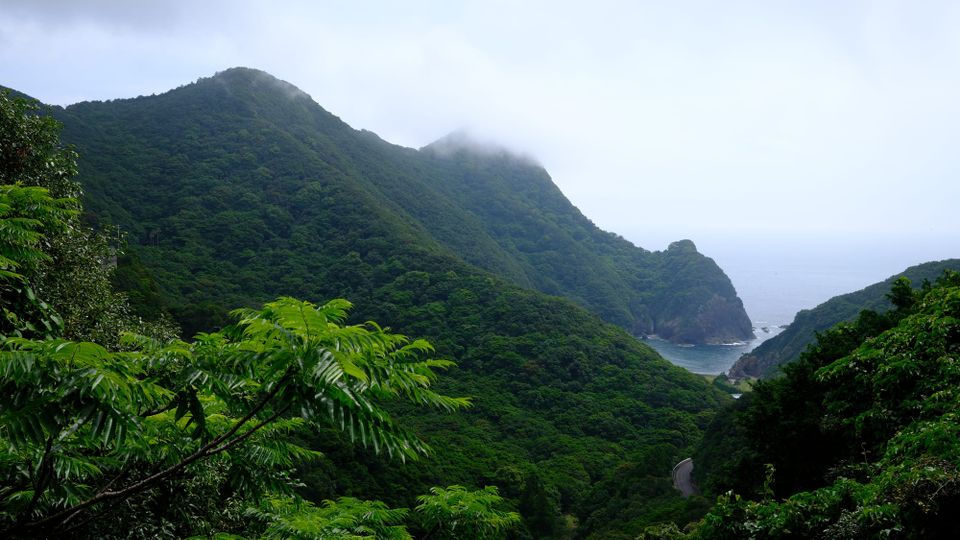
From Mountains to the Ocean
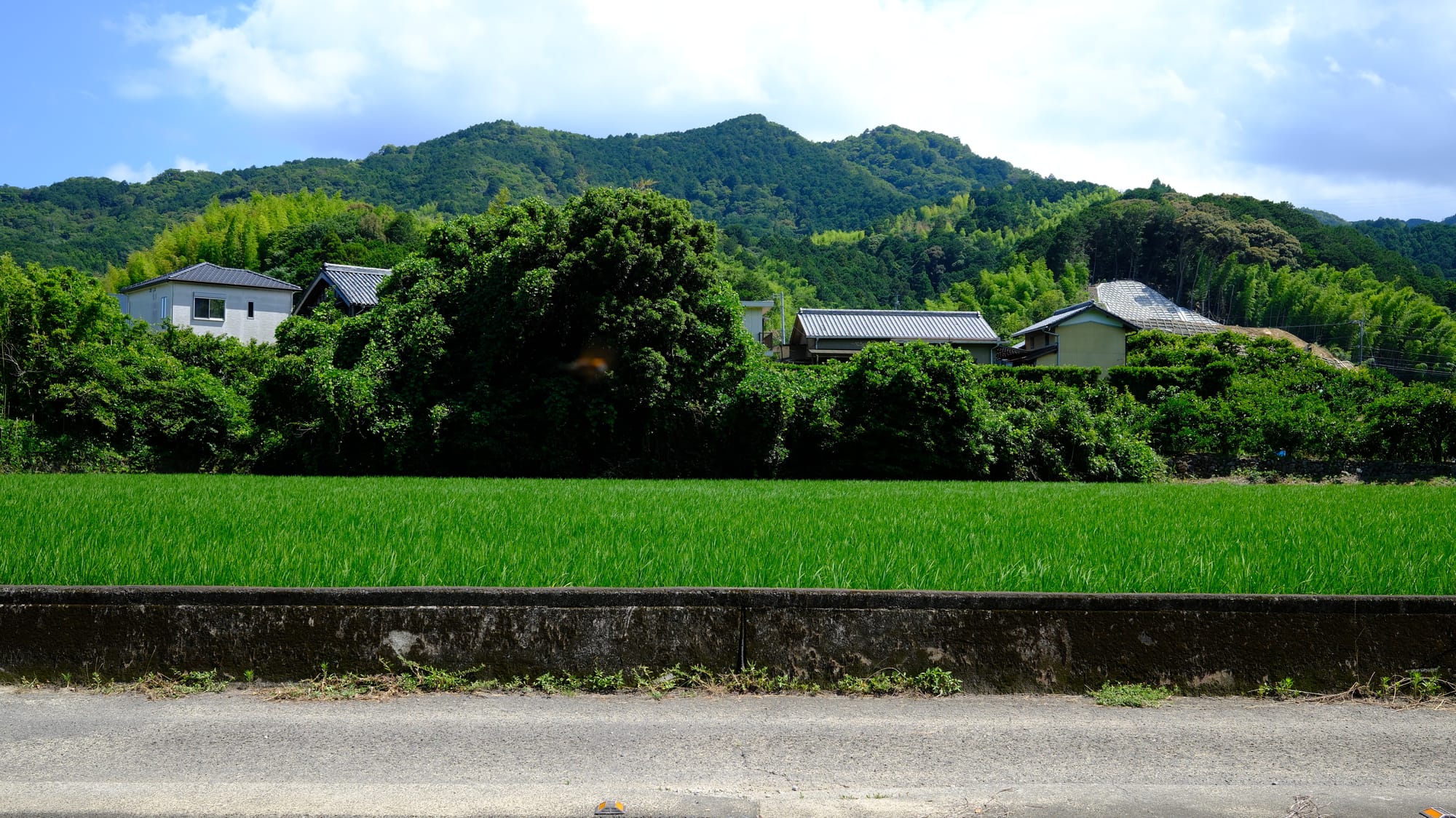
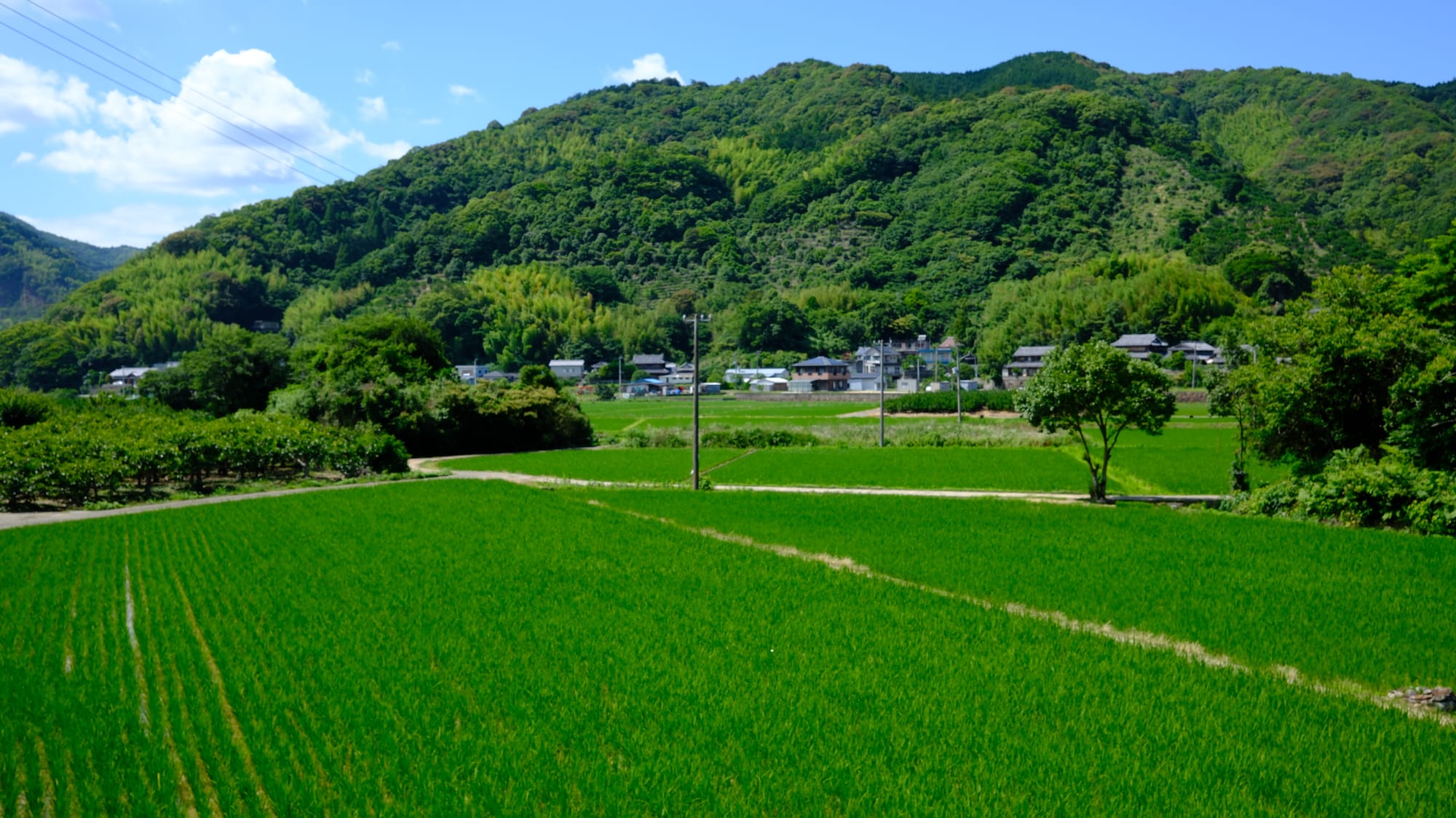
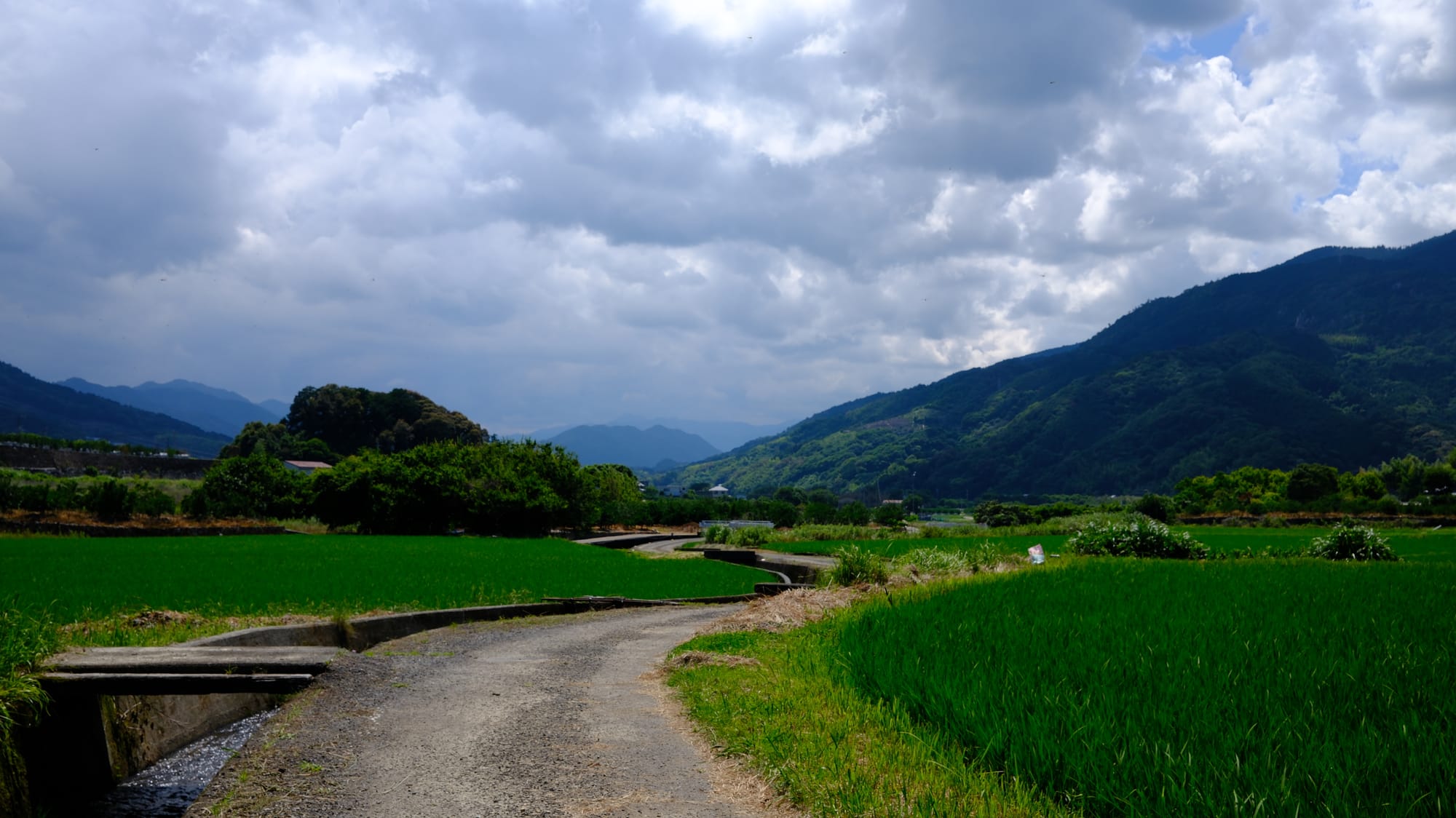
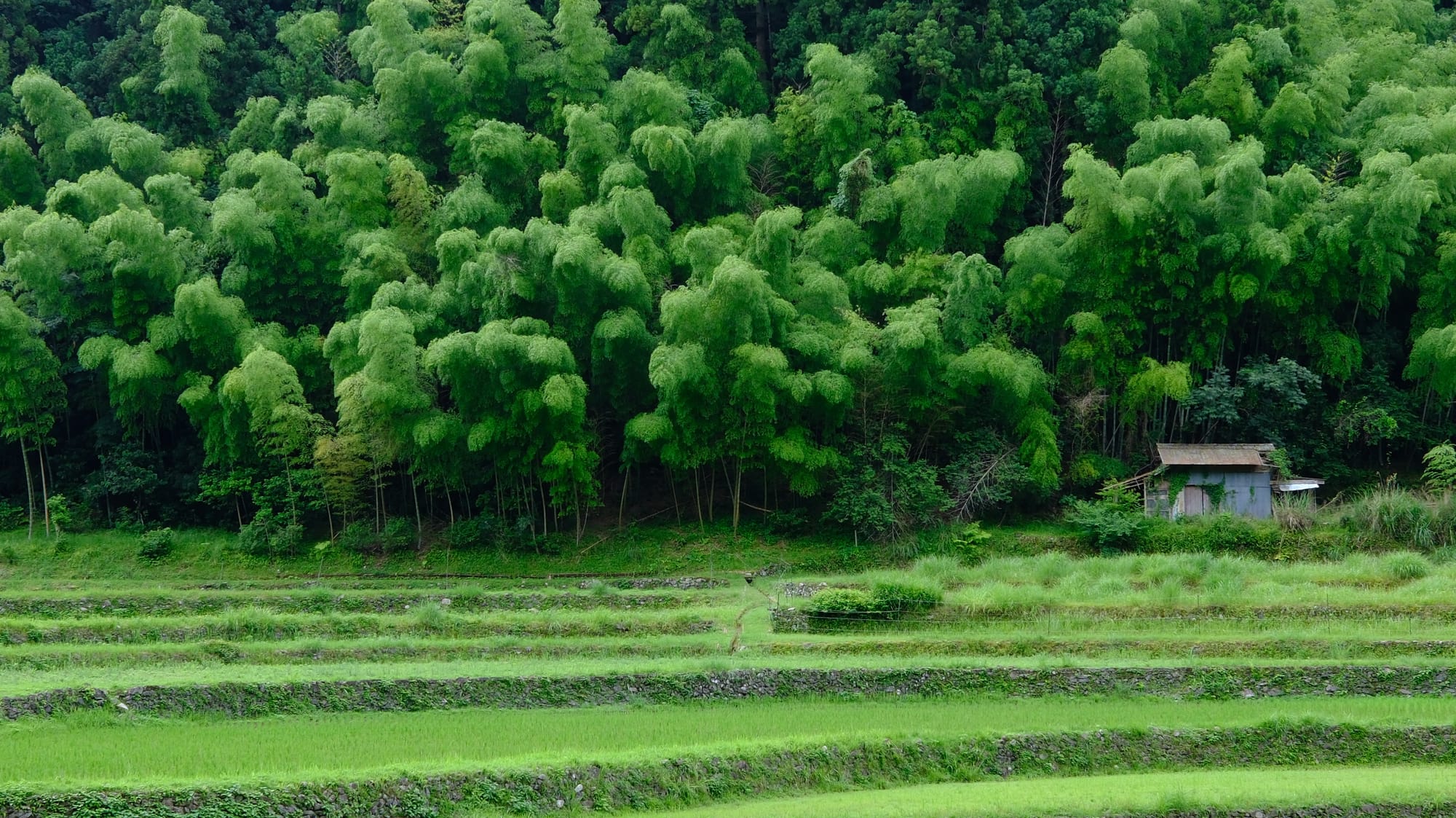
The trail wound through small villages and farm fields. At one point I passed a rural elementary school and glanced through the gymnasium windows. Five children were riding unicycles across the wooden floor.
As far as I could tell, nobody found this unusual.
It was also getting hot. By this stage, Pocari Sweat—that fabulous Japanese electrolyte drink—had become a regular part of my diet.
Chizuko
Chizuko was eighty years old and liked talking.
Even when I called to make a reservation at her guesthouse, she was up for a chat.
Where are you now?
Where are you from?
Where do you live?
How long have you lived in Japan?
It took a good three minutes of conversation before we got around to the actual reservation.
When I arrived at the guesthouse, the front door was unlocked, but nobody appeared to be home. I rang the bell several times.
Nothing.
Maybe she was inside sleeping. I know my mother in law likes an afternoon nap.
I opened the door and called out a cautious “Konnichiwa!”
Ping pong ping pong. Still nothing.
Hmmm. No shoes in the genkan.
No problem. There was a shady bench in the garden and a pleasant breeze, so I sat down to wait.
About thirty minutes later, a woman in gardening clothes came walking down the street.
“David!” she called, waving.
“Ahh… nope. Jason.”
“Oh yes, that’s what I meant.”
She laughed and showed me inside.
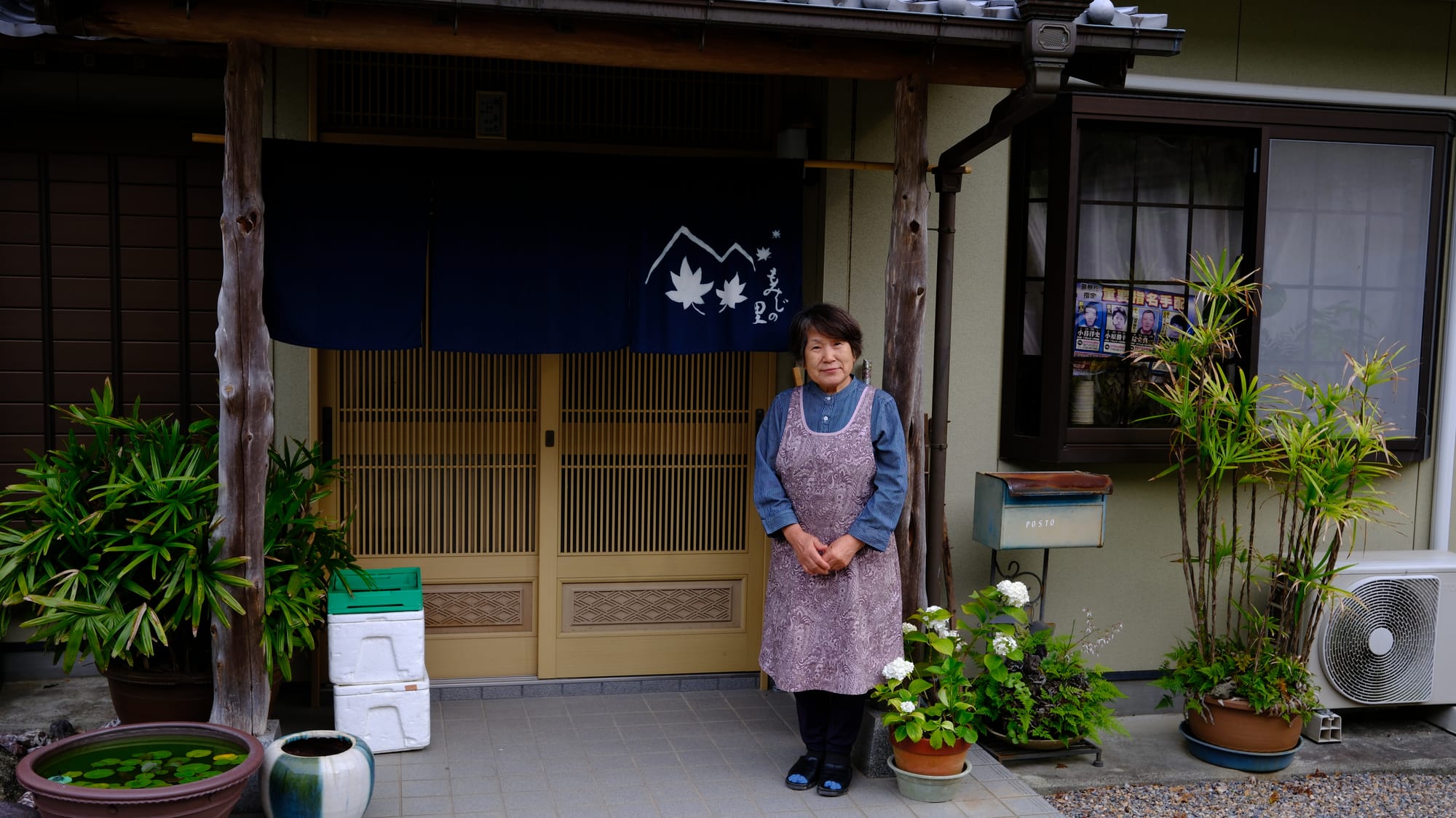
The house was a classic large inaka home with cool wooden floors, tatami rooms and sliding doors. I handed her a box of manju I’d bought near Temple 19.
“Let’s eat them together,” she said.
The kettle was on before I could even take my backpack off.
Her husband had passed away several years earlier. Now she looked after a small citrus orchard in winter, a vegetable garden in summer and somehow still found the energy to run a guesthouse. She has a son in Tokushima City and a daughter in Germany who is coming to visit in August with Chizuko’s grandson. Did I mention she loved talking?
“Dinner is at 6:30 and breakfast is at 6.”
“Wow. Six o’clock is early.”
She looked at me slightly puzzled.
“Everyone eats breakfast at six.”
I agreed with her.
Everyone eats breakfast at six.
At eighty years old, she seemed to have considerably more energy than I did.
Through the Mountains
The route onwards crossed several mountains on the way to Temples 20 and 21.
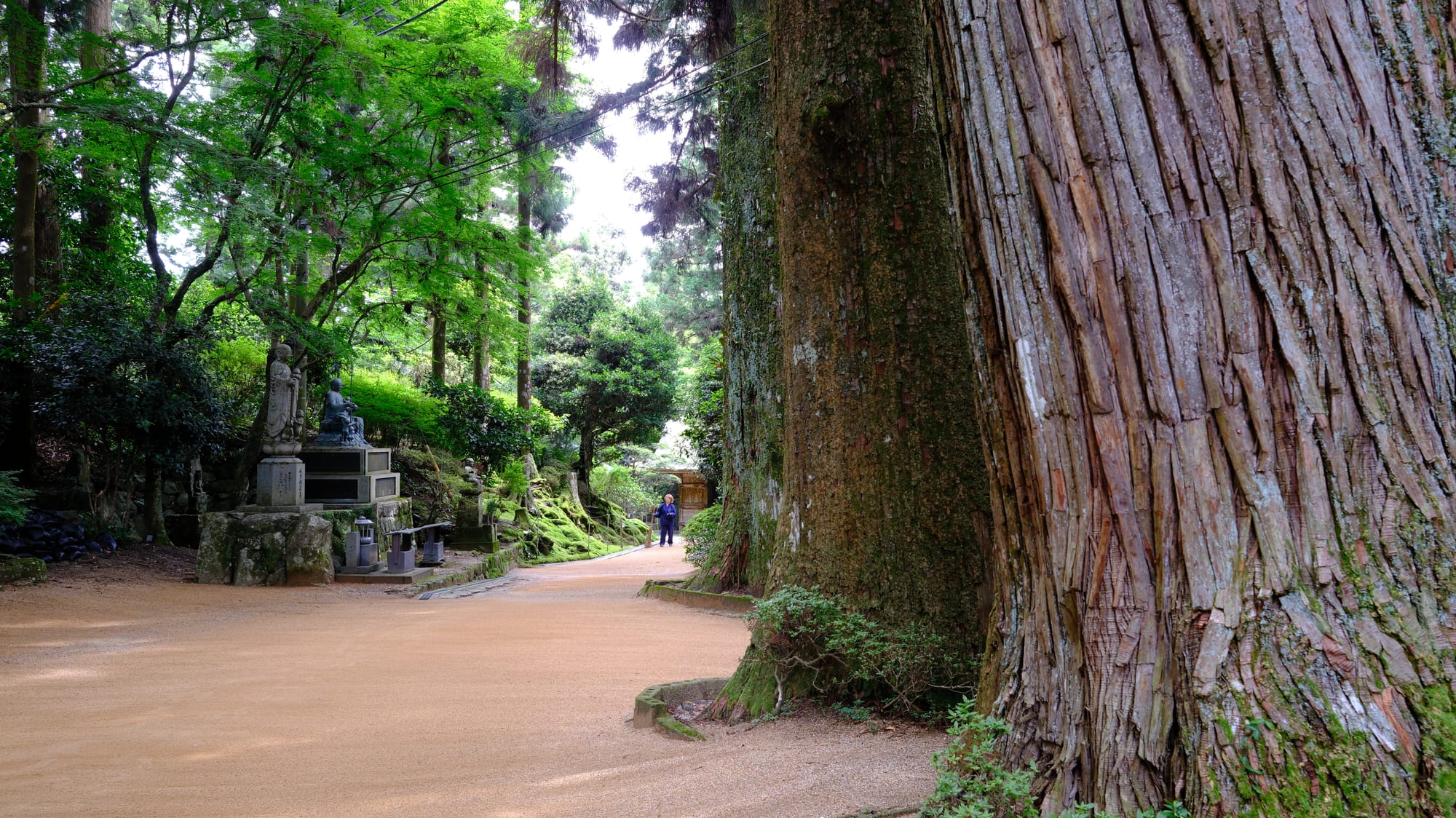
At Temple 20 I spotted a woman sweeping a dirt path beneath towering trees. That was her job - sweeping the dirt, but there was something about it that made me relax. A kind of outdoor Zen cleaning moment.
The trail then led through forests of bamboo. Leaves drifted down constantly, floating through the air like snow flurries. The ground beneath my feet was carpeted in white bamboo leaves.
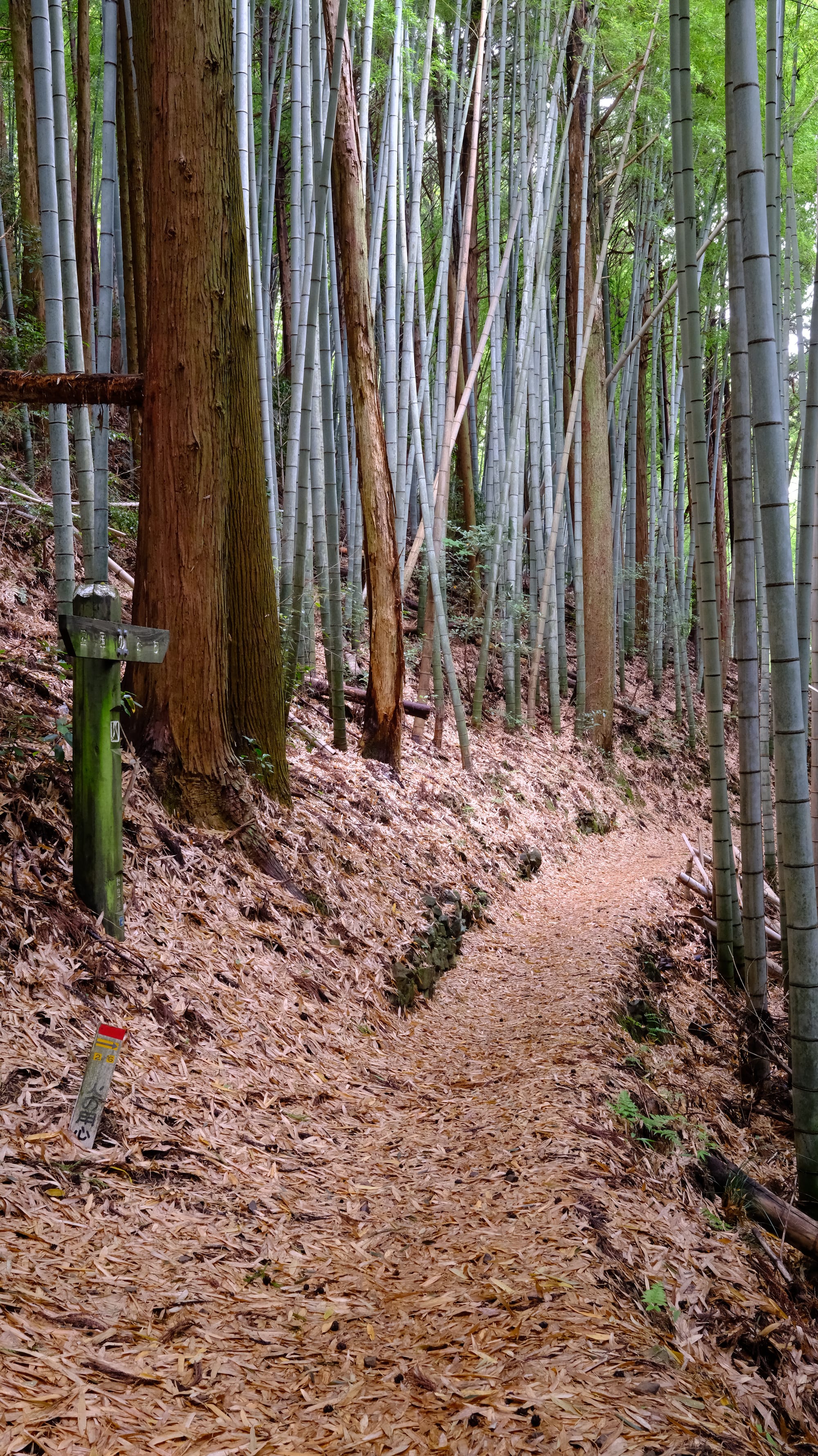
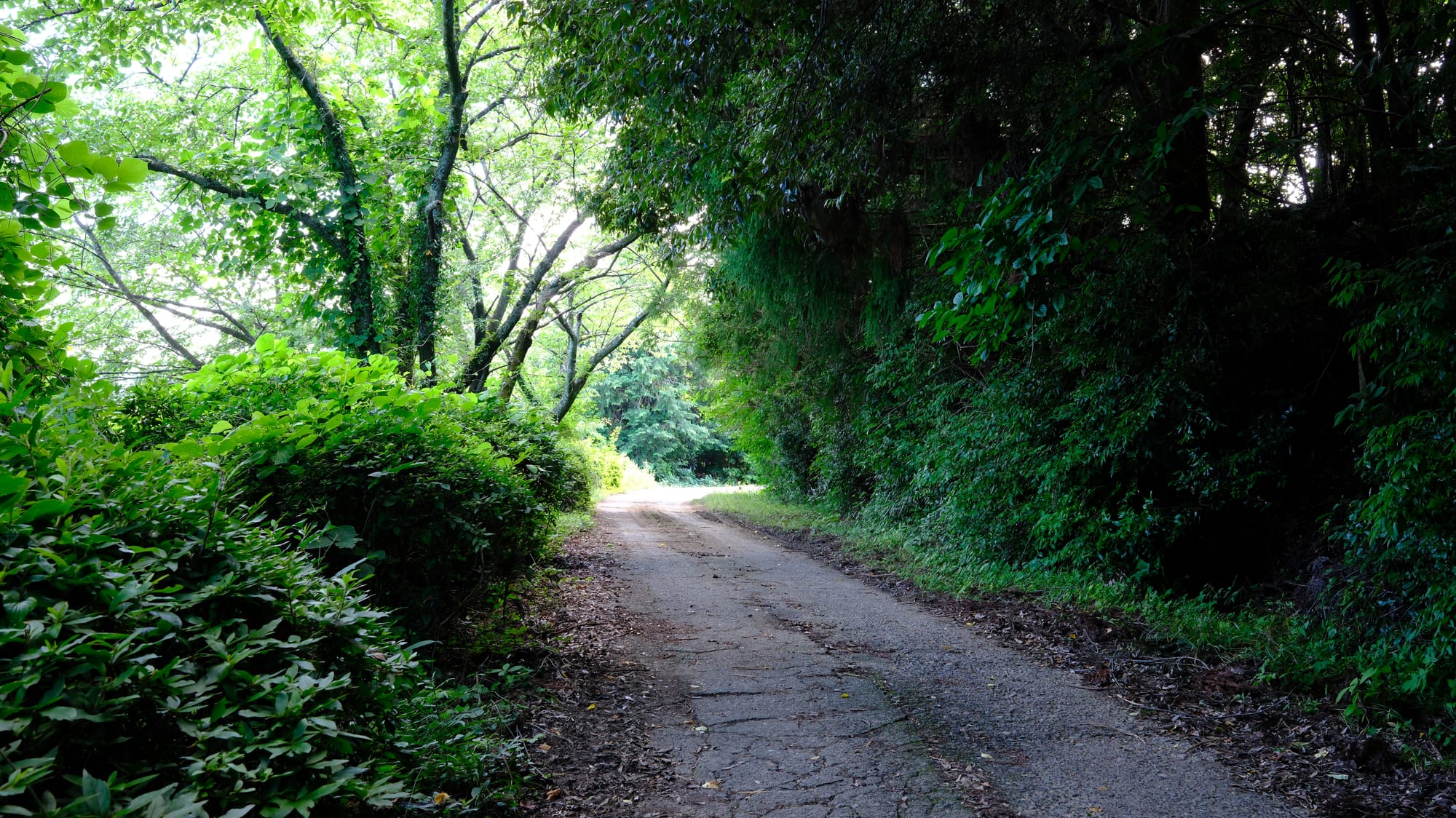
Some of the old mountain roads were wonderfully spooky.
The forest canopy was so thick that sections remained dark even in the middle of the day. Moss in the centre of the road had been dug up by what could only have been wild boar (inoshishi). There were no cars. No people. No sounds beyond the occasional bird and the crunch of my own footsteps.
The sort of place scary movies are made from.
I started tapping my pilgrim’s staff on the road and talking out loud to myself and to the world.
Partly for company.
Partly for the boars.
Actually, mainly for the boars.
I have discovered that I possess a strong tendency to poke things when carrying a stick.
And I am carrying a very large stick.
A bug.
A worm.
A crab.
All seem worthy of a gentle poke.
I like to justify this behaviour by claiming I am helping them off the road.
Deep down, however, I know that is only half the reason.
The other half is that poking things is surprisingly entertaining.
The earthworms here were enormous. A strange indigo-purple colour and nearly thirty centimetres long.
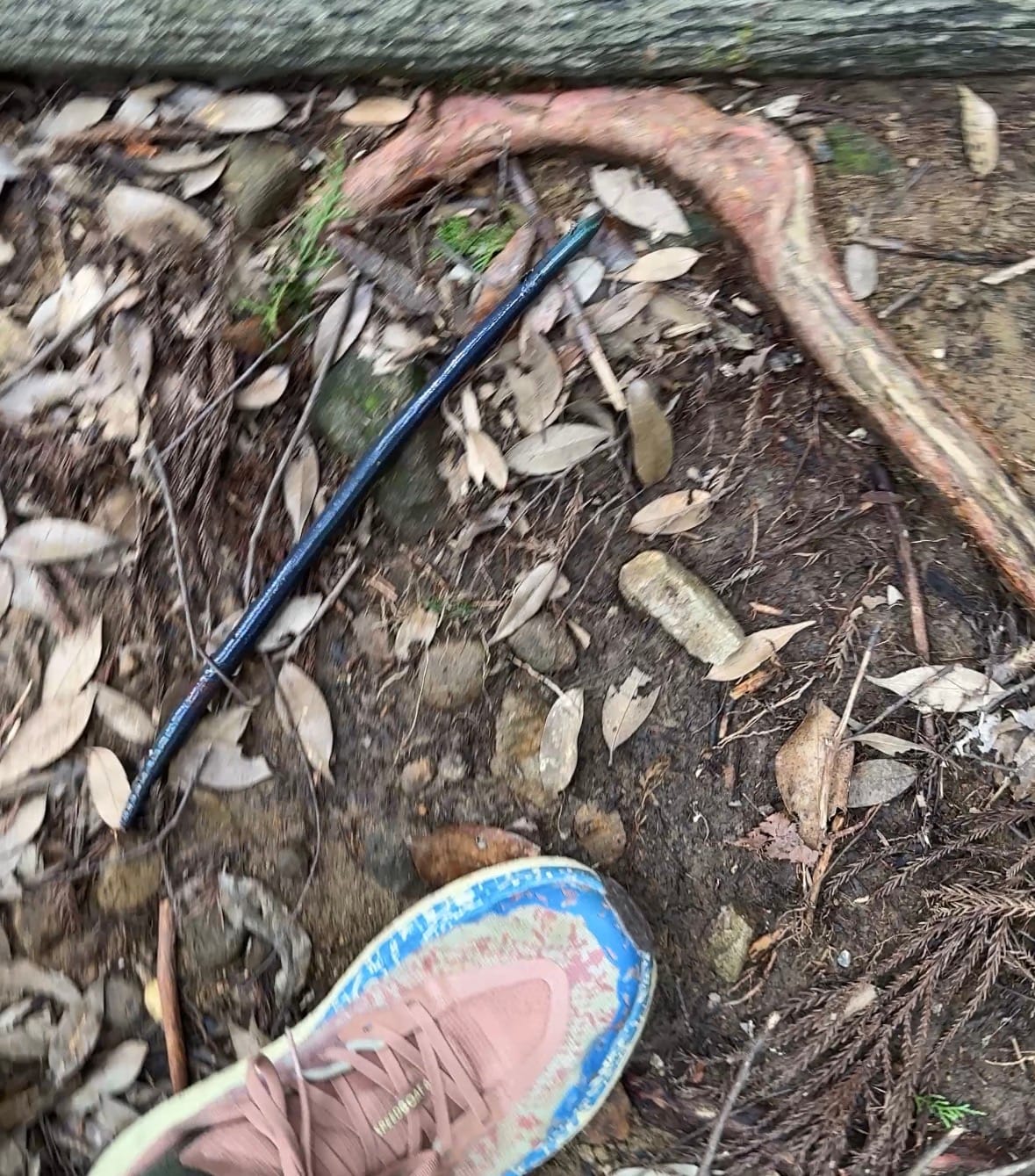
At one point I watched one drag an entire leaf back into a pile of forest litter. It looked less like an earthworm and more like an alien tentacle disappearing beneath the surface.
As I descended towards the coast, the giant worms disappeared.
The crabs took over instead.
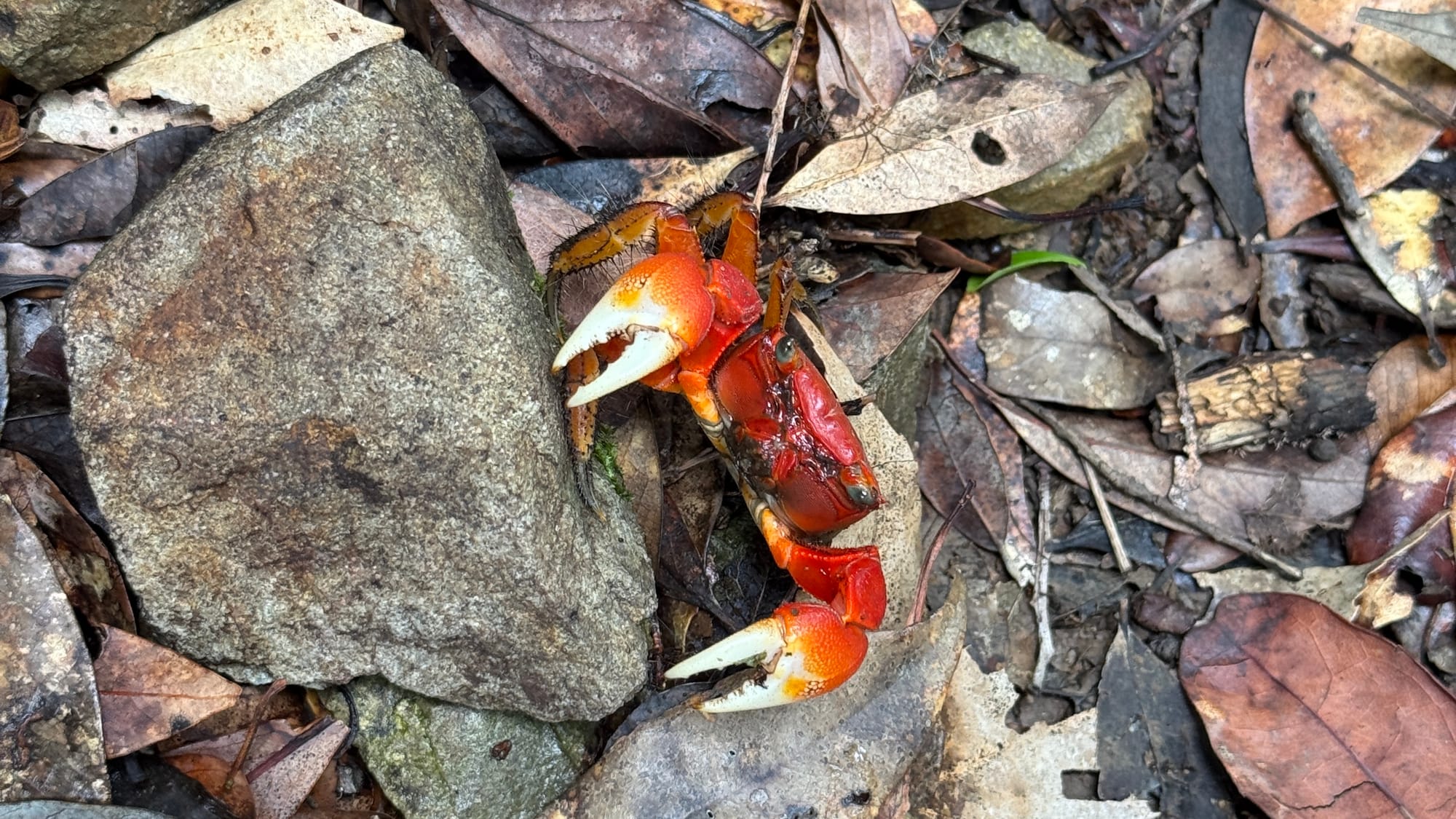
The humidity was extraordinary.
Walking felt less like walking and more like swimming.
Swimming in sweat.
At one point I started thinking about frogs. Frogs like humidity. If a frog had walked past and complained about the moisture levels, I would have considered its argument entirely reasonable.
My little toes had also developed what appeared to be smaller toes attached to the sides of them. Medical science would probably describe them as blisters. In my case, I think “auxiliary toes” is more accurate.
Perhaps there’s a medical paper in this somewhere.
After some amateur surgery involving a penknife and tea tree ointment, they now resemble tiny feet complete with their own shoe soles.
They are so hard I could probably tap dance barefoot.
I am also considering whether they could masquerade as beer bottle openers in a situation of genuine need.
The Osettai Continues
One thing that continues to surprise me about the Henro is the generosity.
A car passed me and then pulled over thirty metres further up the road.
A lady stepped out, opened the back hatch and revealed a cooler box.
This was either going to be very good or very bad.
Fortunately it was very good.
She handed me an ice-cold tomato juice.
I thanked her.
Then she started opening other compartments.
“No, no, really, I’m okay.”
She ignored this completely and handed me a manju.
The exchange was now complete.
Later that evening I stopped at a small okonomiyaki restaurant. The owner and a regular customer asked where I was from and what I was doing.
The usual conversation followed.
Australia.
Osaka.
Walking pilgrimage.
Eighty-eight temples.
“Ohhhh.”
A few minutes later a plate of chilled tofu appeared in front of me.
“Osettai,” the owner said.
Good luck on your pilgrimage.
At this point I am beginning to suspect that if I continue walking around Shikoku long enough, people may eventually start giving me entire meals.
The Ferry to Tebajima
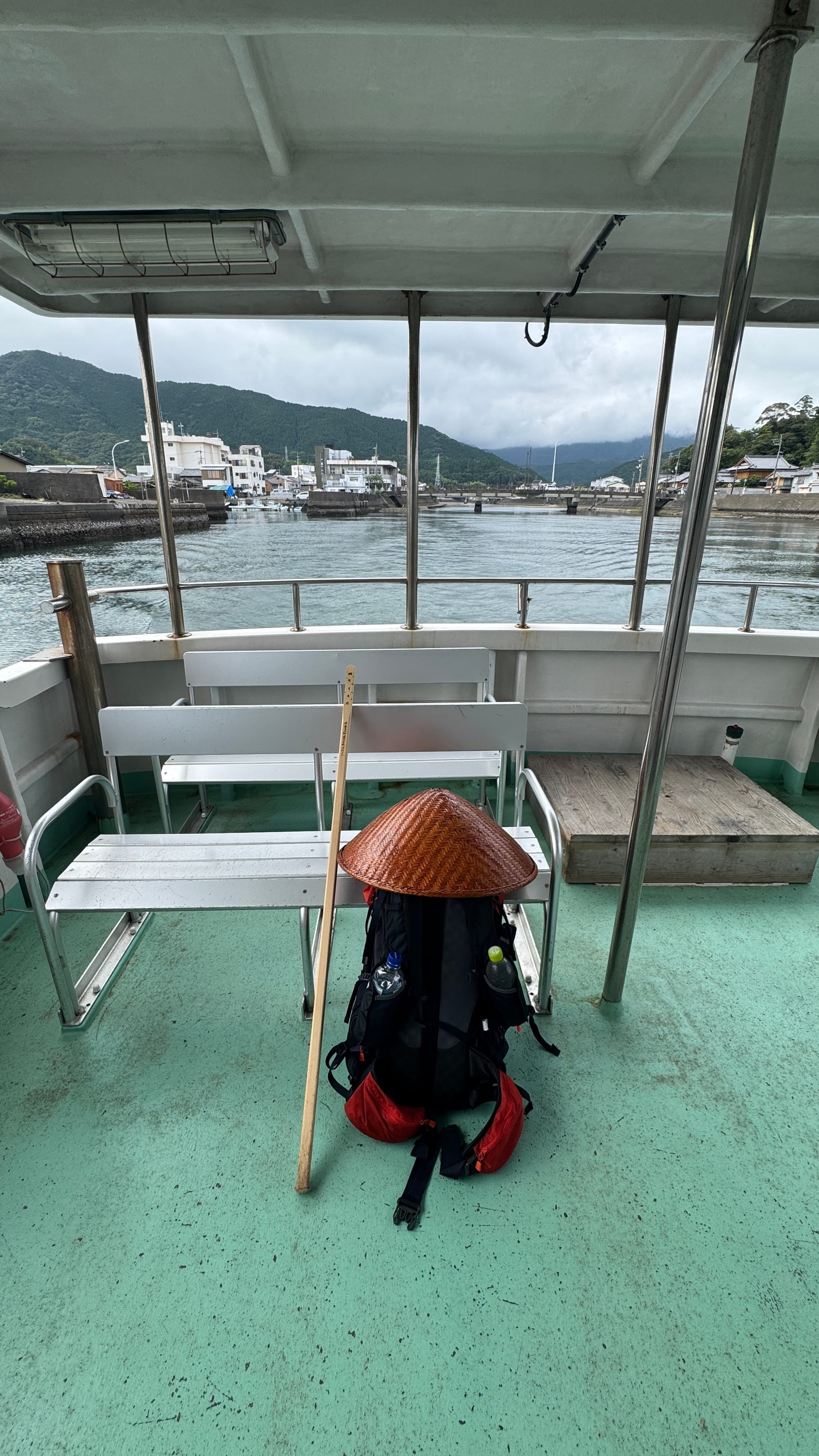
The ferry from Mugi to Tebajima is rather small.
Very small, for a ferry.
Capacity: 26 passengers.
Maximum load: 1,950 kilograms.
I arrived about twenty minutes early and sat out the back chatting with the ferry pilot.
We discussed the humidity before my attention was drawn to a sign explaining that squid under fifteen centimetres must not be kept.
“People come to Tebajima for fishing sometimes,” he explained.
Then he pulled out his phone.
Soon I was looking at photographs of yellowfin tuna, grouper, his boat, and videos of dolphins surfing beside the ferry.
Another passenger boarded.
There were now two of us.
I paid the 210-yen fare.
The captain put away his phone, walked into the wheelhouse and set off for the island.
Life on a Small Island
I’m writing this from a guesthouse on Tebajima, a tiny island with no cars and roughly twenty-five residents.
At its peak during the early Showa era, nearly one thousand people lived here. The houses are still here. The lanes are still here. The harbour is still here.
It’s as if somebody quietly turned the volume down and forgot to turn it back up again.
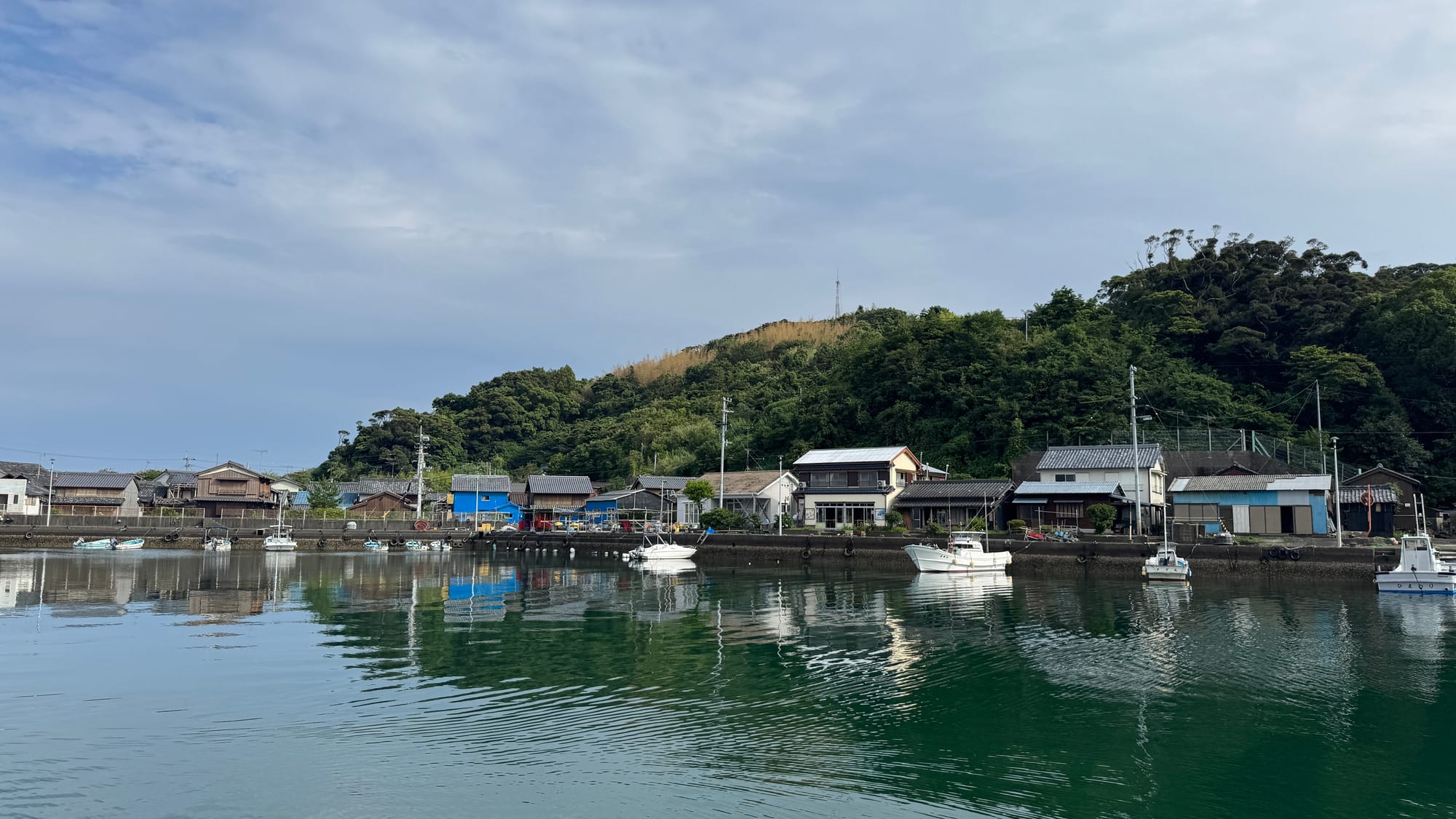
As the ferry approached the harbour, a younger guy with a big smile was there to meet me.
This was Yuya.
Population twenty-five and guest pickup service was still included.
We wandered around the edge of the port towards the guesthouse, passing weathered fishing sheds, empty houses and one resident who ‘seemed pleasantly surprised’ to discover there was somebody new on the island.
Halfway there a foreigner rode past on a bicycle.
“That’s Nick,” Yuya said. “He owns the guesthouse.”
I nodded.
Another foreigner running a guesthouse in Japan, I thought.
A perfectly reasonable assumption.
An assumption that would survive for approximately two hours.
Everything that arrives here comes by boat.
This morning I watched a vessel deliver two forty-four-gallon drums of fuel.
There was some commotion as two guys on shore yelled at two guys on the boat about how to dock properly.
This was both the biggest event on the island before lunch (and also after lunch).
Yuya grows vegetables on the island. He got so good at it that he now operates a larger farm on the mainland as well. He’s trying to move away from the easy crops like tomatoes, cucumbers and eggplants and experiment with other varieties.
According to Nick, Yuya possesses the sort of encyclopedic farming knowledge normally associated with professors, old farmers and people who talk to vegetables.
Yuya also told me he likes to work his greenhouses at night so he can catch bugs. I expect this is also when he talks to his vegetables.
Yuya is also a surfer.
Conveniently, he has his own wave directly behind his house.
“When there’s a swell, the surf is up and the ferry can’t run.”
He grinned.
“That break is all mine.”
Dinner was prepared by Yuya’s mother. The salad ingredients were grown by Yuya himself.
It’s good eating vegetables grown by people you know.
Until that evening I’d never had somebody look at me and ask for feedback on a piece of lettuce. Let us say that it was the most excellent lettuce.
Most people on the island own a boat.
Most people also own a car.
The cars just happen to live in a parking lot on the mainland, about fifteen minutes away by ferry.
Pirates of Tebajima
The guesthouse shelves were lined with books.
Many books.
Many English books.
Academic books, some might say that they were not exactly holiday reading.
Books on Tasmania.
Van Diemen’s Land.
Aboriginal history.
Maritime archaeology.
Pirates.
Books about convict transportation.
Books about nineteenth-century shipping routes.
Books about things I did not expect to find on an island with twenty-five residents and six fishermen.
Perhaps I had judged the book by its cover after all.
Later that afternoon I met Nick.
“What’s with all the books about Australia?” I asked.
“Ah,” he replied. “I translated some Japanese documents about a ship that was anchored about nine hundred metres from here in 1830.”
That got my attention.
Back in 2017, Nick helped uncover evidence relating to the Brig Cyprus, a vessel seized by escaped convicts in Tasmania in 1829.
After taking control of the ship, the mutineers sailed across the Pacific on what became probably one of the most remarkable voyages in Australian maritime history. Their journey eventually brought them to Japan at a time when the country was still enforcing its policy of isolation and foreign ships were almost never seen.
According to Japanese records, the Brig Cyprus anchored just offshore from Tebajima in 1830.
Less than a kilometre from where I was sitting.
At one point samurai vessels were dispatched to investigate and even fired warning shots at the ship.
Suddenly this tiny island felt a lot bigger.
The story had largely disappeared from English-language history but one small piece of it survived in Japanese documents and samurai sketches.
While researching the local history of the island on which he bought a small house, Nick realised that accounts preserved in Japan appeared to describe the missing convict ship. He spent years translating and piecing together records from both countries, helping connect a remote island in Tokushima with an extraordinary chapter of colonial Australian history.
So there I was.
On an island with about twenty-five residents.
Six fishermen.
No cars.
And a direct connection to a gang of Tasmanian convict pirates who had sailed halfway around the world nearly two hundred years ago.
The café attached to the guesthouse is called Kaizoku Chaya — Pirate Tea House.
Which suddenly seemed a lot less whimsical.
The guesthouse itself has been beautifully restored using timber and materials salvaged from other houses in the village. My room still has old-style Japanese windows with thin glass panes secured by a small brass turn-screw lock.
The next morning I ran into Nick again on his bicycle, heading off to work on another building he had acquired. We chatted briefly about island life, Amazon deliveries, tsunami insurance and what it takes to become part of a small community like this.
Yes, Amazon delivers here.
There are even post office boxes.
Walking around the village feels almost deserted. I’ve only been here twenty-four hours and I’ve already seen the same six people several times.
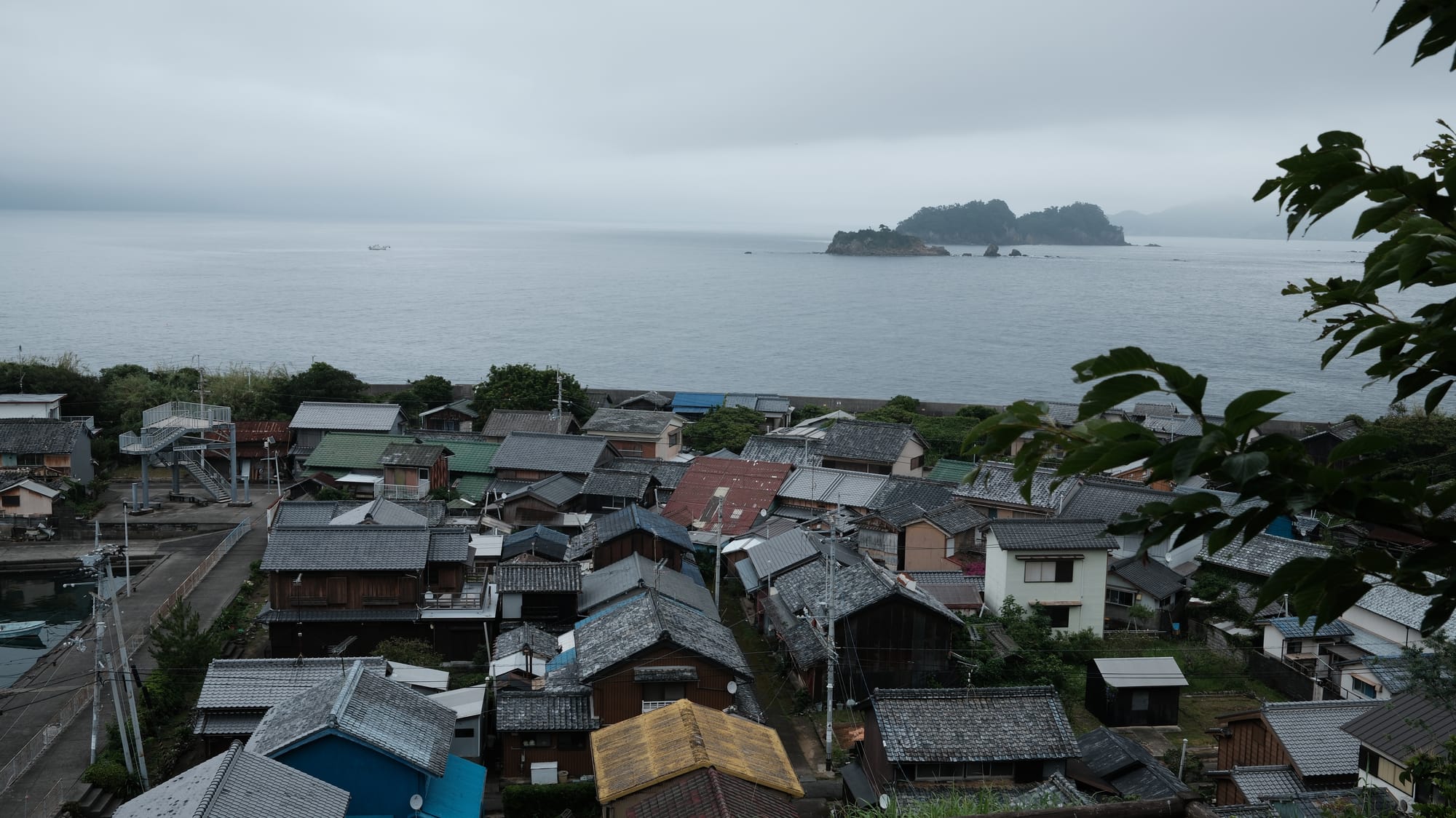
Earlier that morning I thought there was another tourist staying on the island. I watched someone cycle past carrying a camera, stop near the shrine across the harbour and begin taking photographs.
Apparently not.
Apparently he’s a local resident who rides around the island every day taking photos.
The ferry arriving.
The shrine.
A tree.
The same subjects.
Every day.
Rural Japan sometimes feels like a long-running comedy series where everyone knows the script except you.
I suspect Tebajima is no exception.
With the rain falling, the village feels quieter still.
Time to sign off.
I have a 210-yen ferry to catch in the morning.
And several auxiliary toes that require further love and attention.
Dispatch #2: Pocari Sweat, Purple Worms and Pirates
Published: Day 13 of the Pilgrimage - June 20th
Temples visited: 23 / 88
Distance walked: 272km / 1300km
Current location: Tebajima Island | Tebajima-sou Guesthouse
Kilograms of enlightenment achieved: not sure, more than 2
Onigiri eaten: 14
Beers drunk: 12 (a figure readers can influence via the button below)
Granola bars reluctantly consumed: 8
Blisters acquired: 4
For more info on the Brig Cyprus and the pirates check out the Guardian Article here or for the full academic papers go here.
Member discussion