Shikoku Dispatch #3. Be Water
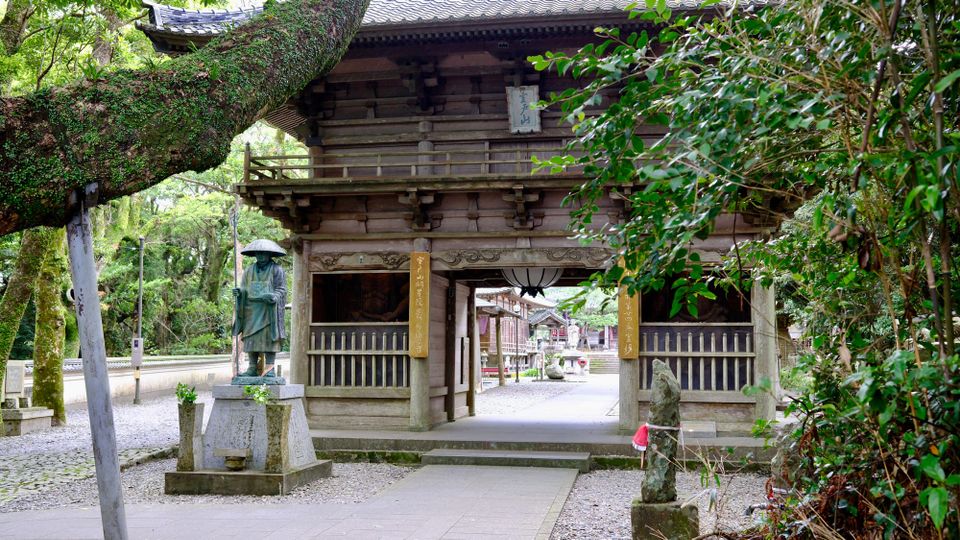
Yukiko
There are two types of people in this world.
People who turn up to dinner with a bottle of wine.
And people who turn up to a Japanese guesthouse carrying a 720ml bottle of sake… despite the host already having a fridge full of it.
Guess which one I am.
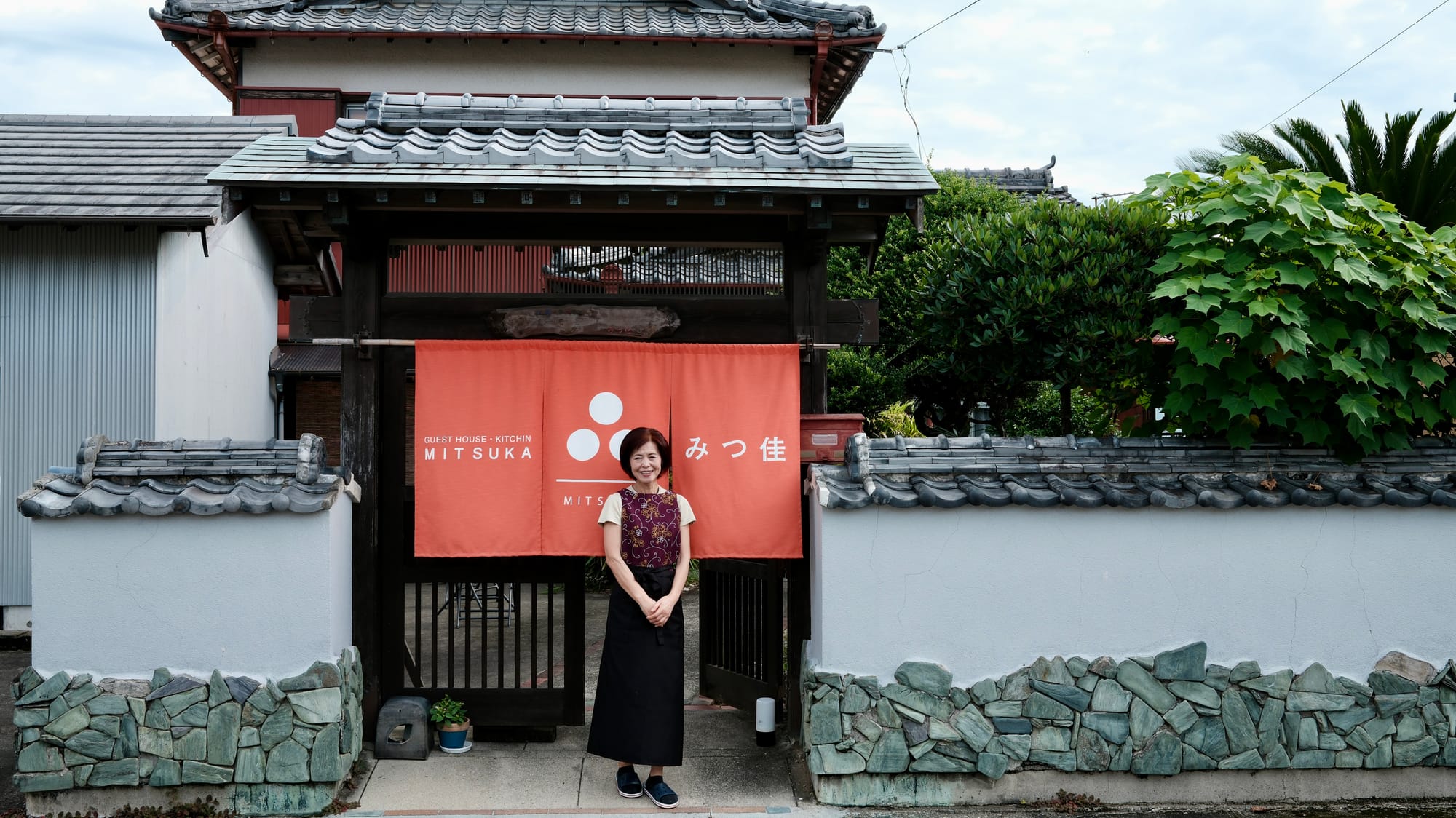
I’d booked Yukiko-san’s guesthouse a few days earlier.
When she messaged to confirm my reservation she casually mentioned that, if I wanted, she often cooked dinner for guests using local fish and vegetables.
Five thousand yen.
Done.
If someone offers to cook me a home-cooked meal, my answer is almost always yes.
After days of convenience-store lunches, onigiri, vending-machines and the occasional hurried izakaya meal, a proper home-cooked dinner feels like winning the lottery.
I arrived in town ridiculously early.
Check-in wasn’t until four o’clock, so I wandered over to the local supermarket to kill some time.
Naturally, I bought a bottle of sake.
I also bought two beers.
Waiting is thirsty work.
An hour later I wandered into the guesthouse carrying the sake bottle like I was presenting an offering to the gods.
“You know we have sake here, don’t you?”
Yukiko-san looked at me with an expression that hovered somewhere between amusement and mild concern.
“I didn’t know,” I said.
“But your food looked so good online that I just had to have sake with dinner.”
She smiled.
“Jason… we have sake here.”
“Oh.…well…It’s a present then…but I’d still like to have a little taste.”
There was a pause.
She looked unconvinced.
I had the distinct feeling I had accidentally broken some unwritten rule of Japanese guesthouse etiquette.
Before disappearing into the kitchen she placed a glass of iced tea in front of me.
“This is cold tea,” she said.
Then she paused.
“Non-alcoholic.”
Oof.
I wasn’t entirely sure whether she was simply being informative…
…or subtly suggesting I’d already reached my alcohol quota for the afternoon.
Either way, I’d been inside the guesthouse for about three minutes and I was already in trouble.
While she busied herself in the kitchen, I wandered around the guesthouse.
One of my favourite things about staying in small places like this is that they tell you a surprising amount about the people who own them.
There were beautiful ceramics displayed throughout the house.
A couple of Bizen pieces.
Some Ontayaki from Oita.
Whoever decorated this place clearly appreciated good craftsmanship.
Then my eyes landed on a bookshelf.
There it was.
A book by John Gauntner.
Honestly…I can’t get away from that bloke.
It doesn’t seem to matter where I travel in Japan - there’s always a sake link somewhere.
Dinner began arriving one dish at a time.
Homemade sesame tofu.
Potato salad with smoked daikon.
The daikon, she proudly explained, she’d smoked herself.
Awa beef with onions and chilli.
Locally caught sashimi.
Mahi-mahi fish cakes.
Pan-fried local chicken.
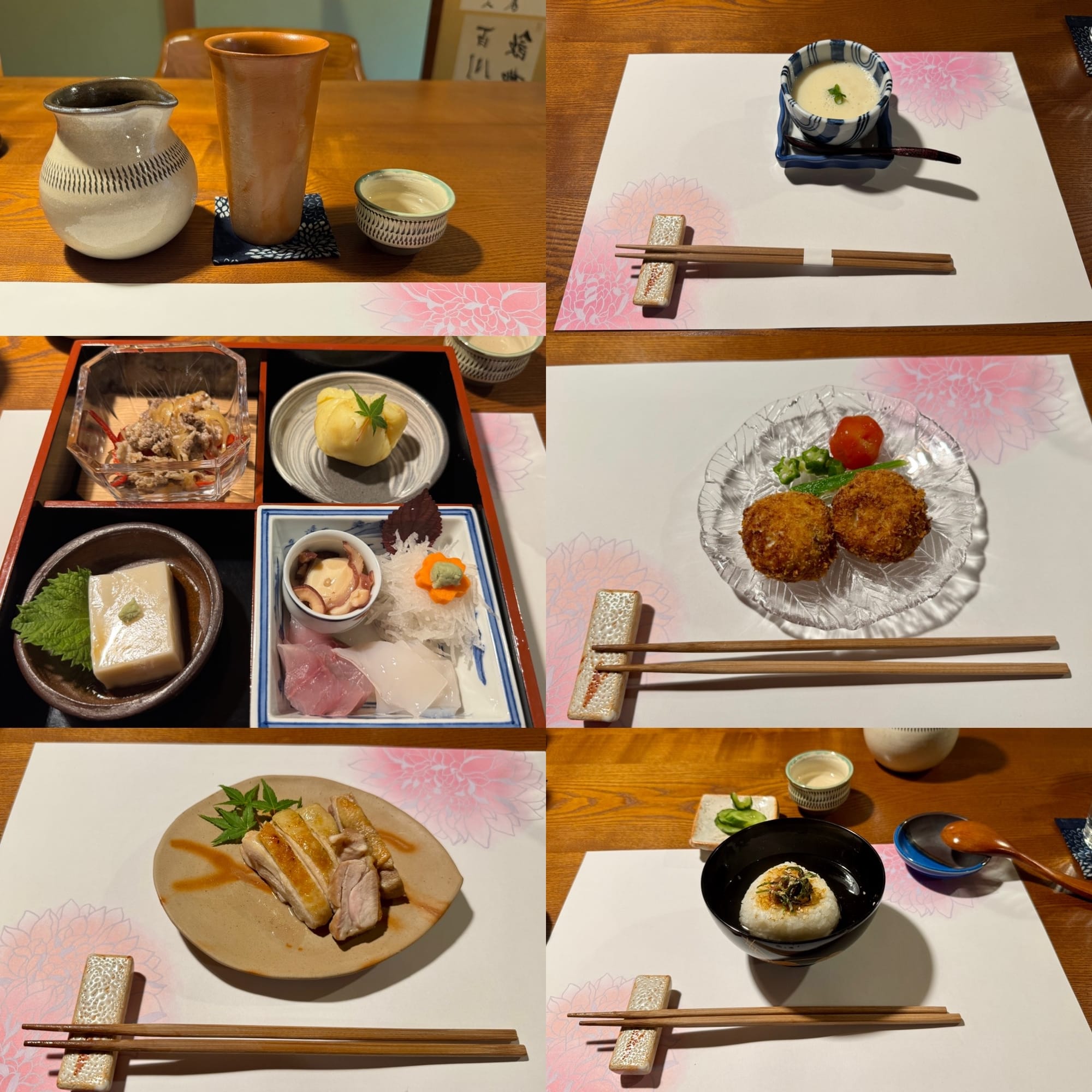
And that still wasn’t everything.
Every time I thought we’d reached the final course another small plate appeared from the kitchen.
I wasn’t eating dinner anymore.
I was slowly being adopted.
The food itself was extraordinary.
Fresh.
Simple.
Perfectly balanced.
But what struck me most wasn’t what was on the plates.
It was Yukiko.
She moved between the kitchen and dining room with effortless grace.
Nothing felt rushed.
Every dish arrived with a short explanation.
Every empty plate disappeared almost unnoticed.
There was a quiet confidence about everything she did.
No wasted movements.
No fuss.
Just calm professionalism.
You don’t learn that by accident.
“So…”
“What did you do before this?”
She laughed.
“I was a cabin attendant.”
“Oh?”
“First Cathay Pacific. Then British Airways.”
“And did you do business class?”
She smiled.
“Business… and first class. I got to travel the world”
Well…
That explained everything.
The service.
The timing.
The attention to detail.
The feeling that somehow she was always exactly where she needed to be before I even realised I needed something.
“What about the cooking?”
“Oh…”
“I’m mostly self-taught.”
Some people simply have a gift.
I’d happily walk another thousand kilometres just to be invited back for dinner at Yukiko’s house.
The following night couldn’t have been more different.
Dinner consisted of a tiny local izakaya run by an eighty-year-old lady.
The menu was gloriously uncomplicated.
¥300 tamagoyaki.
¥600 fried rice.
Some sardines.
A little squid.
One large bottle of beer.
I made the mistake of ordering before I’d finished eating what I’d already ordered.
Again.
The old lady just kept smiling and bringing out more food.
Eventually I admitted defeat.
When I asked for the bill she looked at the calculator, tapped a few buttons and turned it around.
¥1,800.
I checked it twice.
That couldn’t be right.
Apparently it was.
Japan continues to make absolutely no sense.
Be Water
The following morning the rain finally arrived.
Not proper rain.
Just enough to make you wonder whether putting your rain gear on would be an overreaction.
I’d been thinking about this moment for months.
How do you stay dry while walking across Shikoku in the middle of the rainy season?
The answer, I eventually decided…
…is that you don’t.
Bruce Lee once said,
“Be water, my friend.”
Excellent advice.
Unfortunately, I had become all the water.
The humidity was so high that I was already soaked through with sweat before the rain had even started.
So why fight it?
Maybe Bruce Lee had it figured out.
Water doesn’t complain.
It doesn’t resist.
It simply adapts.
One thing people often ask is whether I listen to music or podcasts while I am doing this walk.
I don’t.
No headphones.
No audiobooks.
No true-crime podcasts.
Nothing.
Just the sound of my shoes.
The wind.
The birds.
My woven bamboo hat creaking along with every step.
And whatever happens to be rattling around inside my own head.
Sometimes that’s a dangerous place to spend eight hours.
But it’s also where this pilgrimage really happens.
Given enough kilometres your mind starts wandering in directions you never expected.
One minute you’re wondering whether your socks will ever be dry again.
The next you’re thinking about Bruce Lee.
Maybe this whole pilgrimage is simply teaching me to stop resisting.
To adapt.
To become water.
My solution?
Socks and sandals.
People laughed when I mentioned it before I left.
Now it made perfect sense.
You can’t get wet shoes…
…if you aren’t wearing shoes.
Your socks are getting soaked regardless.
Gore-Tex has already surrendered.
In this humidity your feet sweat faster than any expensive membrane can breathe.
Over the top went my Montbell poncho, covering both me and my backpack while still letting enough air circulate that I didn’t completely steam myself alive.
Above that sat my enormous sedge hat, complete with what must surely be the world’s largest shower-cap attachment.
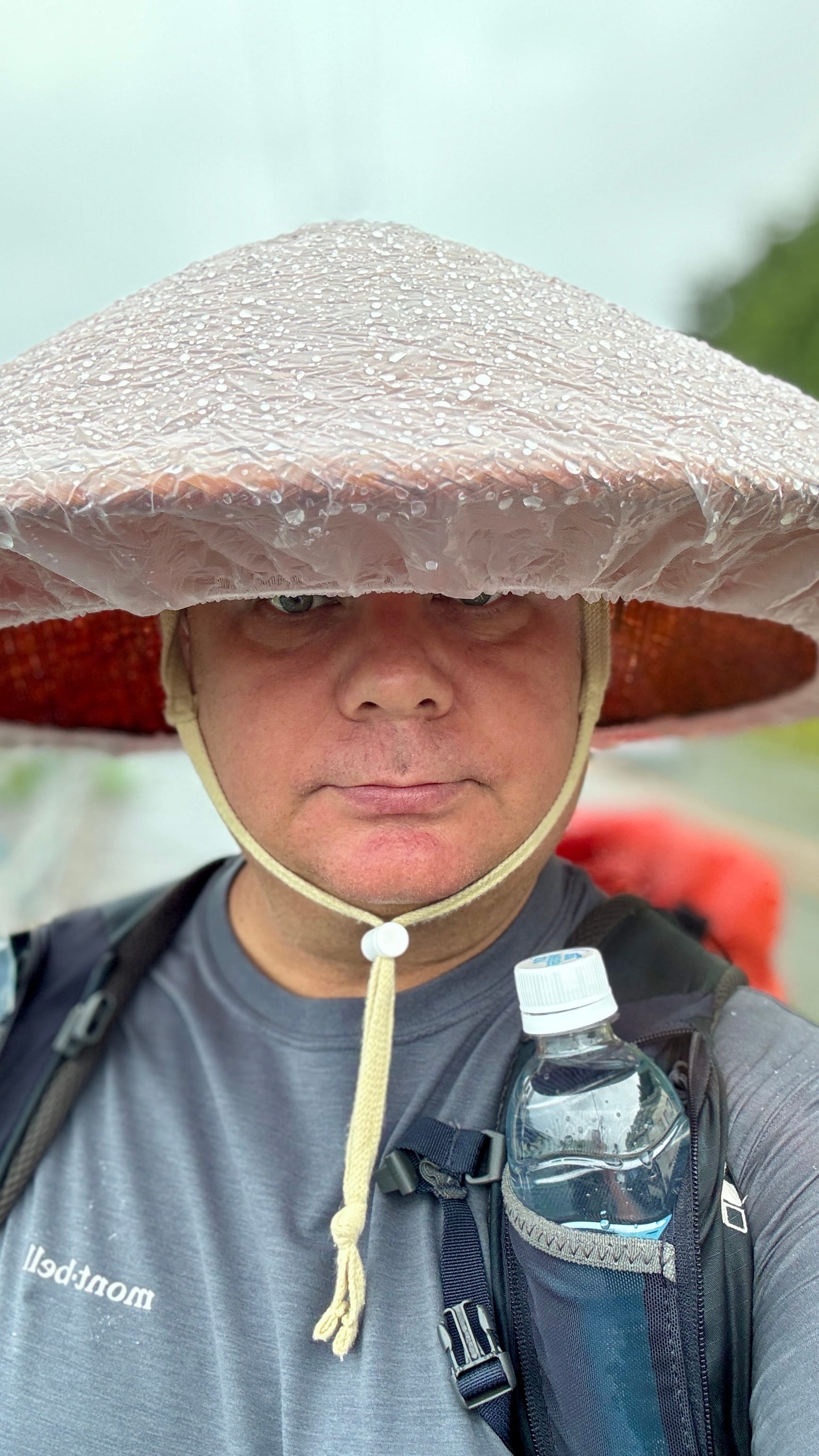
I took a selfie and sent it to my wife.
A few seconds later my phone buzzed.
“You look like a mushroom.”
She wasn’t wrong.
I was a mushroom.
A mushroom…
…on a mission.
Living with water
The road towards Cape Muroto is beautiful.
It’s also slightly unsettling.
For long stretches there’s nothing between you and the Pacific Ocean except a strip of road and a concrete seawall.
On the other side of the road rises steep forested mountains.
The kind of mountains that don’t invite climbing.
They demand it.
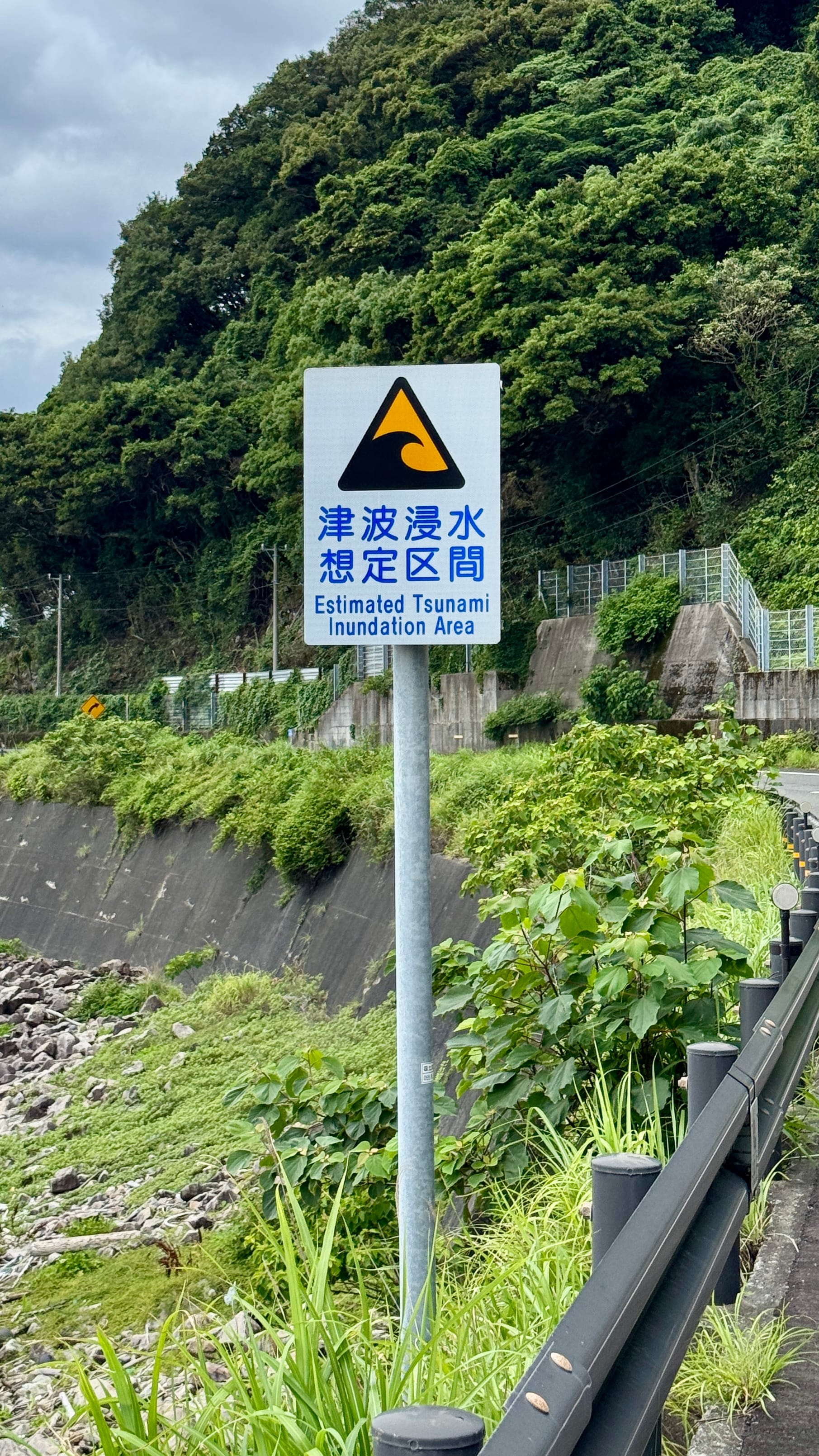
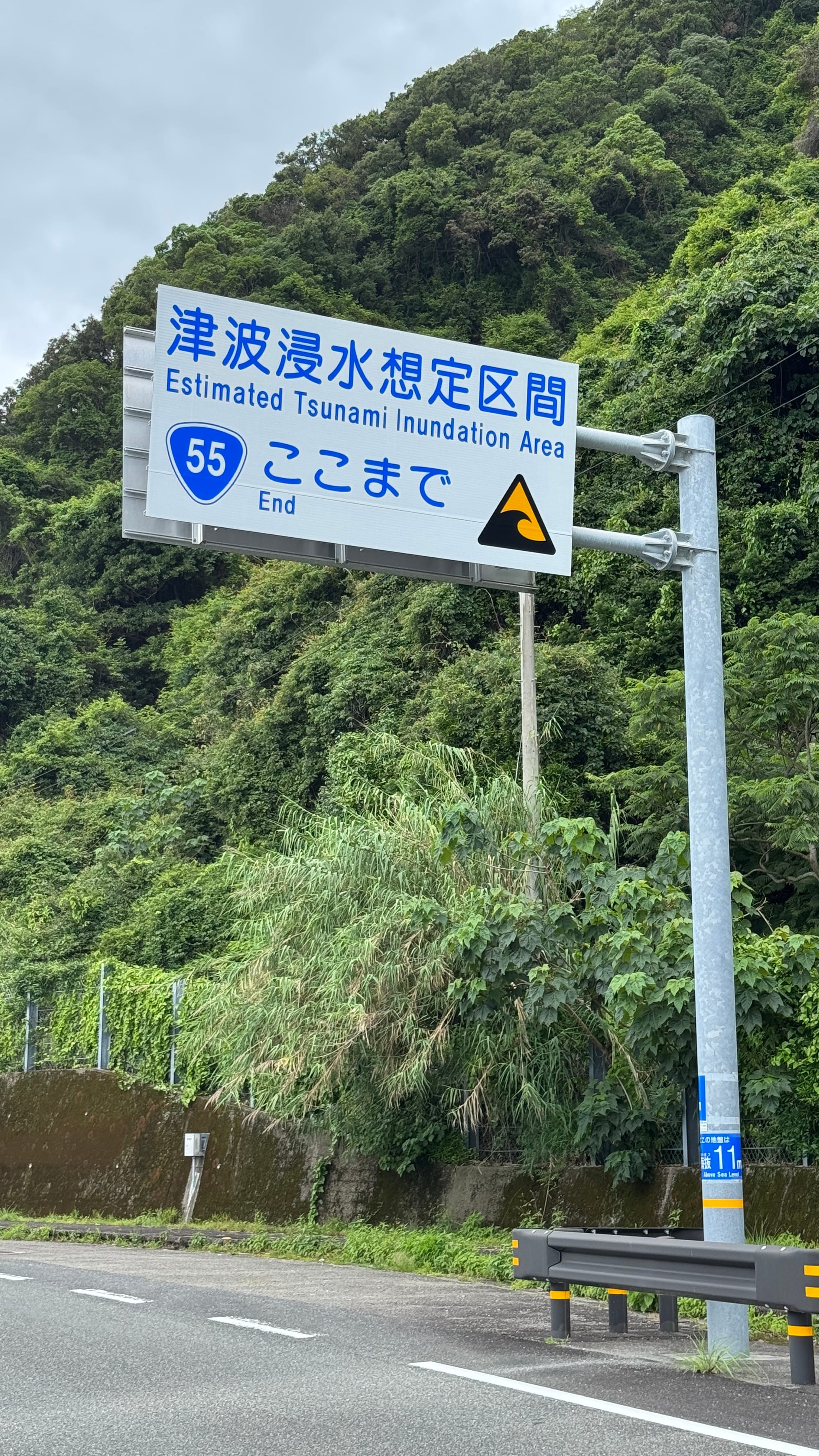
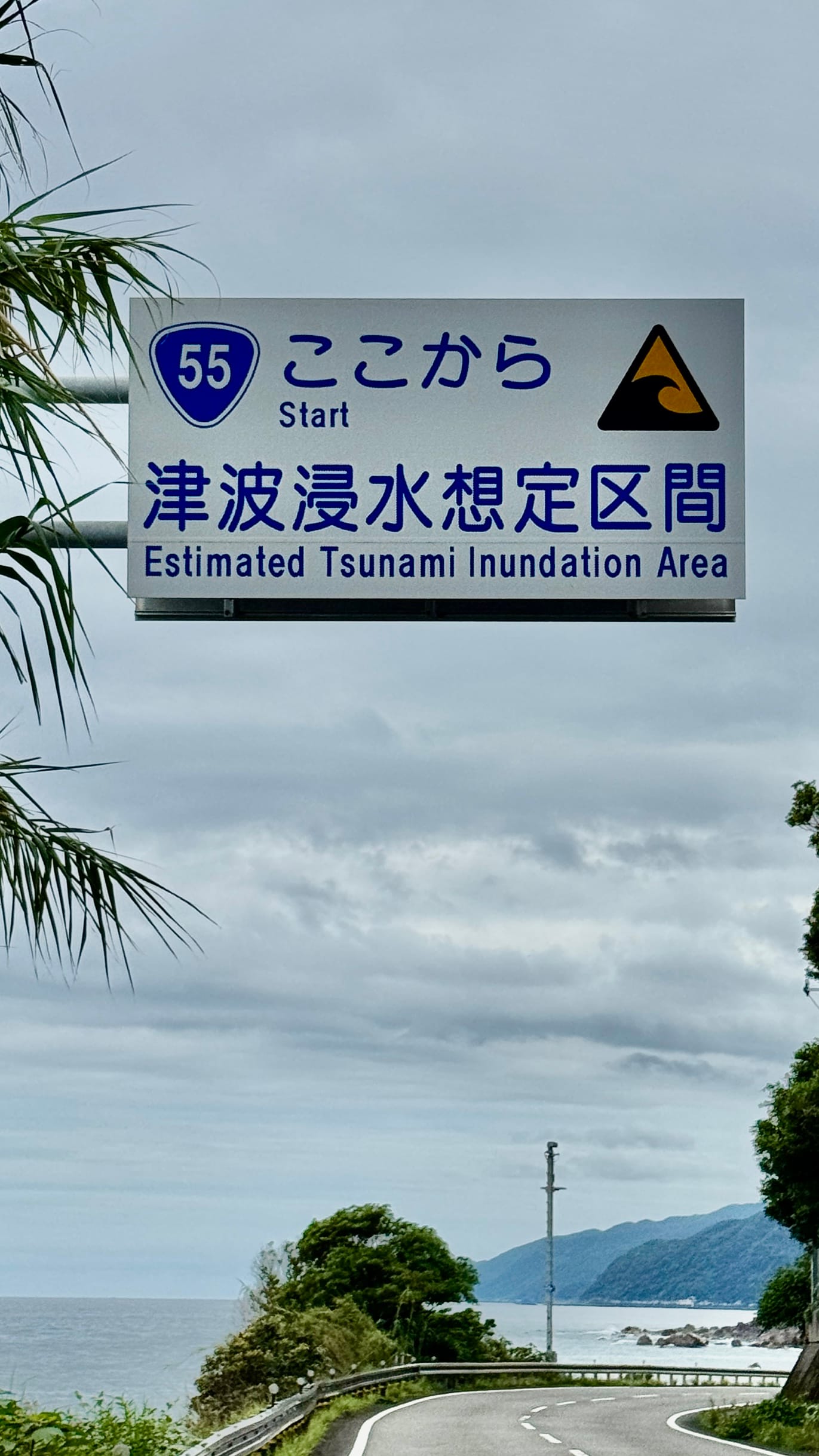
The signs started appearing every few hundred metres.
Start of tsunami inundation area.
A little while later…
End of tsunami inundation area.
Then…
Start of tsunami inundation area.
Again.
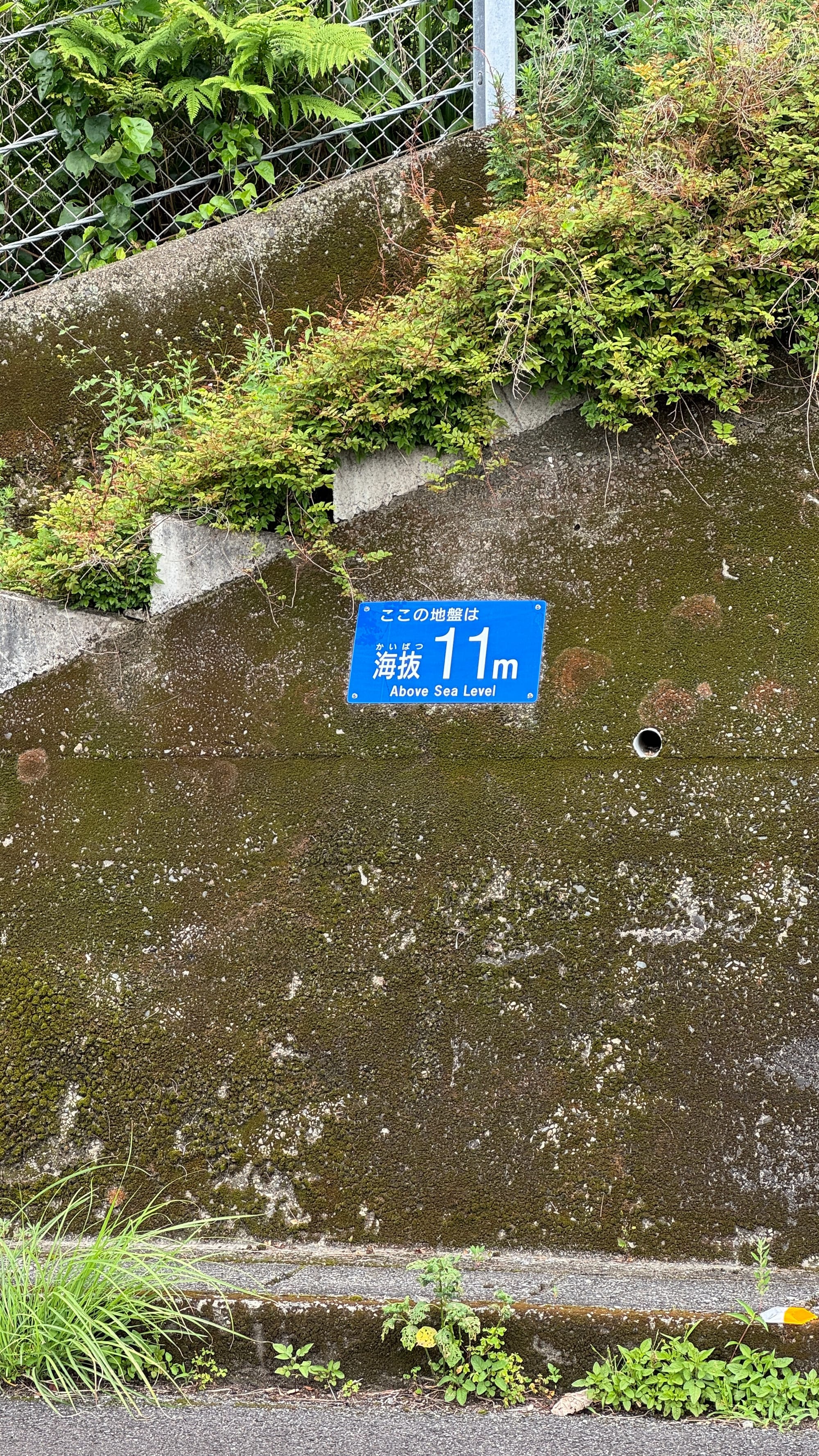
Seven metres above sea level.
Ten metres.
Twelve metres.
Then back to seven.
At first I just kind of noticed them.
By lunchtime they were impossible to ignore.
Without realising it, I stopped looking at the ocean.
I started looking at the side of the hills beside me.
I could probably climb that retaining wall.
That tree looks possible.
If I scrambled up there…
Maybe a car would stop.
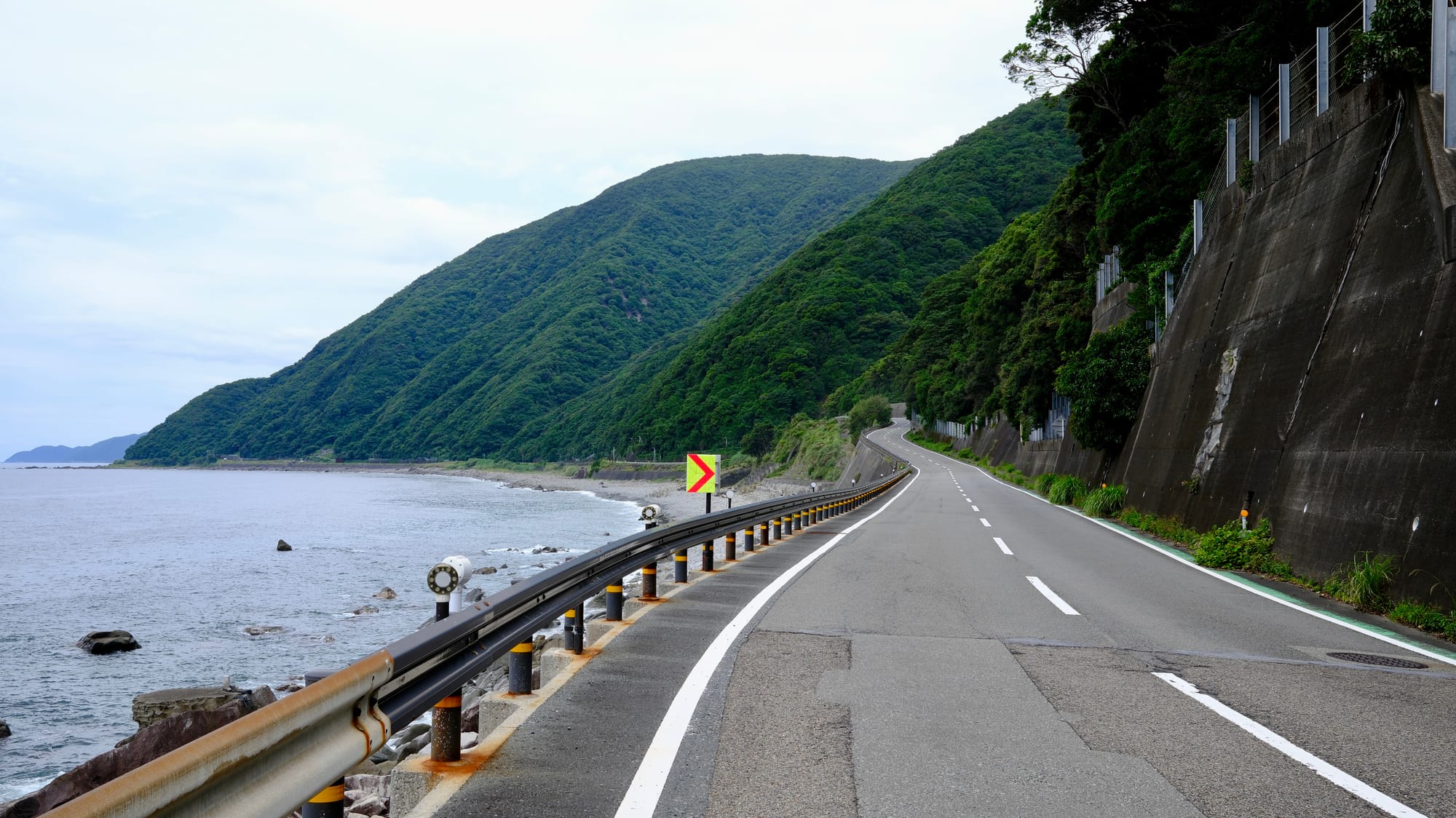
Apparently, after a major earthquake along the Nankai Trough, people here may only have ten to twenty minutes before a tsunami reaches the coast.
It’s an odd feeling.
You’re walking along one of the most spectacular coastlines in Japan while quietly planning how you’d survive it.
One local summed it up perfectly.
“It’s not a matter of if.”
“It’s a matter of when.”
That sentence stayed with me for days.
The reminders are everywhere.
Large steel evacuation towers rise above neighbourhoods.
Enormous enclosed lifeboats sit beside roads with the names of local towns painted on the side.
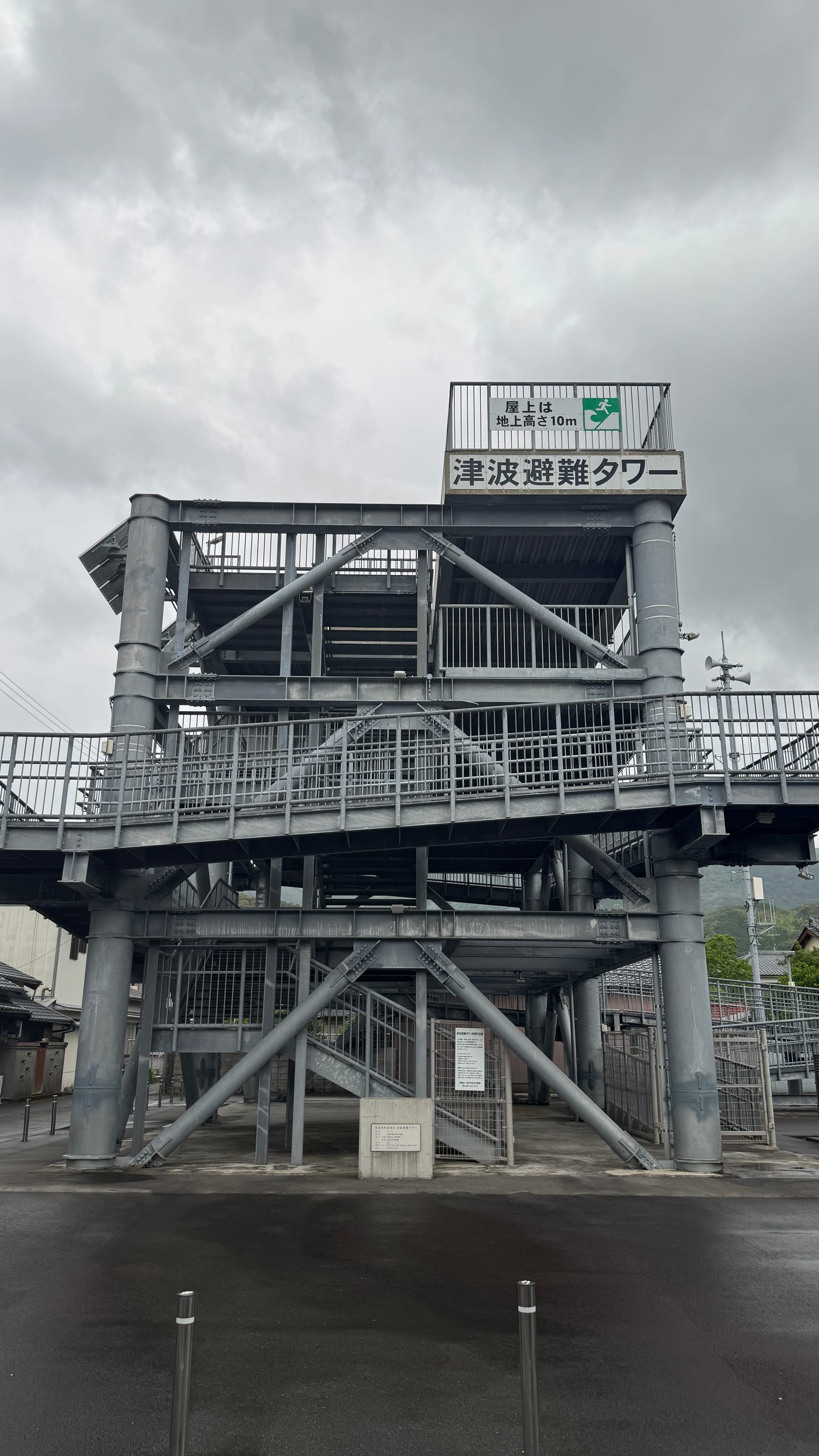
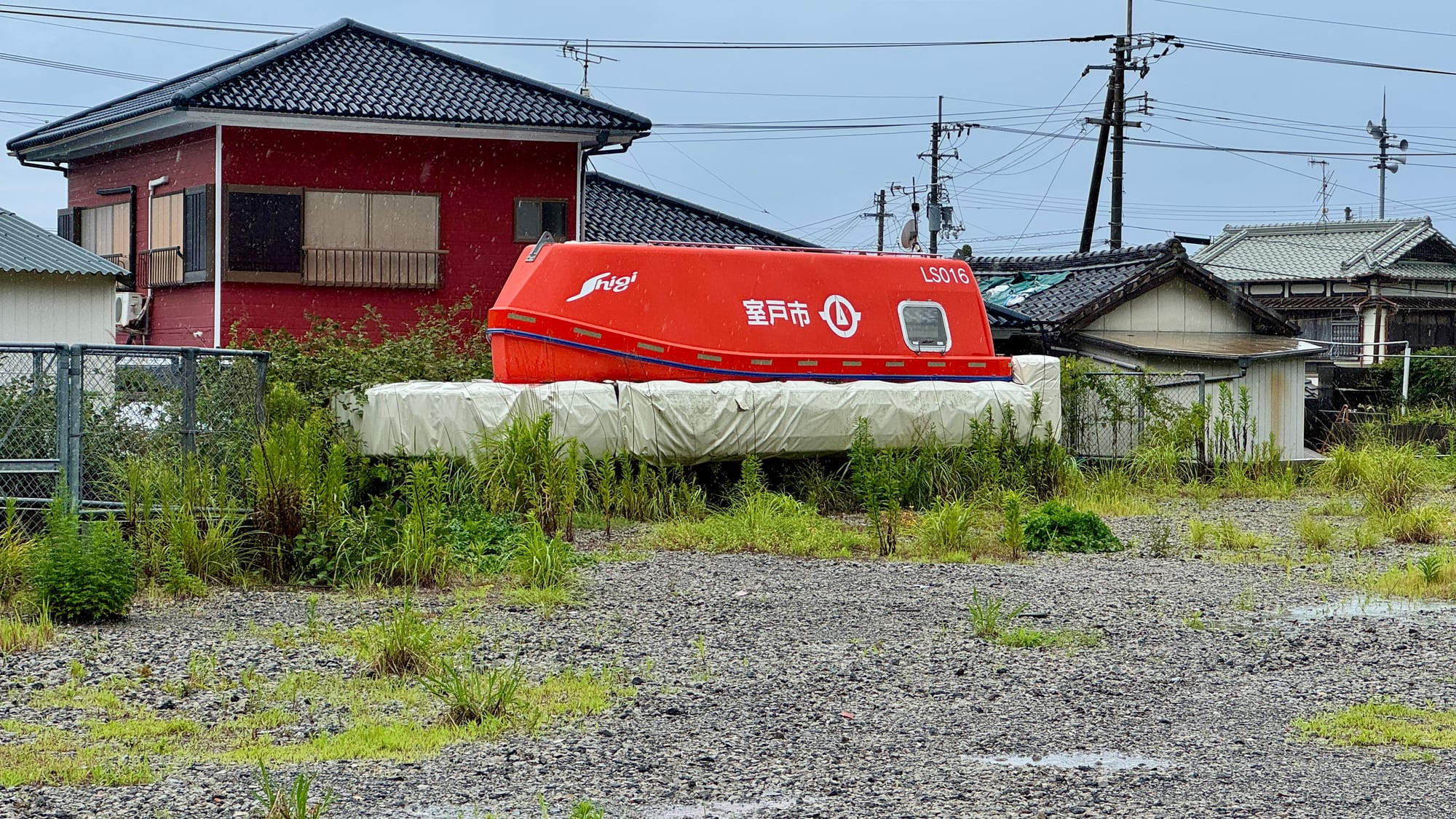
I’d been walking past these strange pods for days without really understanding what they were.
Apparently they’re designed to float if completely engulfed by a tsunami, protecting the people inside from both the water and the debris being carried with it.
It’s remarkable and hard hitting at the same time.
Entire communities quietly preparing for something they hope never arrives.
Then I realised something.
Everyone here knows the ocean outside their front door may one day try to kill them.
Yet they still build homes facing it.
They still fish.
They still plant gardens.
They still open guesthouses and invite strangers in for dinner.
Perhaps living with impermanence doesn’t make life smaller.
Perhaps it makes kindness more important, and life more precious.
I stopped at the Muroto UNESCO Global Geopark to escape a passing shower.
Inside was an exhibit explaining something called DONET—the Dense Oceanfloor Network System for Earthquakes and Tsunamis.
Running along the seabed above the Nankai Trough are hundreds of kilometres of underwater cables linking high-precision earthquake and tsunami sensors.
The system listens.
Waiting.
Waiting for that very first whisper that the earth beneath the Pacific has begun to move.
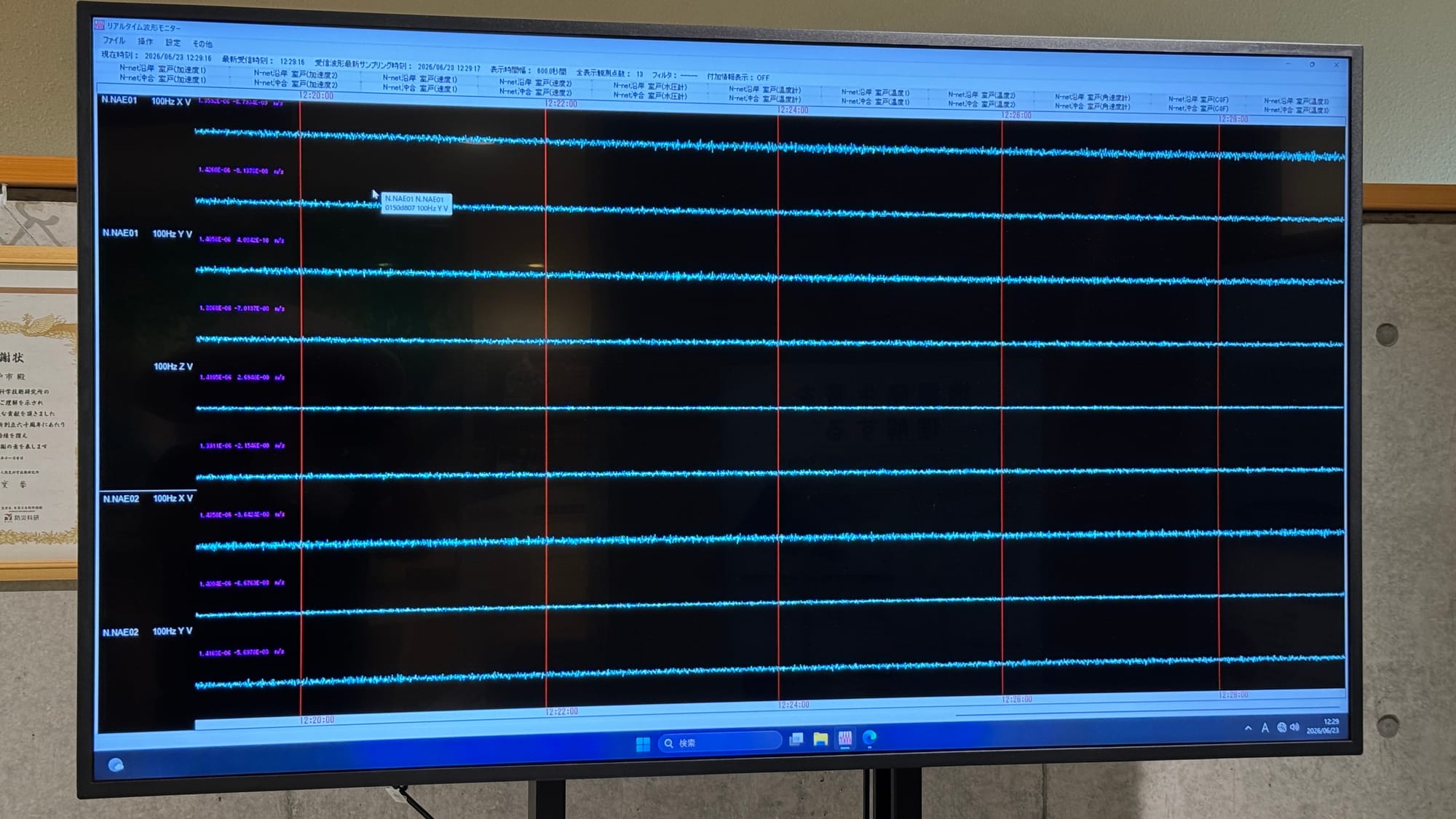
Engineers have even developed a newer system buried hundreds of metres beneath the seabed itself.
Japan has quite literally wired the ocean floor.
All in an effort to buy people a little more time.
A few precious seconds.
Maybe a minute.
Long enough for somebody to run.
Long enough for somebody to survive.
The Island of Dr. Moreau
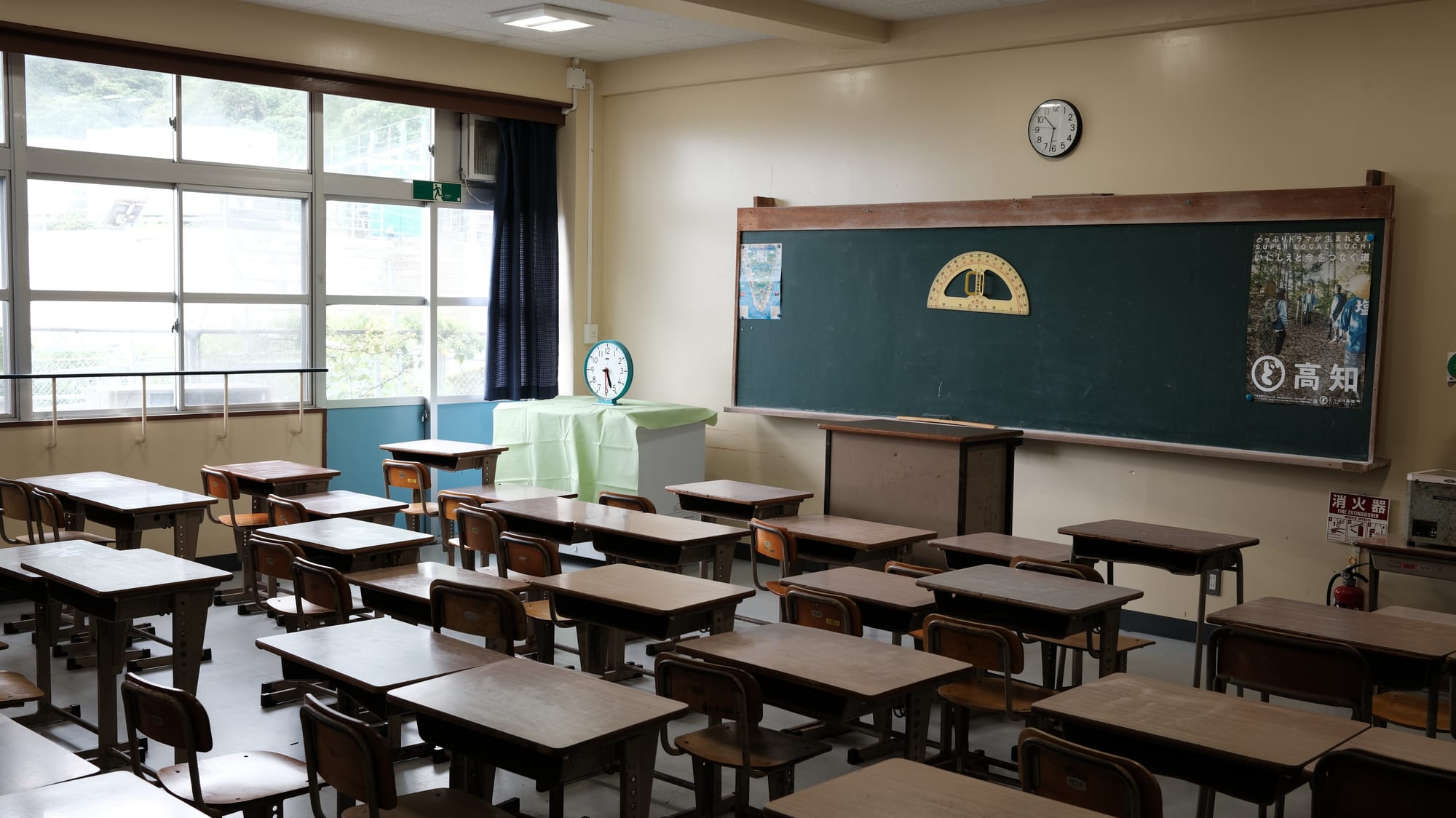
The next stop on my list was the Muroto Schoolhouse Aquarium.
I’d actually planned to visit it.
The rain almost caused me to walk straight past.
I’m glad it didn’t.
I’ve seen old schools converted into sake breweries.
I’ve seen them become cafes.
I’ve even seen one turned into a community centre.
An aquarium, however…
…was a first.
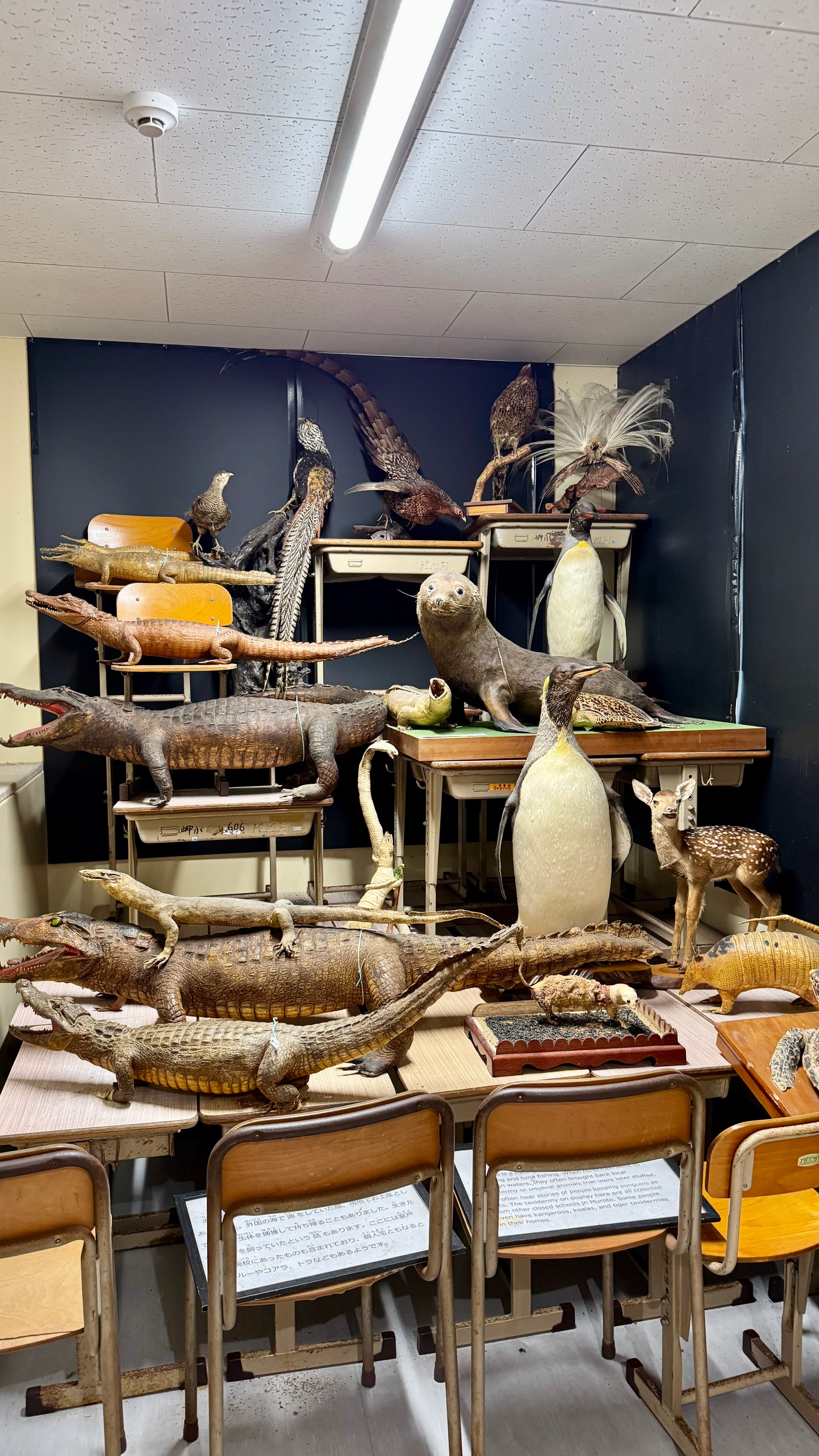
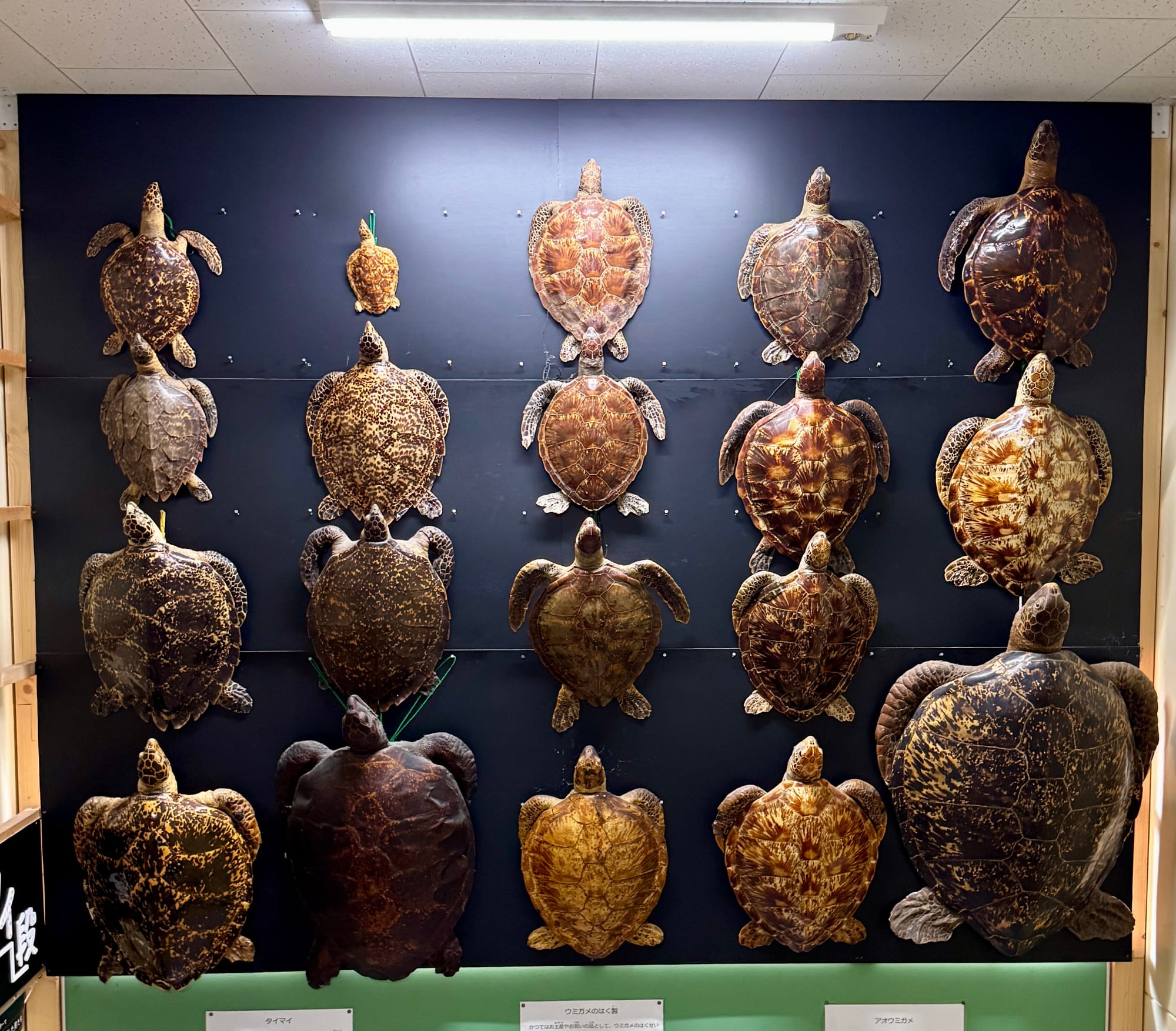
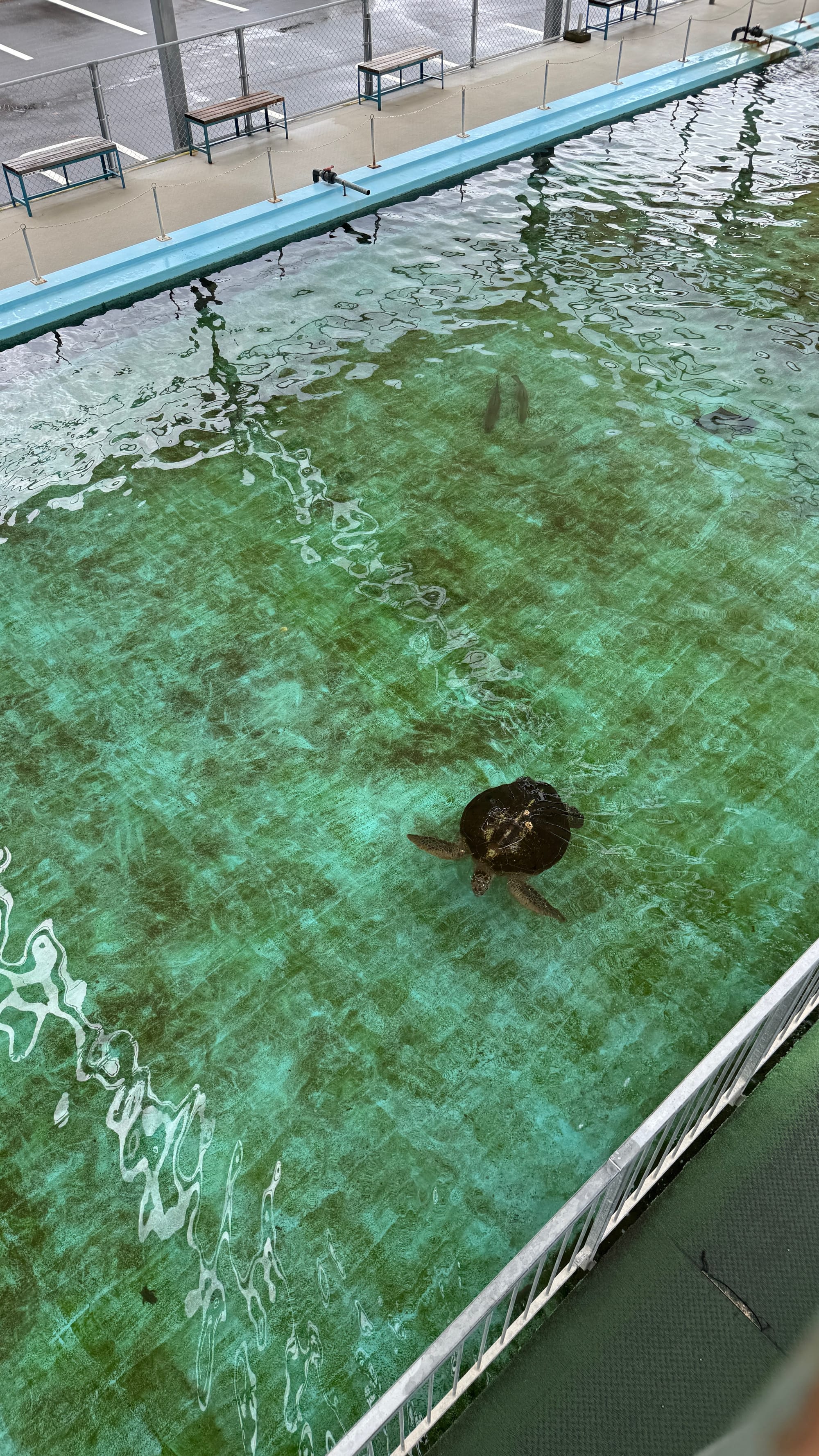
The taxidermied turtles were only the beginning.
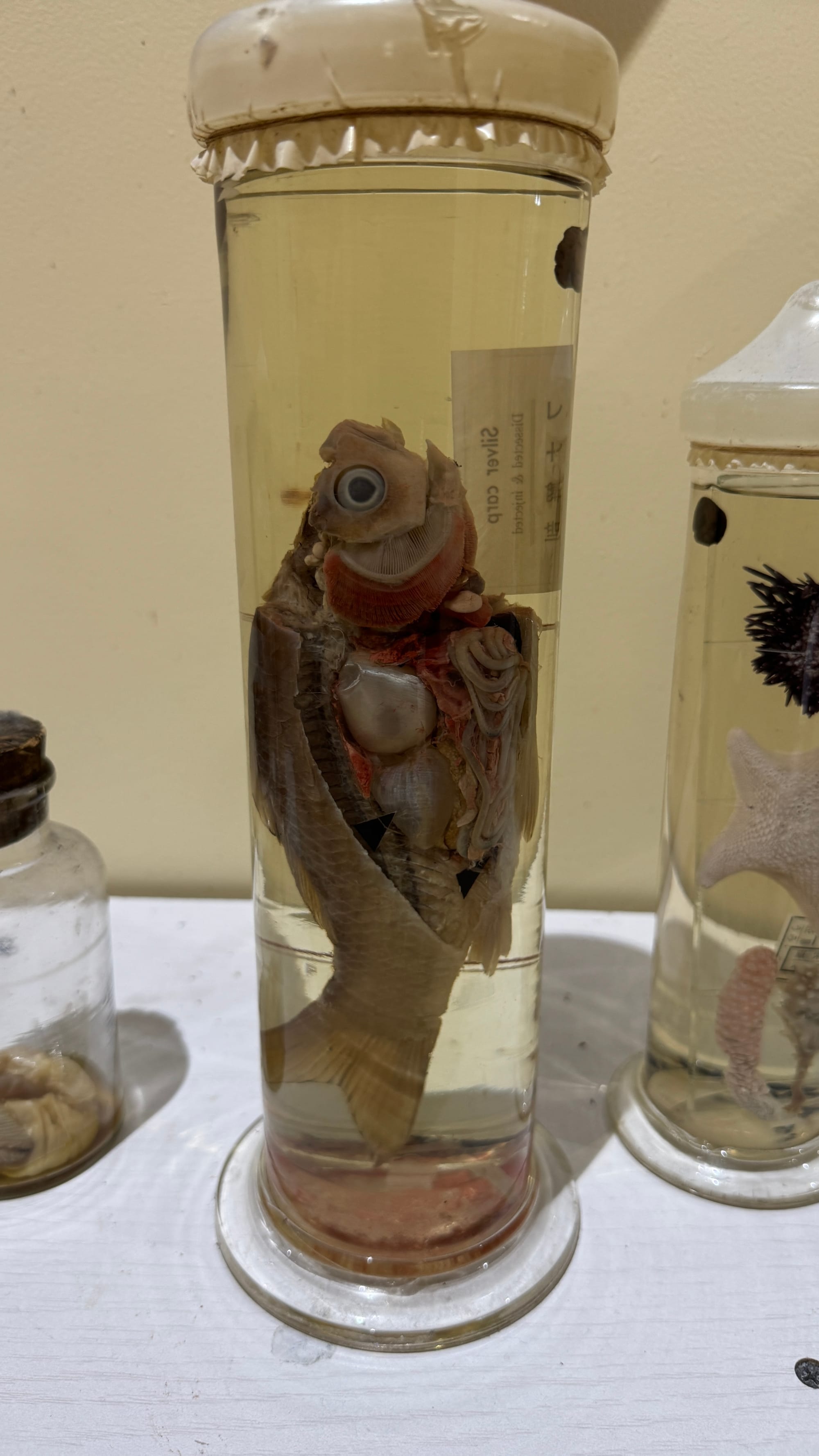
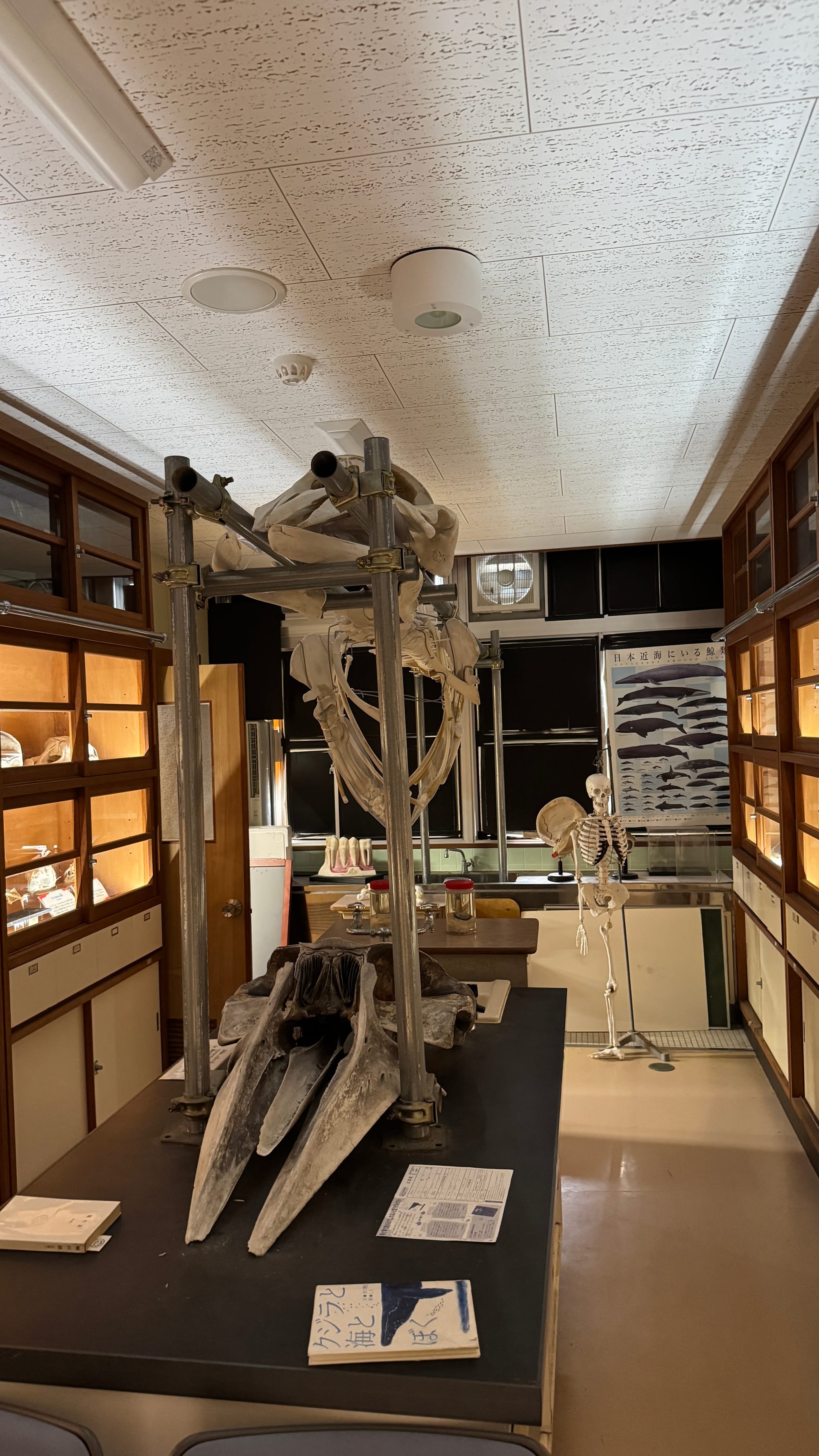
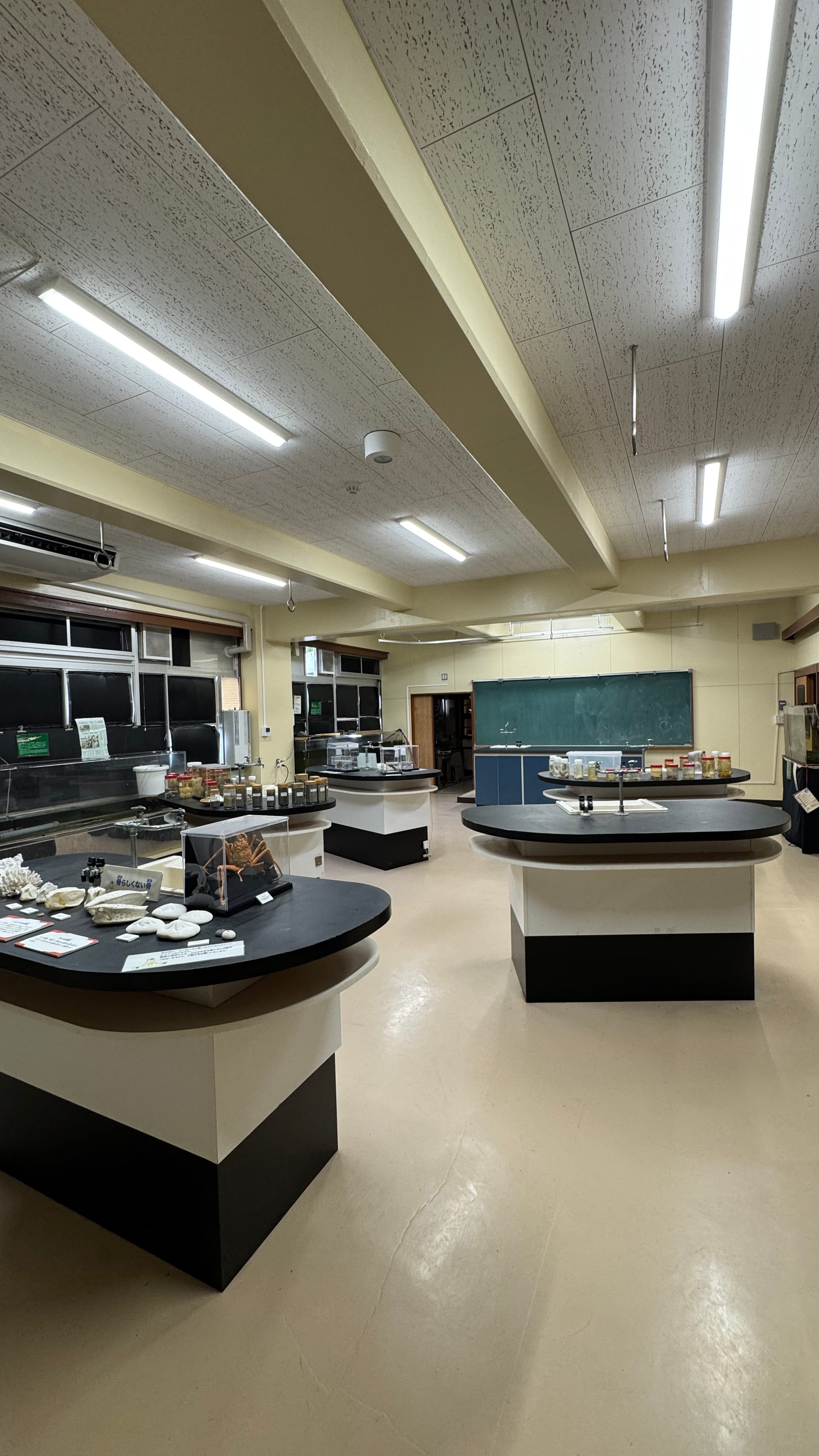
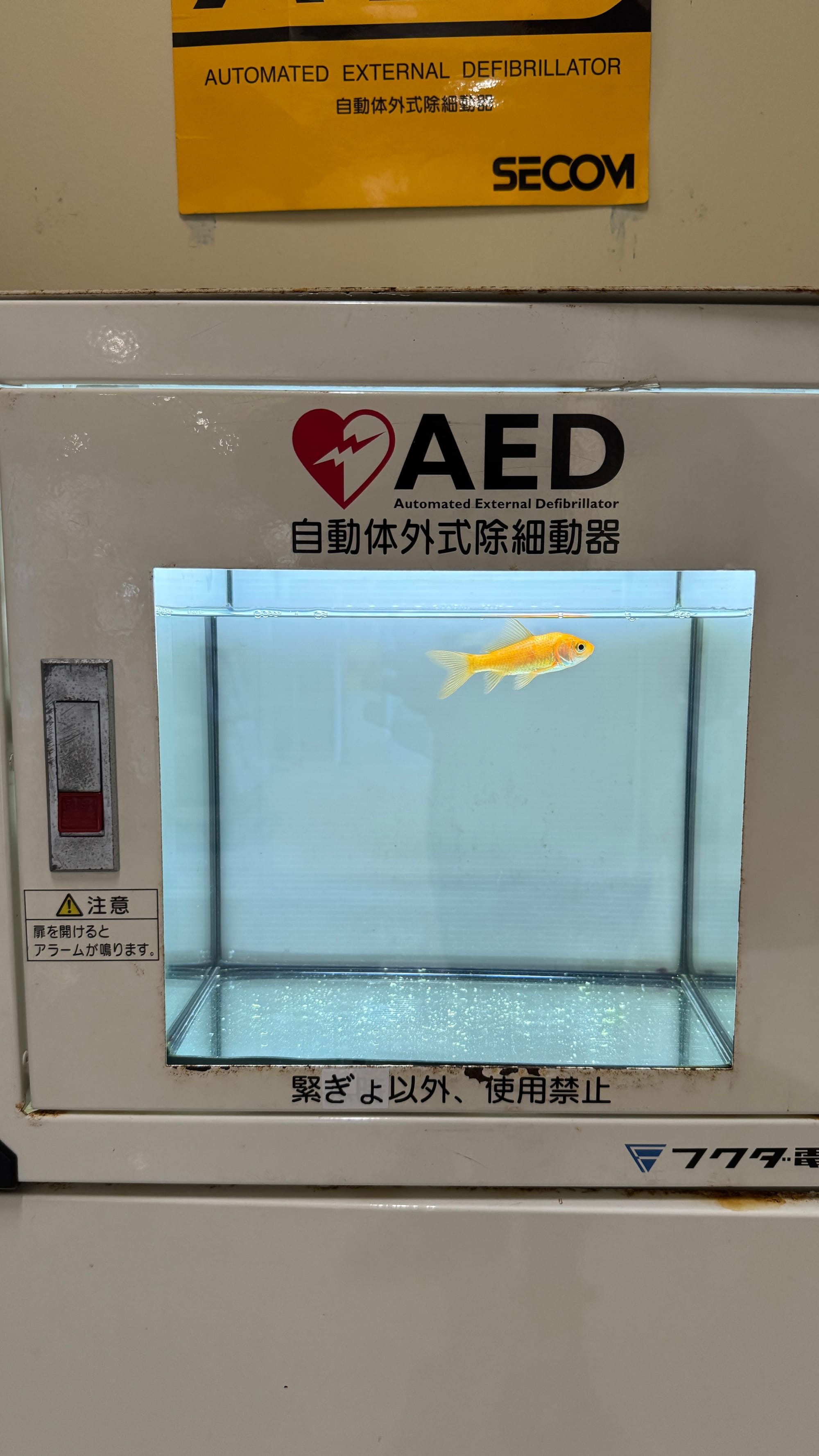
Very quickly the place drifted into what can only be described as The Island of Dr. Moreau.
There were penguins.
An armadillo.
Dissected fish floating in jars.
Skeletons.
Then it somehow evolved into a Boney M concert of orthopaedic marine mammals.
I have absolutely no idea who designed the exhibits.
Whoever it was clearly woke up one morning and thought,
“Let’s make this just unsettling enough that people remember it forever.”
Mission accomplished. And they have schools come here to study marine science.
Sky and Sea
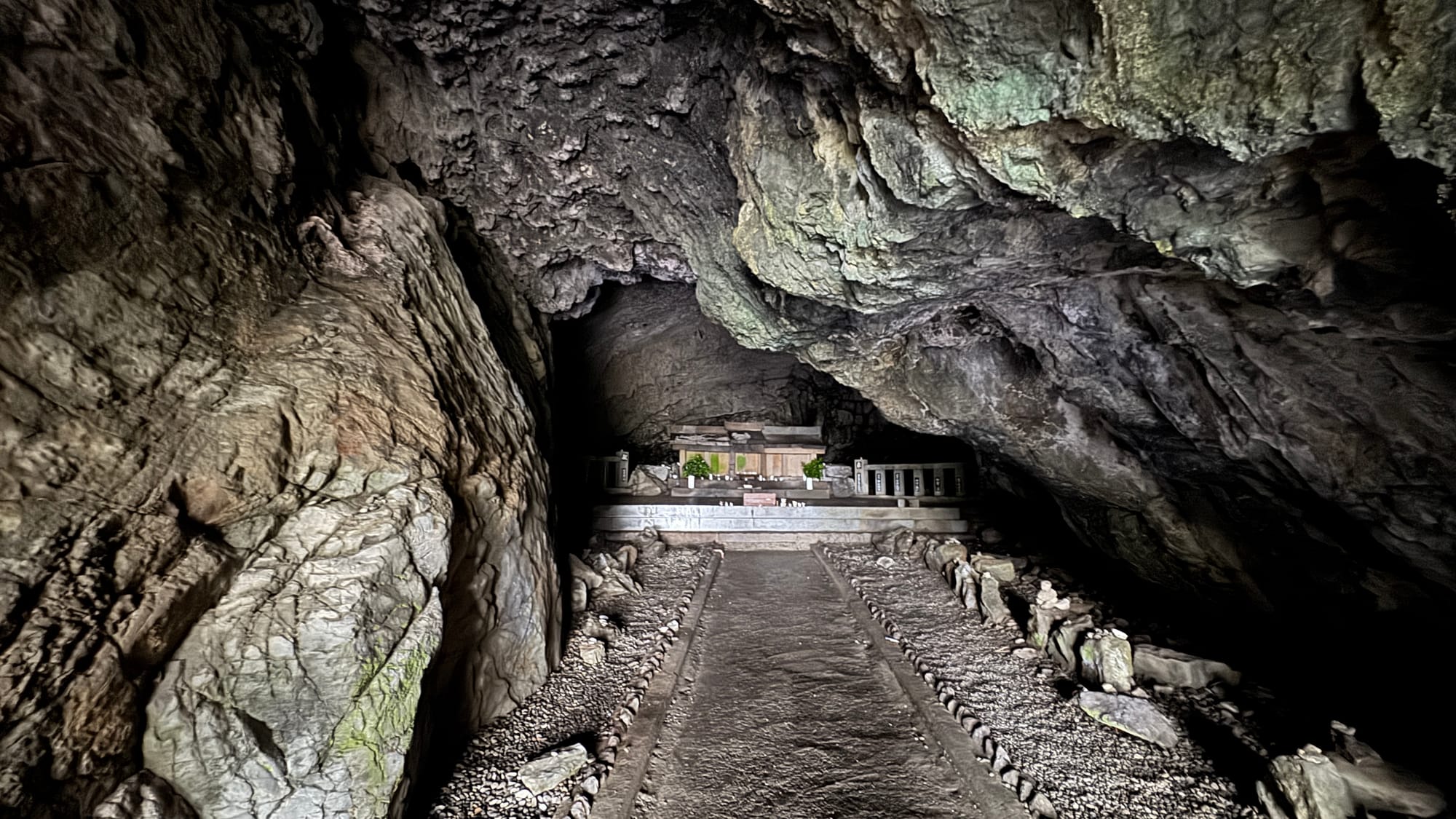
Not far before Cape Muroto lies Mikurodo Cave.
A sign outside announced it was closed because of rockfalls.
The gate, however, was open.
The sign also looked as though it had been there for quite a while.
I looked around.
Nobody.
In I went.
Quickly.
This cave is traditionally believed to be the place where the young monk who would later become Kūkai spent time in meditation. Yes the same monk that this pilgrimage is built on.
Standing inside, it’s easy to understand why.
The cave opens towards the Pacific.
Waves crash endlessly against the rocks near the ocean.
The sound echoes through the darkness.
I could not imagine spending days here. Let alone weeks.
But that’s what monks do I guess.
Listen.
Think.
Don’t think.
Meditate.
Tradition says that after his spiritual awakening he took the name Kūkai.
空海.
Kū.
Sky.
Emptiness.
Kai.
Sea.
Ocean.
In Buddhism, kū doesn’t simply mean “nothing.”
It’s the understanding that nothing exists independently.
Everything depends on something else.
Everything is connected.
In Jason-speak…
All this shit is connected.
A random guesthouse.
A book by John Gauntner.
A woman who spent years serving passengers in first class.
A bloke walking around Shikoku dressed like an oversized mushroom.
Somehow…
It all keeps circling back.
Maybe that’s what this pilgrimage really is.
Not finding answers.
Just noticing connections you’d normally walk straight past.
Twenty-six Bottles
That evening I checked into a ninety-six-year-old hotel perched right next to the Pacific.
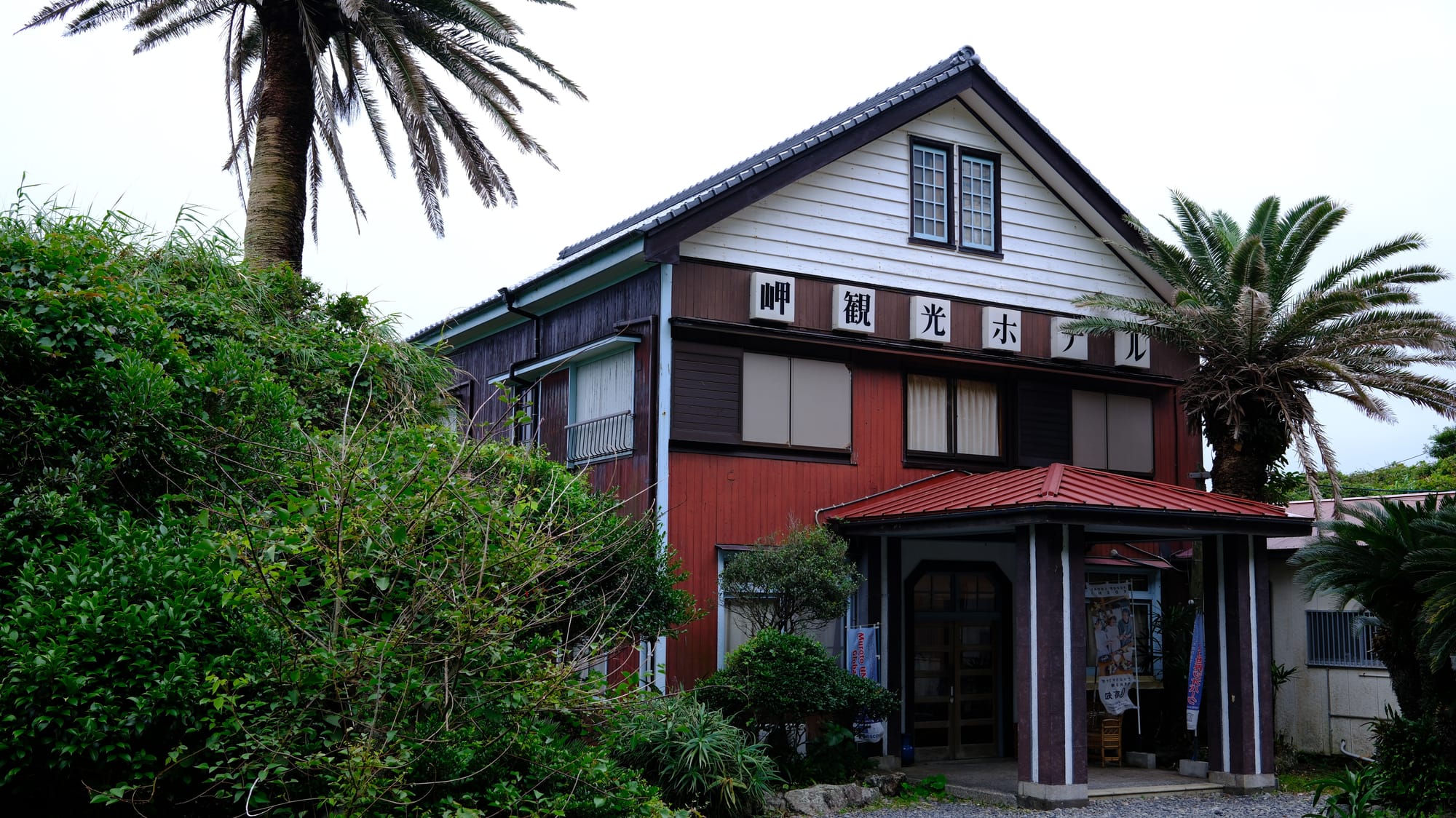
The owner proudly gave me the grand tour.
The bath.
The dining room.
The age of the building.
Everything.
Finally we reached a back door which led to the laundry.
“Laundry is out here but please close this door.”
“No problem.”
“Otherwise all the animals come in.”
“Animals?”
“Everything.”
“Deer.”
“Tanuki.”
“Badgers.”
“Wild boar.”
Fair enough.
Doing a wash and spin cycle somehow started to feel like I was on safari. The only wildlife I could smell though was my dirty washing.
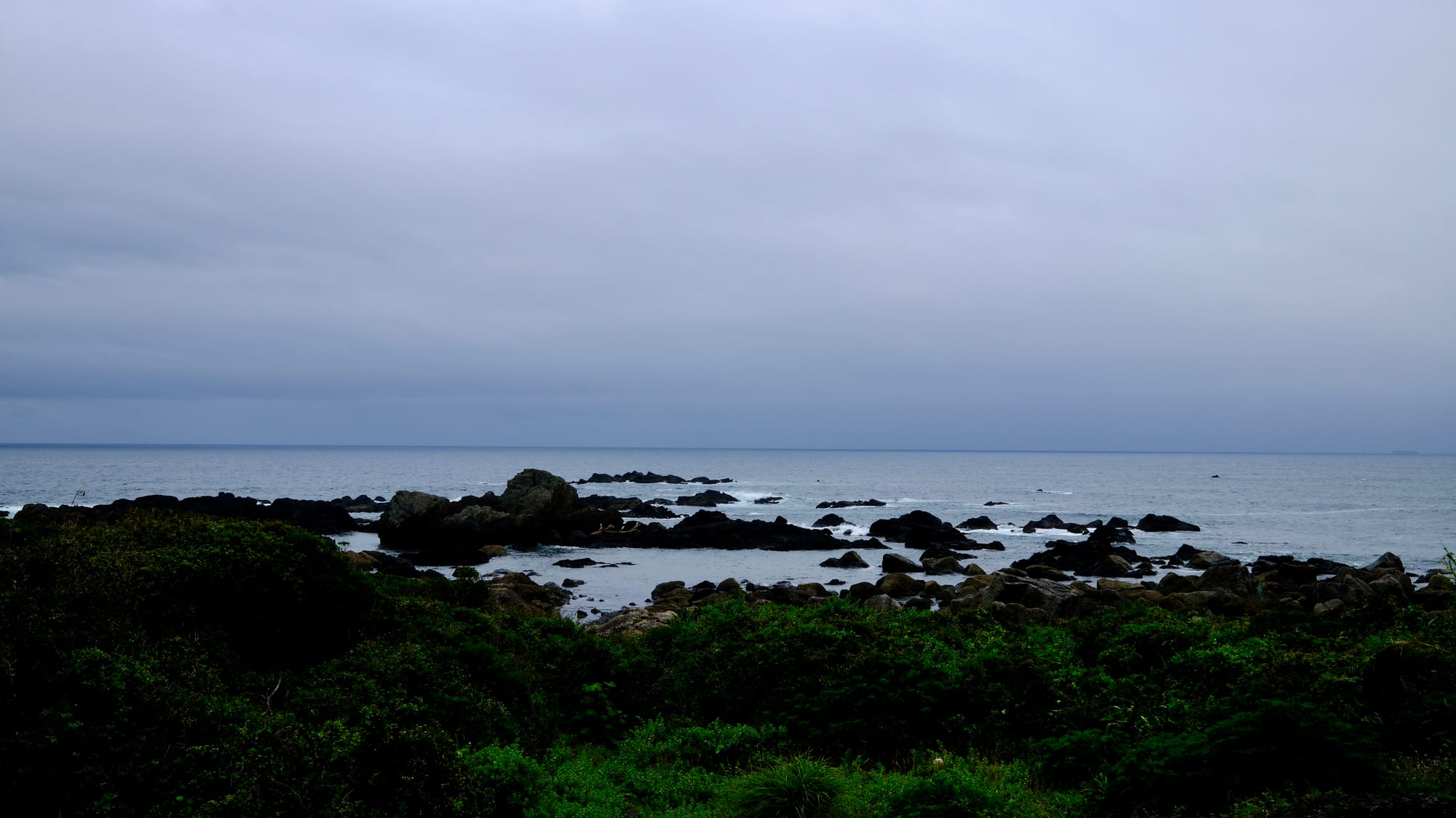
Later that afternoon I was soaking in the bath when I noticed a praying mantis sitting on the windowsill.
I opened the window and gently flicked it outside.
It landed safely in the bushes.
I watched it for a moment.
Then something moved.
Then something else.
The entire overgrown garden seemed to be crawling with crabs.
Not one.
Dozens.
I spent the next five minutes half hanging out of the bath watching tiny crabs wander through the undergrowth.
“Good luck, little praying mantis,” I muttered.
I wonder if crabs eat praying mantises.
That night the hotel was hosting three groups.
A cheerful bloke from Toyama.
A couple from Nara.
And me.
The owner also happened to be a Kochi Sake Advisor.
Which, as it turns out, was about to become very relevant.
After a couple of beers the man from Toyama casually asked,
“So… what sake do you have?”
“Oh…”
The owner disappeared into the back room.
After a good 3-5 minutes he reappeared with a tray of sake, not one or two bottles, but twenty-six.
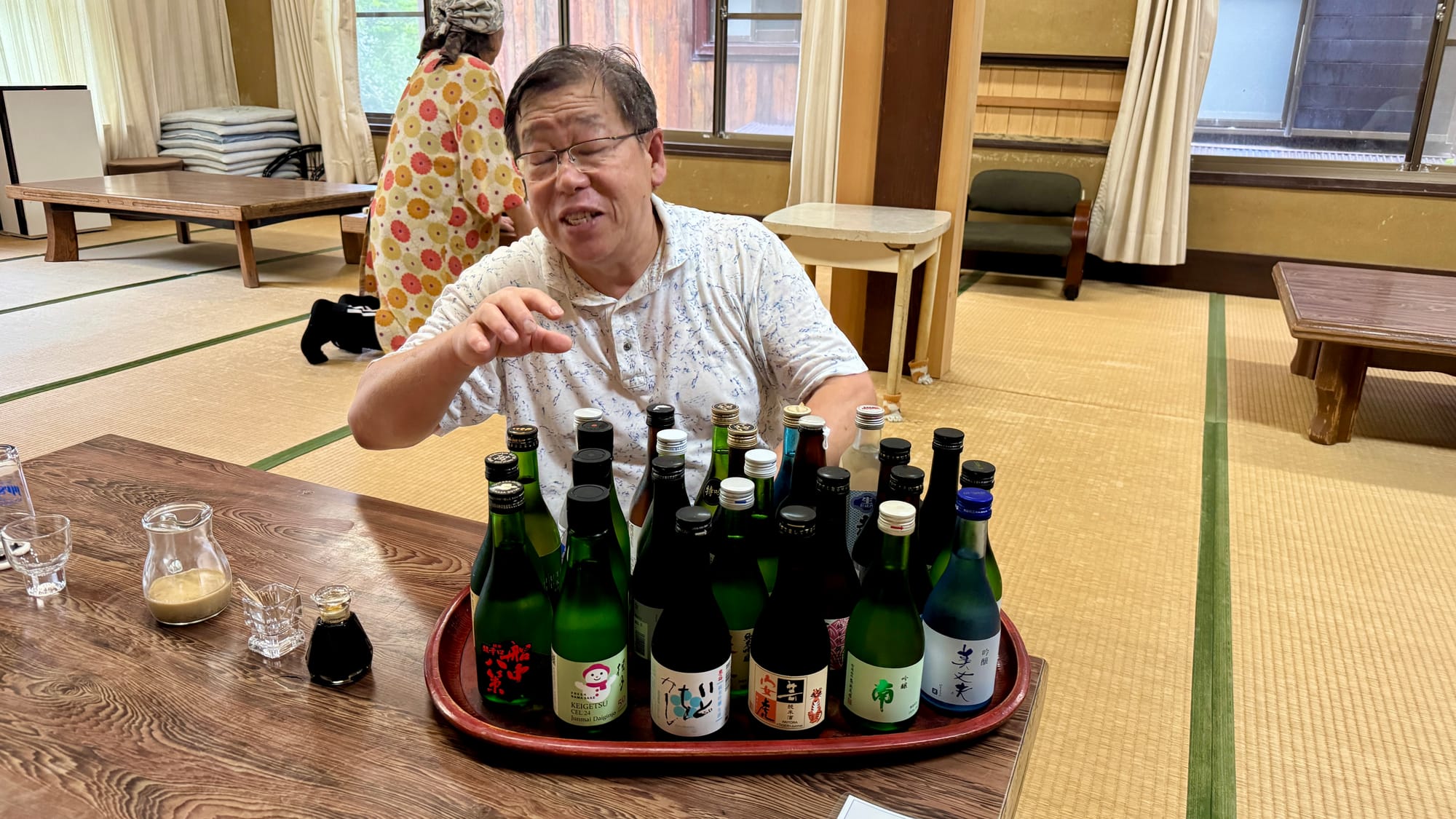
Twenty-six bottles.
All of them from Kochi.
The dining room transformed into an impromptu sake seminar.
Every bottle was different and was enthusiastically spoken about.
His wife stood quietly in the background.
She sighed.
She smiled.
She gently shook her head.
Clearly she’d seen this performance before.
I couldn’t help smiling.
No matter where I go in Japan…
…it always comes back to sake.
When water wins
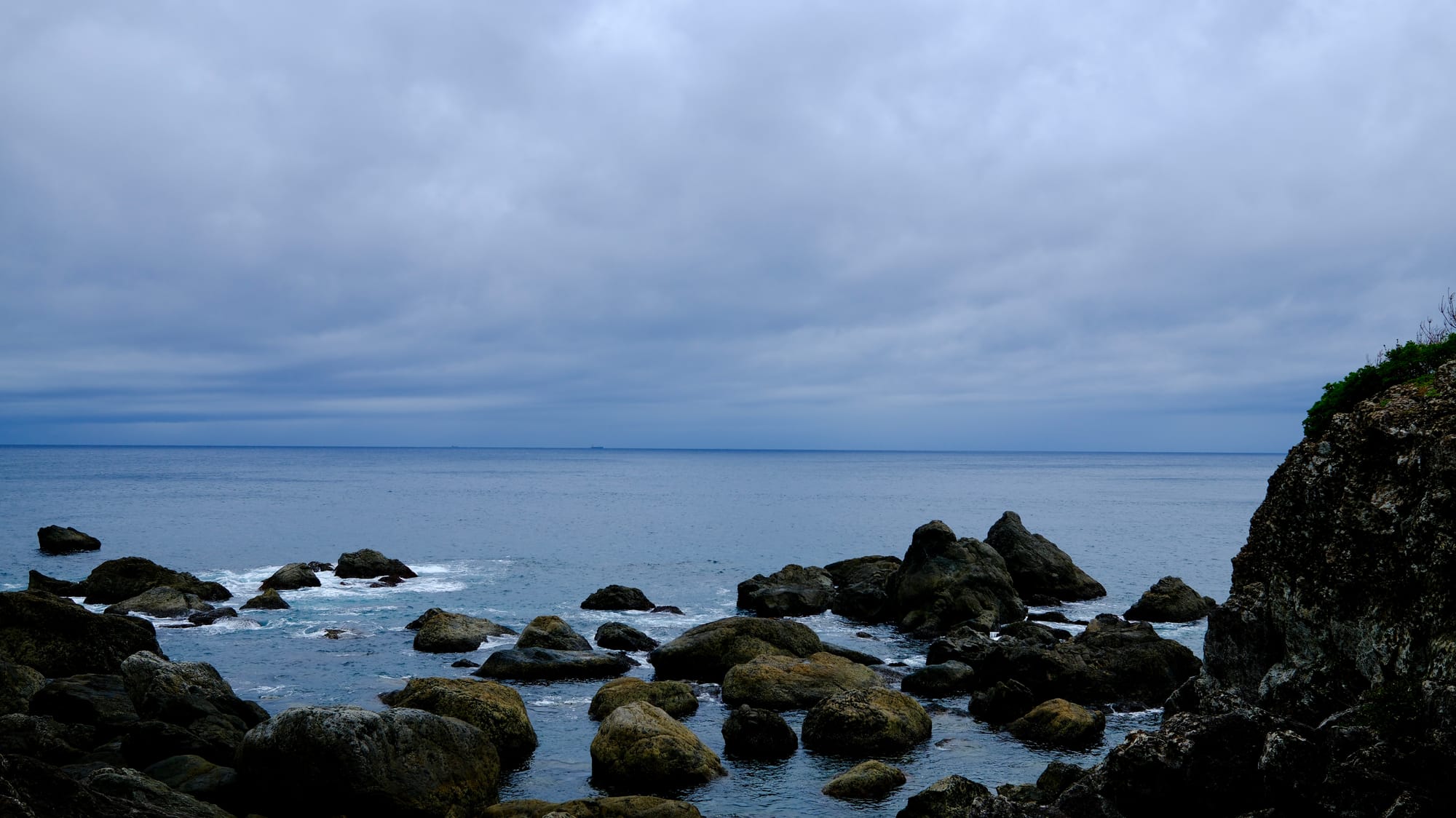
The next morning the clouds looked heavy, but not threatening enough to stop me.
Temple 24 sat high above Cape Muroto and there are two ways to reach it.
The traditional Henro trail disappears into the forest.
The other follows the vehicle road.
Normally I’d take the trail without thinking.
But after days of rain the mountain paths would be muddy, slippery and probably crawling with leeches, and probably crabs as well - those things were everywhere.
The road it was.
By the time I reached the temple, the rain had settled into that steady drizzle that makes you think you’ve made the right decision.
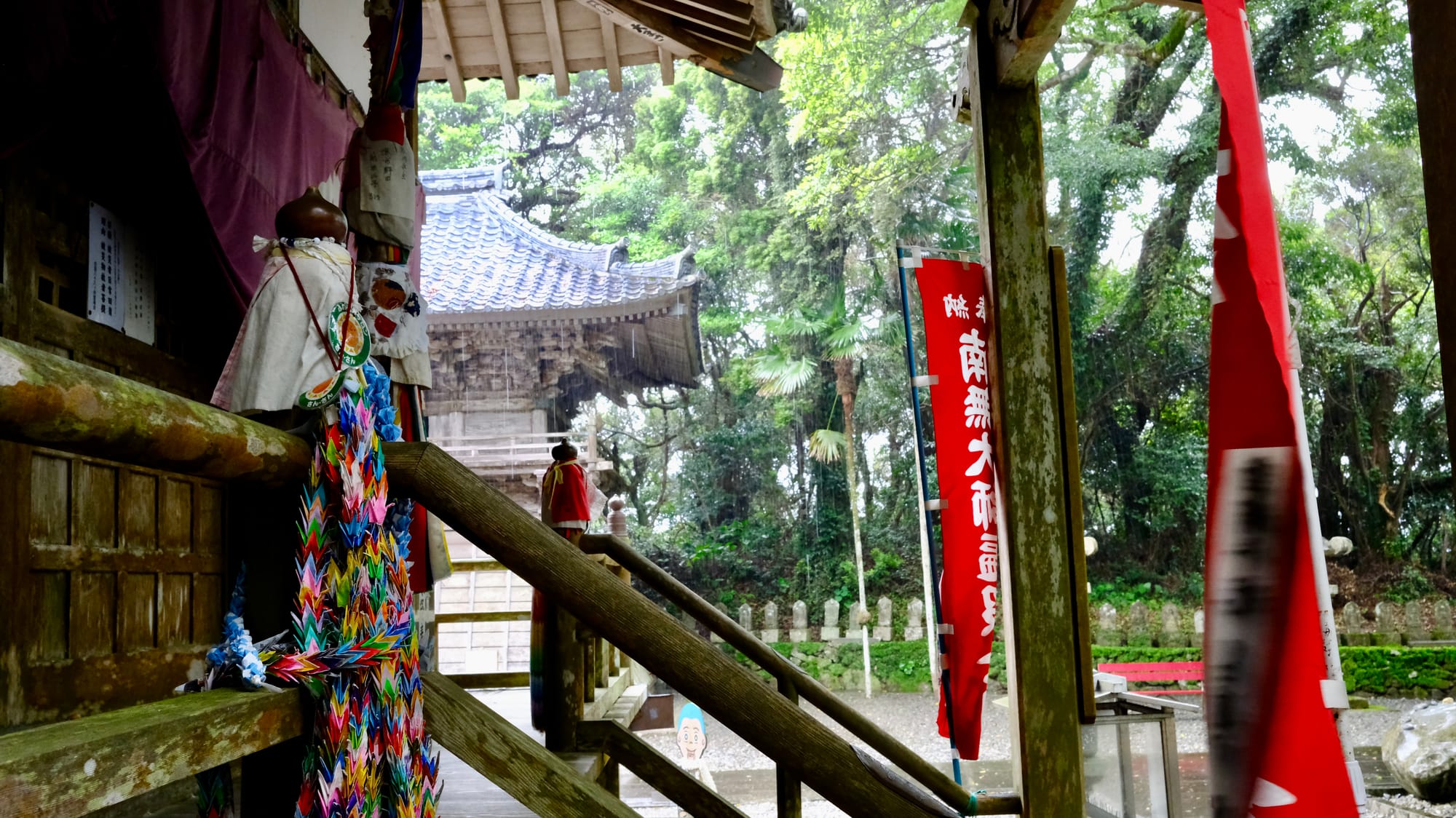
I rang the bell, lit the incense, and woke up the guy in the stamp office. I apologised.
Then it was time to transform back.
Poncho.
Hat.
Socks and Sandals.
Backpack cover.
Mushroom mode activated.
I confidently set off down the mountain.
I made it approximately fifty metres.
To the toilet block in the car park.
Then the sky completely lost its mind.
This wasn’t rain anymore.
This was weather with wrath.
The wind was walloping and whipping it sideways.
One thing about ponchos in a storm is they turn into sails. I was a mushroom with a wingsuit.
Apparently I’d taken Bruce Lee’s advice a little too seriously.
I had become water.
The forecast wasn’t encouraging.
There were currently two typhoons pushing up towards Japan.
The typhoons politely informed me that walking in the rain was no longer possible.
One thing I’m slowly learning on the Henro is that you don’t always get a vote.
Sometimes the pilgrimage decides.
I caught a bus about twenty-five kilometres ahead to wait out the weather.
Once it passed, I’d return and walk the missed section properly.
No cheating.
The kilometres still had to be earned.
I just wasn’t going to earn them while horizontal rain was trying to send me to South Korea.
Stillness
What I expected to be one night quickly became four.
Four unexpected days in the same little town.
At first I was still in planning mode - get back there and get a walk in if the rain isn’t too bad.
I’d become oddly obsessed with forward progress.
Temples.
Kilometres.
Accommodation bookings.
The typhoon couldn’t have cared less.
Eventually I stopped looking at the weather forecast every fifteen minutes.
A break would do me good.
I unpacked my bag.
Found a rhythm.
Read.
Wrote.
Drank coffee.
Drank beer.
Drank sake.
Talked to people.
For the first time since beginning the pilgrimage…
…I stopped walking for more than one day.
Each morning I wandered down to the same little coffee shop.
The owner wasn’t rude.
Just…
Reserved.
Day one I got polite Japanese customer service.
Coffee.
Thank you.
See you.
Day two she recognised me.
There was a little more conversation. Japan vs Sweden at the World Cup on the TV.
Day three there was a smile and she already knew what I wanted before I’d ordered.
We never really had a proper conversation. On my way out the door I heard a couple of old ladies ask her - “who is that?”
Her response “no idea”
It’s something I’ve noticed after living in Japan for years.
Friendliness here often doesn’t arrive all at once.
It grows quietly.
One visit.
One conversation.
One small moment at a time.
You’re a stranger…until suddenly you aren’t…but you are.
Sometimes at the end of the day - I wonder - what on earth did I think about for the last 8 hours?
When you’re walking eight or ten hours every day with nothing but your own thoughts, you begin noticing things you’d normally rush straight past.
The old guy sweeping leaves outside his house.
The woman tending flowers beside a tsunami evacuation sign.
The coffee shop owner who smiles a little more each morning.
The praying mantis.
The crabs.
The bloke who somehow produces twenty-six bottles of sake from a back room.
Then my brain wandered somewhere else entirely.
Water.
The amount of water on Earth never really changes.
The glass of water sitting in front of me might once have been part of a dinosaur.
Or an ancient Egyptian.
Or Bruce Lee.
If I’d spent the whole walk listening to podcasts, I wonder how much of that I would have missed.
Maybe silence isn’t empty after all.
Maybe it’s where the interesting stuff lives.
The guesthouse where I was staying had another character.
His name was Shuhei.
He’s one of those people you never forget.
A slightly portly Japanese guy somewhere between twenty-five and thirty-five.
Always wearing suspenders.
Thick Coke-bottle glasses.
He speaks Japanese, a bit of English, and possesses the sort of encyclopaedic knowledge that makes encyclopedias feel slightly insecure.
He seems to do everything.
Housekeeping.
Carrying luggage.
Fixing problems.
Answering questions.
Making sure everyone is happy.
Some people might think he’s a little unusual.
Spend half an hour talking with him and you realise he’s just wonderfully, unapologetically himself.
Which, frankly, is refreshing.
As it happens…
He also loves sake.
Of course he does.
Another regular guest—a lady from Singapore on what can only be described as a serious yuzu pilgrimage—invited us both out for Indian food the following day.
Shuhei was driving. I bought him lunch.
When we got back he put a bottle of sake and two glasses on the table.
Shuhei can drink sake like water. If Bruce Lee had met Shuhei, he might have changed the quote: “Be sake, my friend.”
The pilgrimage provides.
Looking back, it’s funny what I remember most from those few days walking to Cape Muroto.
Not the kilometres.
Not even the temples.
I remember Yukiko handing me a glass of “non-alcoholic” tea after I’d arrived carrying a bottle of sake.
I remember becoming a mushroom.
I remember scanning mountains instead of oceans because of tsunami signs.
I remember Bruce Lee.
I remember Kūkai.
I remember a praying mantis being launched into what was either freedom… or the crab pit of doom.
And I remember a typhoon reminding me that nature really couldn’t care less about my carefully colour-coded itinerary.
Bruce Lee said,
“Be water, my friend.”
Kūkai spoke of emptiness.
Of interconnectedness.
Of the understanding that nothing exists on its own.
Standing on that coastline, surrounded by people who quietly live with the knowledge that one day the ocean may come looking for them, I think I began to understand—just a little—what both of them were getting at.
The people I met.
The meals I shared.
The storms.
The delays.
The conversations over sake.
None of it felt random.
Somehow…
It’s all connected.
Perhaps that’s the real pilgrimage.
Not simply walking from one temple to the next.
But learning to notice that everything is already connected.
Like rivers.
Like people.
Like water.
Dispatch #3: Be Water
Published: Day 20 of the Pilgrimage — June 27
Temples visited: 25 / 88
Distance walked: 372km / 1,300km
Current location: Nahari, Kochi
Kilograms of enlightenment achieved: No idea. No scales available, but definitely more than two (I hope)
Onigiri eaten: 20
Beers drunk: 19 (a figure readers can directly influence via the button below—and a huge thanks to everyone who already has!)
Granola bars reluctantly consumed: 12
Blisters acquired: 4
Member discussion